

Skip The Metal File: 5 No-Brainer Ways To Sharpen Lawn Mower Blades
We may receive a commission on purchases made from links.
If you think about it, there's an awful lot of infrastructure in the average lawn mower that's mostly dedicated to spinning a blade around. The time, money, and energy that goes into it suggests that it must be fantastically important. So it would be a shame to waste those resources, along with all the internal combustion, battery tech, and materials engineering, because of a dull blade. Fortunately, sharpening a mower blade is so easy that you can do it with a rock or another piece of metal. And it really is important. The blade is a mower's interface with your turfgrass, and problems ranging from scalping and grooves in your lawn to running out of gas quickly can mean you need to sharpen your lawn mower blades.
You might be wondering: What's wrong with using a metal file to do the work? And the answer is...nothing at all. That is, if you have the time and skill for it. Using a metal file is a slow, manual process. And while it's not especially difficult, it does take some knowledge and practice to apply the right pressure in the right direction at the right angle to get the right bevel. You should also end up with a balanced blade, and since balancing usually means removing material, that's even more filing to do without any necessary improvement in sharpness. With that said, we made a list of the most accessible, which range from angle grinders to knife sharpeners, hobby tool sharpeners, mower blade sharpeners, and professional blade sharpeners.
Sharpal knife and mower blade sharpener
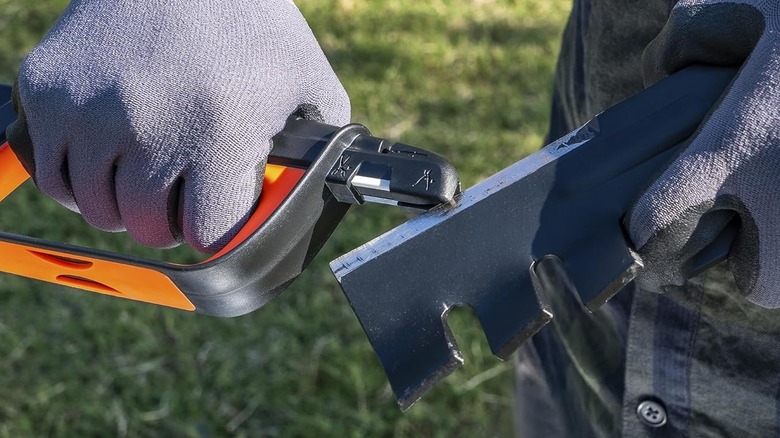
Fans of pull-through hand-held knife sharpeners might, at first, look askance at the Sharpal 103N all-in-one blade sharpener ($20.69). Pull-through knife sharpeners are usually small, somewhat indelicate instruments that remove a lot of material and usually do it at a fixed angle that might not match your mower blade's bevel. But the Sharpal 103N means what it says about being an all-in-one sharpening solution, and has different (and differently sized) sharpening mechanisms scattered around its frame for different blades and tools, including one for mower blades.
Sharpal manufactures sharpening tools for garden, workshop, outdoor/sports, and kitchen use, including diamond sharpening stones, pull-through knife sharpeners, and more, so they seem to know their stuff. The 103N is used both hand-held and stationary, depending on the type of blade you're sharpening. For a mower blade, the best approach is to clamp the blade in a vise and pull the sharpener along the cutting edge. Different sharpening slots are designed for single- or double-bevel blades. All of its sharpening tools are tungsten carbide except for the ceramic honing rod, and includes the slot for mower blades and pruners, used for largish single-bevel edges.
The tool's hand guard is oversized for use with gloves, and has a non-slip base and an orange grip overmold. Note that the 103N's 50-degree sharpening angle is considerably larger than the 30- to 35-degree industry standard for mower blades.
Angle (and other) grinders
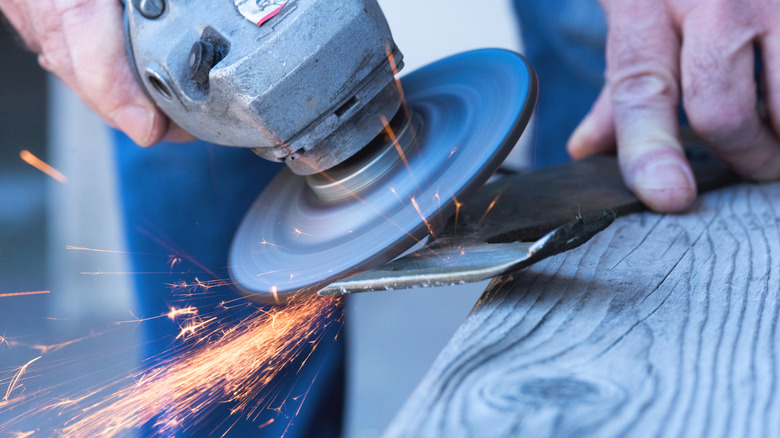
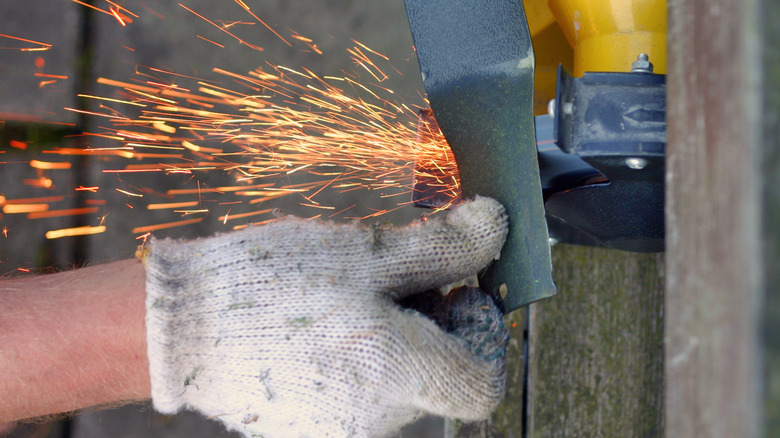
Because of a mower's blade bevel and balancing needs, attacking one with an unguided drill or rotary tool isn't always the best idea. But it turns out that sharpening mower blades with an angle grinder is a common and effective way to do it. The trick lies in choosing the right wheel or grinding disc for your needs and experience. Because an ordinary grinding wheel can be very aggressive, it's best reserved for a seasoned pro with a light touch or for cases where the mower blade is heavily nicked or pitted. Mount your blade it in a vise with the bevel facing up. Grind evenly on each side of the blade to make balancing easier. If your blade is in good shape and just needs a touchup, consider using a flap disc, which is essentially overlapping layers of sandpaper fused to a stiff backing wheel for use in an angle grinder. Flap discs are far less aggressive than grinding wheels and often produce a better finish. While many mower owners, including (and maybe especially) old-timers, tend to use angle grinders freehand, there are jigs and attachments that help you maintain the correct angle (usually around 30 degrees). The best angle grinder jigs will have an adjustable angle, making it as flexible as possible.
The bench grinder is a viable alternative. Like angle grinders, bench grinders are aggressive. They're also not portable, leading many to prefer angle grinders. Another alternative to metal files for sharpening mower blades fast is the die grinder, which is driven by compressed air.
Rotary tool sharpening attachments
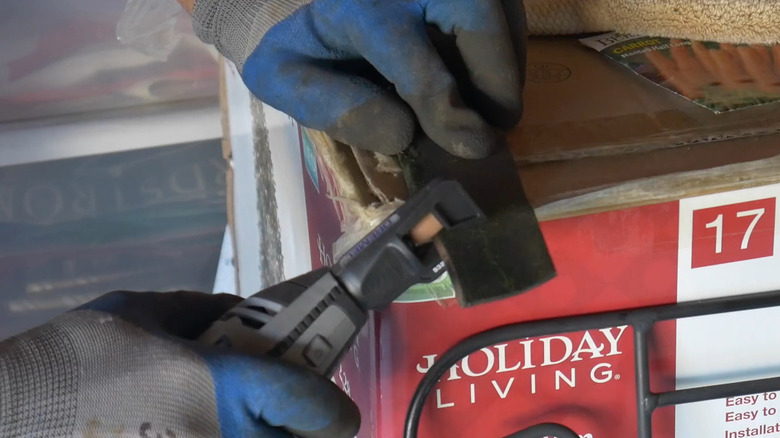
There are, of course, dedicated tools and tool attachments on the market for sharpening mower blades, and this is often a solid way to go for DIY sharpening. Rotary tools are good candidates because they're powerful, compact, and very portable. Popular rotary tool manufacturer Dremel makes a sharpening kit ($22.77) that includes attachments for chainsaws, mower blades, and lawn/garden tools. The attachments help you maintain the correct sharpening angle, while a small, rapidly spinning grinding stone does the hard work. The mower blade sharpener was once sold outside of the sharpening kit, but that product has been retired. It is, however, possible to buy Dremel-compatible mower-blade-only attachments from other manufacturers if all you need is the mower sharpening guide.
It is possible to sharpen some lawn mower blades without removing them using tools like the Dremel attachment, but think it through carefully if you're considering it. Mower blades are typically beveled on top of the blade, often leaving little room for a sharpening jig. More importantly, sharpening on the mower will prevent your balancing the blade properly, which can cause poor cutting and mower damage.
Drill attachments and balancing tools
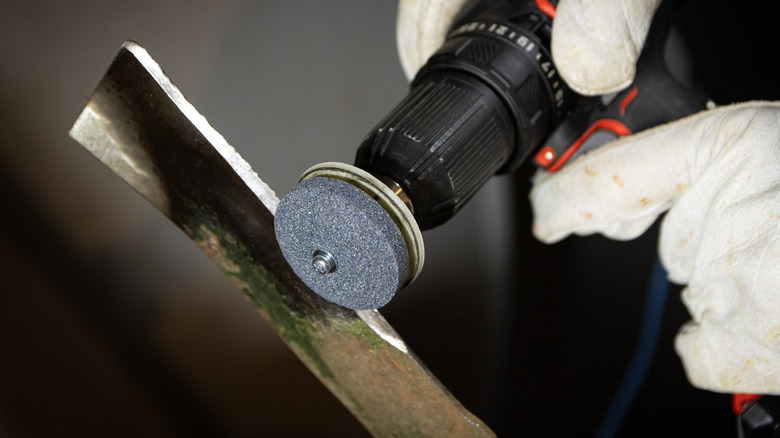
Another dedicated mower blade sharpening attachment is the Arnold universal lawn mower blade sharpening kit ($10.88), which attaches to a standard drill. As an alternative to bench grinders and other tools, drill attachments can be a low-cost solution because most DIYers will have a power drill, while not everyone will have an angle or die grinder. A few things make the Arnold sharpener an attractive option. The attachment is designed so that, during sharpening, the mower blade is straddled between a grinding wheel and a guide that helps you maintain the correct sharpening angle. Some users report that the Arnold and similar sharpeners can skitter around a bit if you don't apply enough pressure, and even experienced users sometimes find the Arnold device can be surprisingly time-consuming to use and doesn't always result in the ideal bevel angle.
Another big advantage of the Arnold kit is that it comes with a blade balancer, which is basically a pivoting stepped cone on which you place the mower blade after sharpening. The blade will tilt to its heavier side, and if your blade tilts far, this can result in unwelcome mower vibration. Simply remove a little material from the heavier side until the blade balances properly.
Let a pro sharpen your mower blade
Properly sharpening a mower blade (or just about any blade, for that matter) is usually something that works best when you have plenty of experience under your belt. As with small engine maintenance and even lawn mowing itself, it's not uncommon to outsource the responsibility to a professional who is likely to do a better job, and often for a reasonably small fee. You can have a pro sharpen your lawn mower blades at many Ace Hardware locations; unfortunately, Lowe's and Home Depot stores do not offer mower blade sharpening services. Some independent small engine shops will offer the service, and some companies like Re Edge It even offer mail-in options.
Not only is professional sharpening the easiest way to sharpen lawn mower blades, but it also has distinct advantages you might not bring to the DIY table. A pro should, of course, do all the things you know about, like sharpening to the right bevel angle and carefully balancing the blade. But a seasoned pro will also be able to spot structural issues and excessive wear that calls for blade replacement.
One last note: Don't forget to examine the bolts and nuts used to mount your blade to the mower. It's generally a good idea to replace nylon locking nuts during each sharpening, if your mower uses one.