

Skip The Bench Grinder: Sharpen Lawn Mower Blades With A Simpler DIY Solution
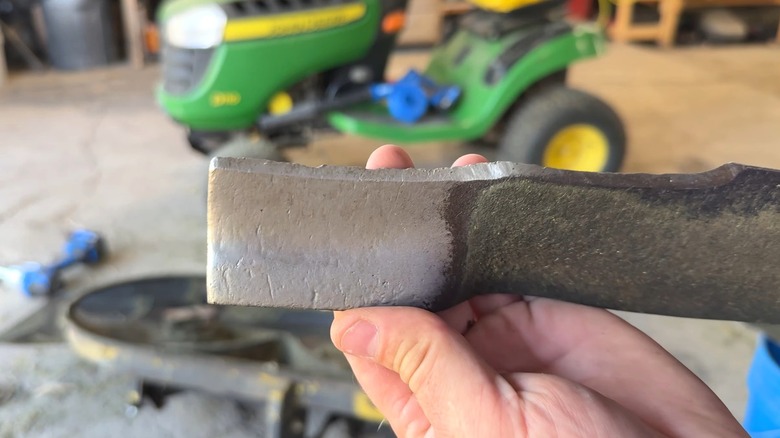
One thing I learned about landscaping during the years I ran a gardening company with my wife is the true importance of a well-manicured lawn; it's the canvas that highlights all the other hardscape and garden features. Nothing ruins the picture like brown patches in your grass or missing turf, and one of the easiest ways to produce these defects is to mow with a dull blade. Consequently, one of my top priorities when mowing is to regularly inspect the blade and sharpen it when necessary, and my tool of choice is our trusty 4-inch angle grinder with a flap disc.
The advantage of using this tool — as opposed to a bench grinder — is that I can sharpen the blade without taking it off the mower, provided it isn't in bad shape and has no nicks, pock-marks, or chips. Grinding out nicks and gouges requires removing the blade and setting it in a vise. If the blade is in decent repair and only needs sharpening, I simply run the tank dry, flip the machine on its side, clean the mower deck, and do a quick once-over on both ends of the blade with my grinder. That's usually enough to restore the edge. It allows a quick and easy way to fix up the machine so I can keep on working, but the angle grinder is also a great choice when you want to remove the lawn mower blade for a more precise sharpening job.
How to sharpen mower blades with an angle grinder
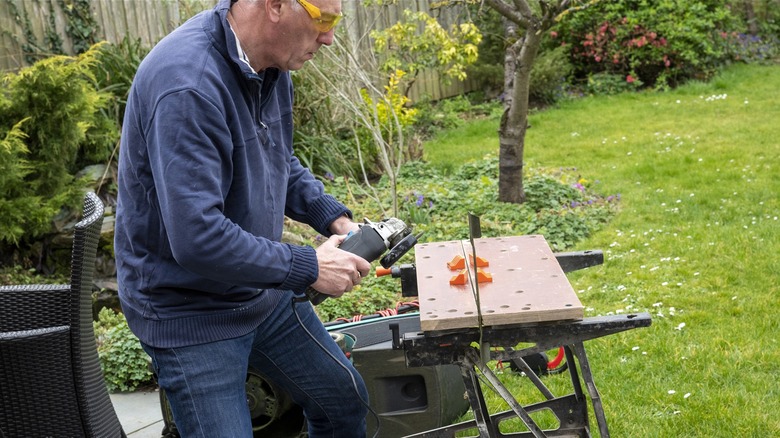
An angle grinder with a flap disc (a 60- to 80-grit variety works well) can sharpen a mower blade quickly and efficiently, but it could also ruin the piece if you're too aggressive or hold it at the wrong angle. The blade has a preset bevel angle (often around 30 degrees), and the angle you hold the grinder has to match it exactly to hone a sharp edge — and by "sharp," we're talking butter knife-sharp, not razor-sharp. If you make the blade too sharp, it will develop nicks and gouges more easily.
Start by removing the blade, using a torque wrench or a long-handled socket wrench to turn the central nut. Before you undo the nut, use a scrap wood piece to stabilize the blade. Wedge the wood between the mower housing and the blade to prevent it from turning as you unfasten it. With the blade removed, secure it in a vise. Put on protective gloves and goggles, because sparks will fly as you work. Align the grinder with the bevel angle. Make two or three light, non-aggressive passes along the blade, and check your progress to see if you're getting the proper angle and a sharper edge. Count how many passes you make so you can do the same number on the other end of the blade, ensuring both ends are ground evenly.
After sharpening, it's a smart idea to check the balance by hanging the blade from a nail on a wall and ensuring it stays horizontal. If it doesn't, grind a little more from the end that's sagging until it does. Balancing the blade is crucial, as it prevents the lawnmower from vibrating and potentially suffering damage to the spindle, deck, and other components.