

Forget Asphalt Driveways: 5 Alternatives That Are No-Brainers For Durability And Style
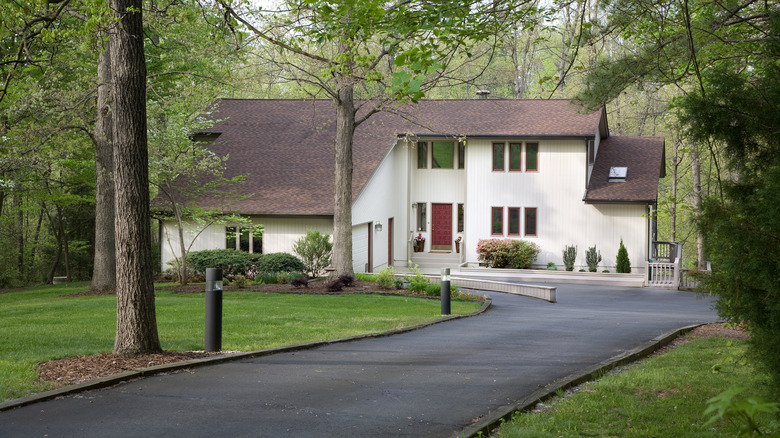
There's a lot to love about asphalt. Apart from being one of the cheaper ways to pave your driveway, asphalt is a flexible product that can be shaped to almost any driveway design and withstand minor ground movement. However, asphalt does have its drawbacks. While it averages a 15- to 30-year lifespan, asphalt can be damaged by water infiltration, UV rays, chemical spills, freeze-thaw cycles, and high heat. It's also not the most stylish material in the world. Sure, fresh asphalt looks sharp for a little while, but it will soon fade. So, why not forget asphalt and think about some alternatives that are more stylish and durable?
The alternative you choose will depend greatly on how much you want to spend and how durable a product you want. Cobblestones and bricks are beautiful, traditional products that can last 100 years, but you're going to pay for it upfront. Exposed aggregate concrete gives you all the strength benefits of regular concrete, but with a more decorative finish. Permeable pavers, meanwhile, are excellent at draining rainwater and have a lower environmental footprint. Gravel too is impressively durable, and can essentially last forever with occasional refreshments.
These materials look the part too. Whether you want a highly decorative surface or something with a little more texture than asphalt, these materials are all worthwhile alternatives that will give you an attractive and long-lasting driveway.
Cobblestones
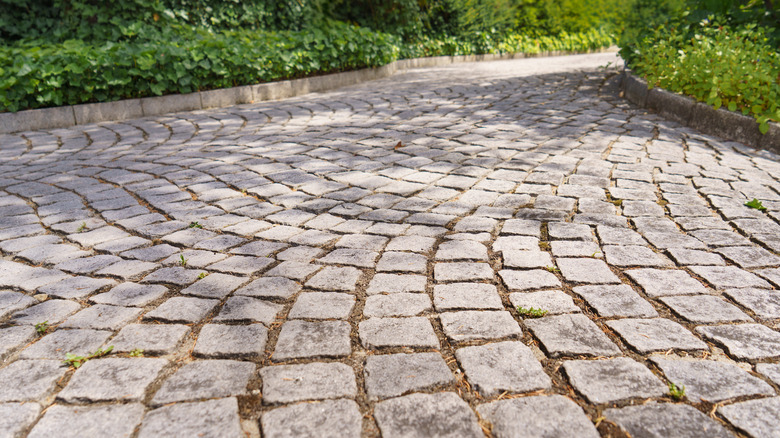
If we had to choose one paving material as the most durable and stylish driveway alternative to asphalt, cobblestones are it. These have been used to pave roads for thousands of years. The Appian Way, the ancient Roman Road, is still in use today with 10 miles of original cobblestones intact. If that is not a testimony to how durable this material is, we don't know what is.
Cobblestones are rounded stones that were originally sourced from riverbeds, but can today be cut by modern machinery. There are several different types of cobblestones you can choose from, including granite, basalt, and sandstone. Granite is one of the most sought-after due to its seemingly endless immunity to wear and tear, ability to hold tremendous amounts of weight, and natural weather resistance thanks to its non-porous surface. Now, cobblestone does come with a relatively high price tag of $18 to $50 per square foot, but the longevity of the product means that you are likely going to be saving money long-term.
Then there are the looks. Being natural stones, cobbles can come in a variety of different colors and textures. Granite comes in gray, cream, or pinks, while basalt is naturally dark and sandstone comes in mottled browns. You can also create unique and decorative patterns with cobblestones, giving you a truly dynamic driveway that will look great for ages.
Exposed aggregate concrete
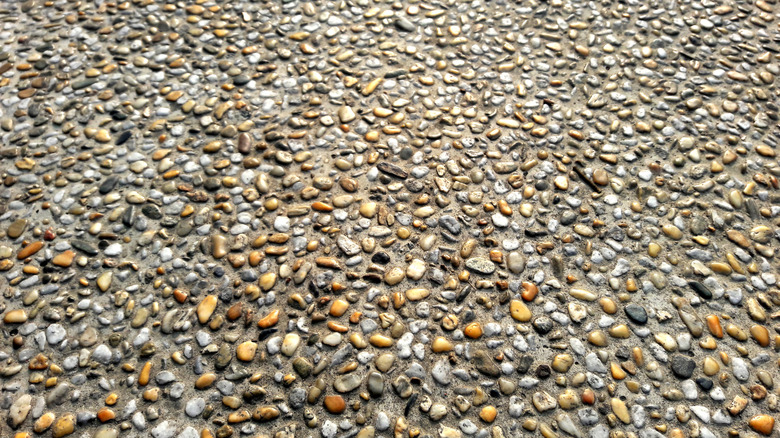
When you compare standard concrete and asphalt driveways, there are plenty of reasons why concrete might be the more durable option, as it maintains its structure under direct sunlight and can withstand heavy loads more capably. However, one big flaw of concrete is that it looks just as plain as asphalt. Instead, you can go with a superior type of concrete that gives you all the strength and durability of standard concrete, but looks much better. We're talking of exposed aggregate concrete.
All concrete is made with a mixture of aggregates, but you usually don't see them. Exposed aggregate is intentionally made with larger and more decorative aggregates that are revealed when the outer skin of the cement is removed after pouring. The larger aggregates create a slip-resistant surface and hide wear-and-tear better than a flat concrete surface. A well-installed exposed aggregate driveway will last over 30 years if you are routinely performing bi-annual resealing and cleaning.
The aggregates are also what give this surface its unique style. The large aggregates can be anything from bigger stones and gravel to seashells and crushed glass. The type you choose will determine the pattern and color your driveway ends up being.
Bricks
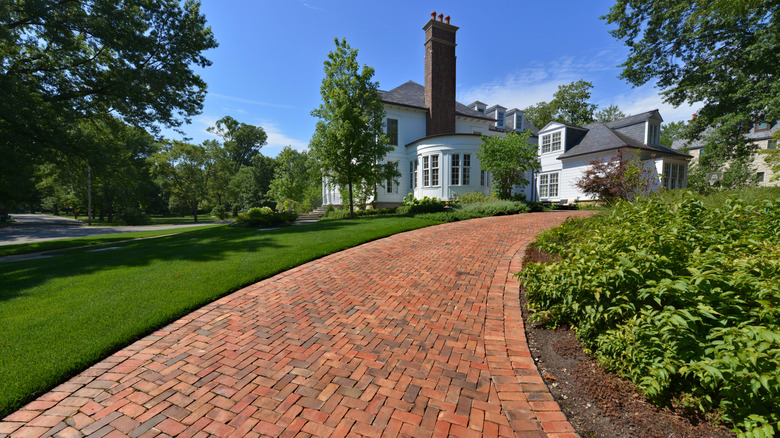
Similar to cobblestones, bricks provide durability and a timeless aesthetic to your driveway. Made of compressed clay or shale rock that has been fired to extremely high temperatures, bricks are among the most long-lasting building products ever devised. Among their numerous advantages, brick driveways often last for 50 years, and some can last over 100 years with the right maintenance. Plus, if you have issues with sinking bricks, you can just take them up and re-level them without too much fuss.
Bricks are also much more resistant to wear and tear than asphalt. While an asphalt driveway will look crisp and clean for a little while, the consistent use and exposure to the sun will begin to show after a few years. Not so with bricks. Their durable construction means that they will take typical driveway use and heavy loads without appearing damaged. Plus, because they are individual interlocking pieces, bricks can be laid in a number of different patterns, such as herringbone or basketweave, that make for an incredibly attractive surface.
If there is any downside to this type of driveway, however, it's the fact that nasty weeds can grow up through the gaps between the brick pavers. This can be remedied with manual weeding, herbicide application, or continually renewing the sand in between the pavers. Bricks are also more expensive than asphalt, averaging $12 to $22 per square foot.
Permeable pavers
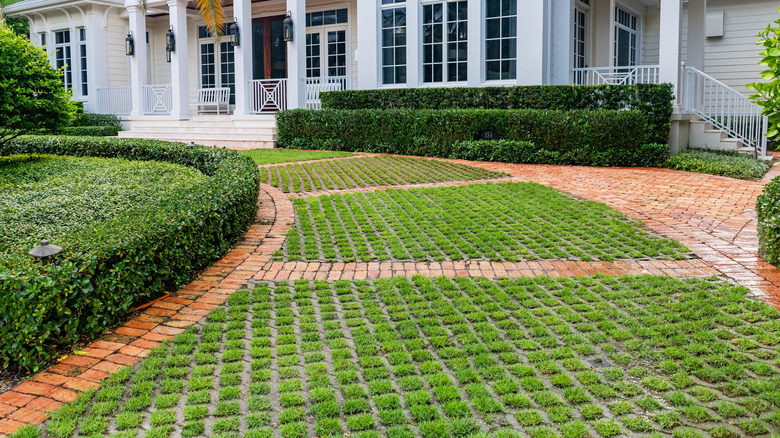
For the eco-conscious, there might be no more practical and eco-friendly replacement for concrete or asphalt driveways than permeable pavers. As the name suggests, permeable pavers are intentionally designed to allow rainwater to permeate through the surface and back into the soil below. The pavers achieve this either by having an opening in their design or larger joint spacing. The chief advantage of permeable pavers over something like asphalt is that rainwater is allowed to move freely, preventing flooding.
In terms of style, most permeable pavers are made from stone or compressed aggregates that sit upon a deep gravel base. Therefore, they offer a timeless look while simultaneously being helpful for the environment. The types of permeable pavers that come with openings are also known as Turf Stone, as they allow grass to grow through them, giving you a great mix of greenery thrown in with the pavers.
As for durability, these pavers have a pretty long lifespan that can extend upwards of 50 years. Like the bricks we mentioned earlier, permeable pavers can also withstand the freeze-thaw cycle, in this case because water does not remain between them. This greatly reduces the potential for cracking and sinking. Plus, unlike the solid surface of asphalt, pavers can be easily replaced as needed because they are individual interlocking units.
Gravel
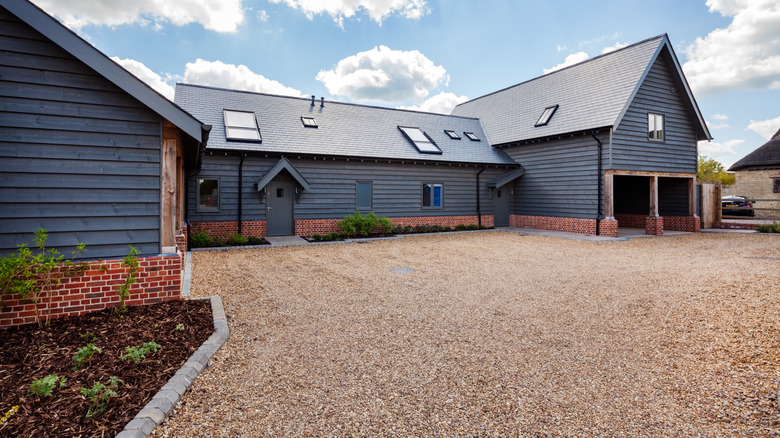
We have gravel on this list because, well, it is a no-brainer alternative to asphalt. Not only is gravel the cheapest driveway material there is, at as low as $0.40 per square foot, but you have a wide range of stone choices to suit your needs. Attractive pea gravel can be used to pave a driveway, and its rounded shape and wide color array make for a more dynamic and handsome surface than plain asphalt. However, pea gravel does require a stabilizing element to prevent it from washing away. Standard gravel can be simply compacted into a more solid surface.
In terms of gravel's durability over asphalt, there is some room for debate. Gravel is naturally permeable, meaning it will reduce pooling, runoff, and soil erosion. If washouts or potholes do occur, they can be easily fixed by adding more gravel. As such, a gravel driveway can theoretically outlast asphalt's 15- to 30-year lifespan with simple routine maintenance. In fact, if you're really on top of things, gravel can technically last forever with continual refreshing. However, most gravel driveways will only last about 15 years before needing to be fully redone.
Still, if you're looking at saving money and you don't mind regular maintenance, gravel is a wonderful alternative to asphalt. It also lends a nice, rustic feel, which makes it perfect for rural properties and farms.