

The Cheapest Driveway Material Is Also The Easiest To Install
It's not often that people think of the cost of building a driveway. They tend to be there, and then you drive on them. But if you are replacing an old, ruined driveway or putting one in as you build a new house, the costs become real. Two things drive the cost of a new driveway: the value of the material and the expense of having it installed. In both categories, a gravel driveway is the clear winner. In truth, it's not even close. The next cheapest type (measured by dollars per square foot) is poured solid concrete driveways, which are at least twice as expensive. As the materials get more specialized and fancier — from asphalt to bricks and pavers, etc. — the price increases in multiples.
Every type of driveway material has its pros and cons. Brick driveways are elegant and long-lasting; cement pavers offer interesting designs and color options; asphalt is durable, with its dark color absorbing solar energy, freeing it from ice and snow when the sun shines. But does that mean gravel driveways are an undesirable second-rate option among driveway denominations? Not at all. Gravel driveways are ultra-practical, extremely durable, and have a long-respected history. Many of the stately old houses of Europe and England have long and lovely gravel driveways that are generations old. Gravel driveways can be both attractive and inexpensive.
Gravel driveway pros, cons, and installation
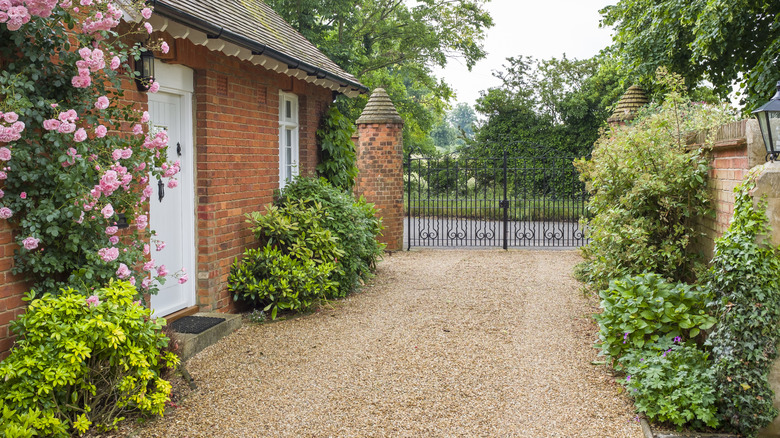
Some of the pros regarding gravel driveways are that, in addition to being relatively affordable, they are durable and long-lasting. They resist weed growth, their upkeep is easy and inexpensive, they are environmentally friendly, and there are many types of gravel coming in a variety of colors and textures. Some cons: Gravel is not as comfortable to walk on in bare feet. Also, loose aggregate can spread from the driveway into your lawn or bordering gardens. Gravel driveways will require more maintenance than other driveways, with aggregate being added to any low spots or where it has flowed down an incline. And while a properly installed gravel driveway is generally weed-proof, there may be occasional breakthroughs or weeds germinating in accumulated surface dirt and grit, so you'll need a few tricks to get rid of weeds.
You may wonder if a homeowner can install a gravel driveway themselves, rather than hiring a contractor. The answer can be yes or no, depending on several factors. If your driveway is relatively short and level, the answer may be yes. A determined DIYer willing to trade their time, labor, and diligence for a contractor's knowledge and equipment can install a gravel driveway successfully. However, long driveways or those with steep inclines, curves, or low spots are best left to professionals. Even if you hire someone to do it, you can be confident that a gravel driveway is the cheapest and easiest to have installed.