

Concrete Vs. Asphalt Driveways: Which Costs Less?
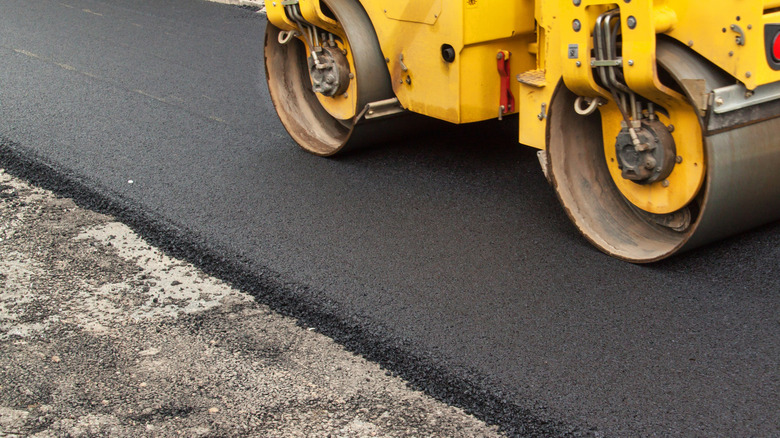
Whether you're putting your house on the market or looking to give it a refresh, a new driveway is going to bring a great amount of value. Not only does it look fresh, but a new driveway can repair previous damage inflicted by severe weather or heavy traffic. In terms of choosing your driveway paving materials, two of the most common are asphalt and concrete. And since budget is a huge part of any home project, you will want to know which of the two costs less.
Let's start with asphalt, a complex blend of bitumen, a petroleum byproduct, with various fines and coarse material such as sand, oyster shell, crushed stone, or gravel. The mixture is usually poured out hot and rolled to fit the shape of the driveway. In terms of price, asphalt ranges from $7 to $15 per square foot. For an example, let's say you have a 12-foot by 24-foot driveway, which is 288 square feet. That gives you a range between $2,016 and $4,320. You can save money if all you need to do is resurface an existing driveway, which will run you $3.60 to $8.30 per square foot.
Concrete also begins with a base of aggregates, but instead of bitumen, concrete consists of fines and coarse materials bound with a mixture of water and portland cement. This creates an exceptionally strong material that is poured into forms and often reinforced with rebar. Prices for concrete range between $8 and $20 per square foot. Using our 288-square-foot driveway example, that calculates out to $2,304 and $5,760. By the numbers, then, asphalt is clearly the cheaper way to pave a driveway.
Asphalt costs less upfront, but concrete lasts longer
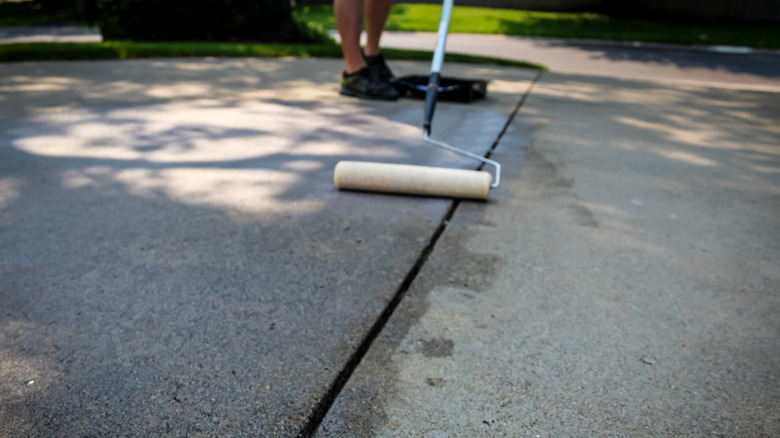
Aside from being the more budget-friendly option in terms of upfront cost, there are other reasons to choose asphalt for your new driveway. It's relatively easy to install and is less prone to cracking in colder climates. Asphalt's flexibility allows it to shift and adapt to changes in heat or shifting substrate, which also reduces the potential for damage. The chief downsides of asphalt as a paving material is that it only has a general lifespan of 20 years, needs to be sealed six months after installation, then resealed every three to five years after that.
Concrete, by contrast, has a typical lifespan of 30 to 50 years if it has been installed properly. It requires far less maintenance than asphalt, only needing occasional resealing every two to 10 years depending on where you live. It can also withstand loads of up to 66,000 pounds depending on the thickness. Asphalt, by contrast, can hold 8,000 to 12,000 pounds per axle. However, intense freeze and thaw cycles can significantly affect concrete, causing severe cracking and accelerated aging, which can be tricky to repair.
Overall, the one you choose will depend on your budget dictates. If cost is an issue, choose asphalt. If you've got a little more wiggle room and longevity is something that matters to you, go with concrete. Either way, you're going to end up with an attractive and durable driveway.