

Upcycle Empty Face Cream Jars Into Cute Holders For Propagating Cuttings

While trips to the nursery are always highly encouraged, they're not always necessary for growing your plant collection. Believe it or not, the key to a budding indoor garden is hiding right in the medicine cabinet. Those empty jars of face cream, toner, and serum might seem appropriate for the recycling bin, but in reality, they can help multiply your leafy greens. Hang onto empty skincare jars and repurpose them into vessels for plant propagation, just as teamdrjoseph did on Instagram.
Once you've decided on the plants to propagate from cuttings — while also keeping in mind the ones that do better in water vs. soil — you'll need a place to house the greenery as it matures and grows roots. On top of being a sustainable approach to gardening, repurposed jars offer a budget-friendly alternative with a unique decorative flair. Plus, those clear containers allow you to watch the roots as they develop, which will signal when you need to transport them to a pot. (Typically when they reach one to three inches.) Additionally, you'll need a container that soaks the stem without submerging the whole plant; a face cream jar is wide enough to do just that, and you can perch the greenery on the rim of the jar to keep it in place.
How to upcycle empty skincare jars into a propagation vessel
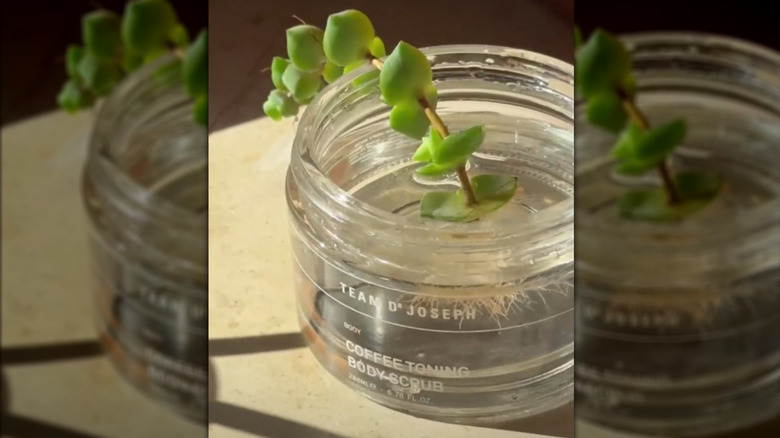
To get your propagation underway, first start by cleaning out the jar to ensure there are no skincare remnants. Select a houseplant that is able to propagate from water — think baby's tears (Soleirolia soleirolii), spiderwort (Tradescantia zebrina), and herbs like mint (Mentha spp.) — and make sure it's manageable size-wise, depending on the jar you're planning to work with. Use sanitized clippers to cut below the node, and place your cuts in the jar with water. Place your DIY gardening gadget in a warm location with indirect sunlight and change the water weekly.
From there, it's a waiting game. It can take up to three weeks to one month on average for roots to begin to grow. Use this waiting period as an opportunity to add some personality to your propagation setup. Bring in other similar DIYs — for example, you can propagate a plant with an empty candle jar, or you can create a propagation station with plastic egg cartons. Keep other decorative elements on hand, like artwork, trinkets, and stained glass pendants if you're setting up shop near a window (while still following the indirect sunlight rule, of course). With a bit of patience and minimal upkeep, you'll be on your way to blossoming greenery.