

Watch Your Roots Flourish: How Empty Candle Jars Make The Perfect Pretty Propagation Station
We may receive a commission on purchases made from links.
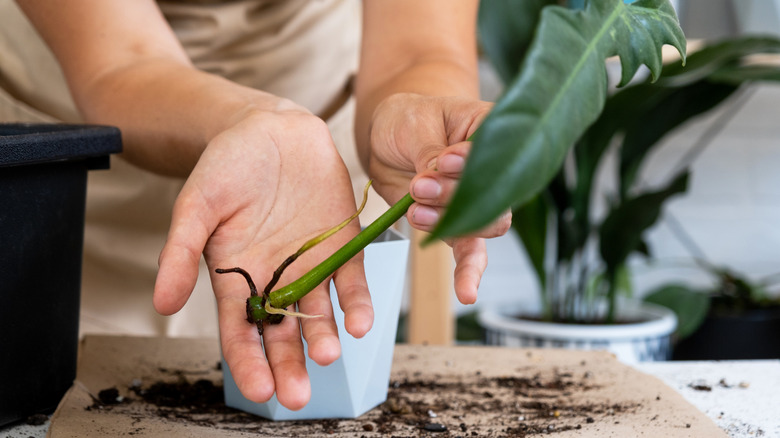
You can never have too many plants. In fact, the more the merrier. That's why a propagation station is practically mandatory if you're cultivating a green thumb. Not only will the practice save you a trip to the nursery (and some cash), but you'll have the pleasure of watching roots develop and a new plant take shape — if you're working with the proper tools and sanitized garden clippers, that is. The next time you're gathering plants to propagate from cuttings, find an old candle jar to house the snippets.
Julie of Cartoules Press Greek Design turns her brand's 9-ounce candle jar into a "propagation vessel" when it comes time to multiply her indoor garden. While a small vase seems sufficient, opting for a circular, deep candle jar like the ones from Cartoules Press has its perks. For one, it's a sustainable practice that allows you to make use of an accessory you might have relegated to the recycling bin. Plus, in order for roots to grow properly, you'll want to work with a deep glass that provides enough space without allowing the entire cutting to fall in. And who doesn't appreciate a little decorative flair? It's a win-win all around.
How to repurpose old candle jars into a propagation station
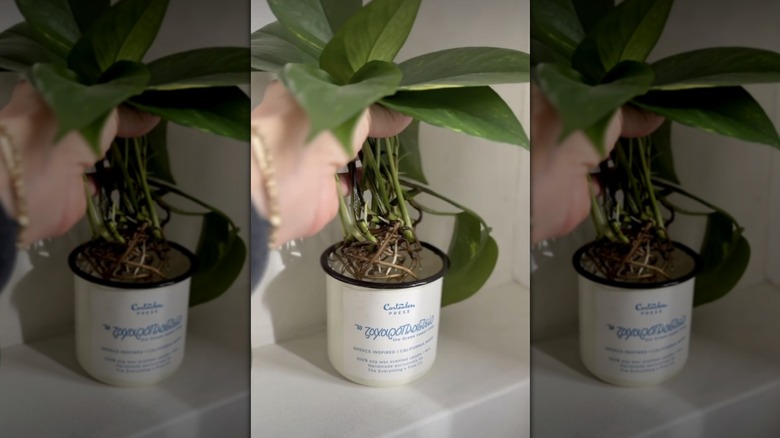
To get your DIY propagation station up and running, first clean your candle jar thoroughly to remove any excess wax. Then, assess which plants you'd like to work with, as some are better suited for soil vs. water for propagation. When possible, aim to propagate during each plant's active growing time for the best results. Once the empty glass candle jar is ready, find a warm locale in your abode with indirect sunlight to place your setup. If needed, cover the top of the jar in plastic wrap and poke a hole in the center to ensure the stems are upright and won't slip to the bottom of the jar. Change your water weekly, use Market Botany Prop Drops if necessary, and wait for your roots to grow to about an inch before transferring your greenery to a pot.
If you're looking to recreate Julie's idea, try using jars in different sizes and colors for various plants. Line them up, placing them on a decorative tray or saucer to up the aesthetic factor. Make sure other statement pieces are nearby, like a small stack of books, artwork, and vintage trinkets in natural materials. Looks aside, do note that plant propagation requires a bit of time, and it could take three weeks to a month before you see any results. Just stay patient and attentive as your new indoor plant starts the growing process.