

Soil Vs. Water: Which Is Best For Plant Propagation?
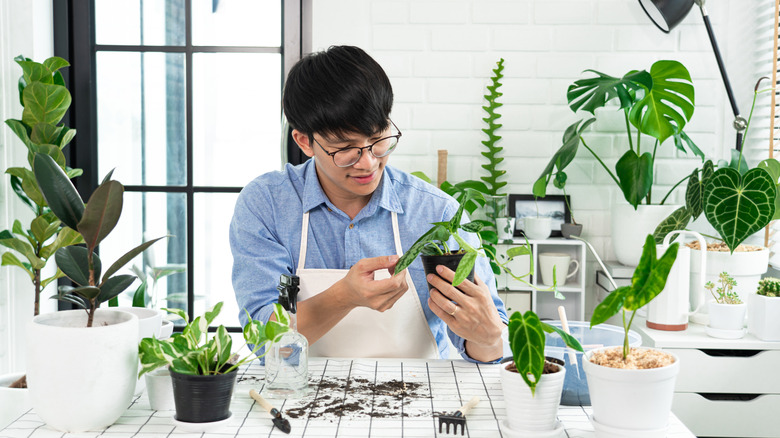
There are so many gorgeous plants you can easily propagate from cuttings, from houseplants to succulents to shrubs from your garden. When plants are propagated by cuttings, the stems must be placed in a growing medium or water to begin forming roots. Many people choose regular soil or water to start growing more plants. Soil is often seen as the best option for stronger roots and a successful new plant. However, the best method for propagation somewhat depends on the plants you're growing and personal preference.
Succulents, plants with woody stems, and cuttings taken from outdoor plants are generally more successful when propagated in soil or a similar medium. On the other hand, many houseplant cuttings do well when started in water. For example, you can easily grow more beautiful pothos plants with just a glass of water. That said, cuttings propagated in water can struggle when transplanted, as they're not accustomed to soil and often have weaker roots. These downsides are why soil is often chosen over water as the better propagation method, but many beginners appreciate the ease of skipping the soil. The amount of time it will take your cutting to root will vary depending on the plant and technique you're using.
Why soil is often better for propagation and tips for success
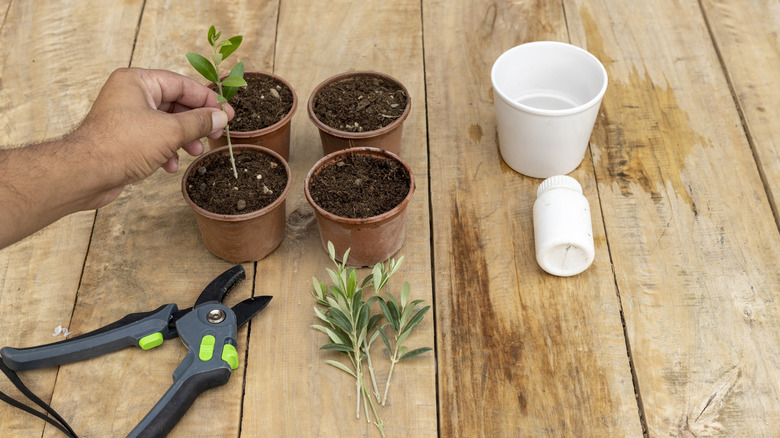
Plants propagated in soil or soilless rooting media tend to grow stronger root systems than those started in water. Cuttings will also adjust to the environment where they root. Since these cuttings are used to growing in soil already, they'll do better with being transplanted. One of the biggest benefits of growing cuttings in soil is that it may not need to be transplanted at all. One simple option is to propagate the stem in the soil you plan to use for the adult plant.
To ensure strong roots, propagate your plants in potting soil or a rooting material, such as sand, perlite, or vermiculite. Soil from your outdoor garden isn't a good choice, as it could carry diseases. After taking the cutting, add your dirt to a small container with good drainage. Dampen the soil and create a divot in the center for your propagation stem. Place the cutting in the opening and push the soil around the stem or leaves to hold it. Propagated plants need humidity to grow. To help the potting mix retain moisture and humidity, place an upside-down jar over the cutting. Alternatively, cover the plant in clear plastic wrap. Woody shrubs from your garden can often be propagated in covered outdoor boxes.
Why some prefer water propagation
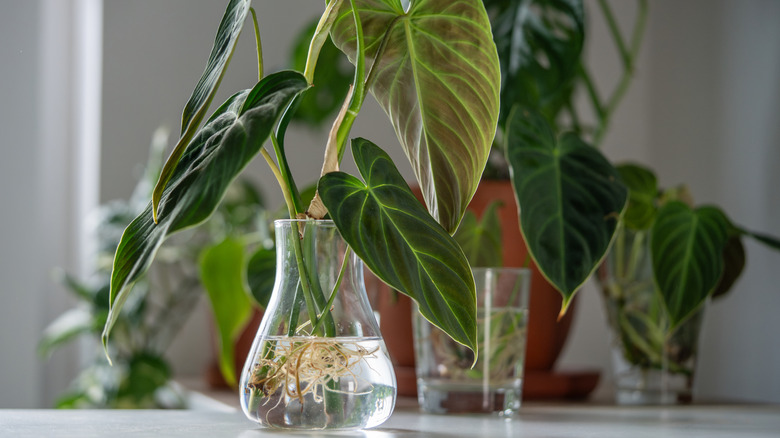
While soil propagation often gives better results, water propagation is easier. If you want to grow more houseplants quickly and easily, water propagation may be a better choice for you. You can simply set the stem in a glass of water and change the water as necessary. You will be able to see the roots developing, rather than having them hidden in the dirt.
Certain plants will thrive when their cuttings are rooted in water. In fact, some may root faster with this method. Houseplants like philodendron, pothos, arrowhead, and spider plants are best for successful propagation in water. These species tend to quickly root in water and are hardy enough to withstand the strain of relocating to a pot of soil.
To create a DIY plant propagation station, fill a small glass with room temperature water. Ensure the stem of your cutting is submerged, but the leaves don't touch the water. Change the water if it begins to look cloudy or if you notice algae growth. Algae will use up all the oxygen in the water and prevent your propagation from sprouting roots. Otherwise, swap out the water every three to five days. Once the roots have grown to a couple of inches, move your plant to a container.