

The Ornate Silver CorningWare Pattern Secondhand Collectors Would Be Thrilled To Find
Sifting through a wedding registry nowadays is nothing if not challenging. Back in the late '60s, however, it seemed brides-to-be wanted the same thing: the CorningWare platinum filigree line. Its sophisticated motif is something any avid kitchenware collector would be delighted to stumble upon 60 years later — bride or not. As a limited-edition gift line, platinum filigree falls into the ultra-rare CorningWare pattern category, but that doesn't mean thrifters shouldn't take a good look around for a piece they can call their own.
Debuting in 1966, platinum filigree includes five different items: two saucepans, two percolators, and one saucepot, all of which vary in size. The groundbreaking white Pyroceram glass is accentuated with a dark silver scroll across the top of each offering, adding an elevated aesthetic to the brand's list of designs. Both the saucepans and pots came with a burner, transitioning the pieces from simply cookware to serving platters for buffets. Depending on the piece's size, some average $50 on second-hand retail sites, but others go for hundreds, catapulting its status to one of the most valuable CorningWare patterns available.
How to spot limited-edition platinum filigree CorningWare
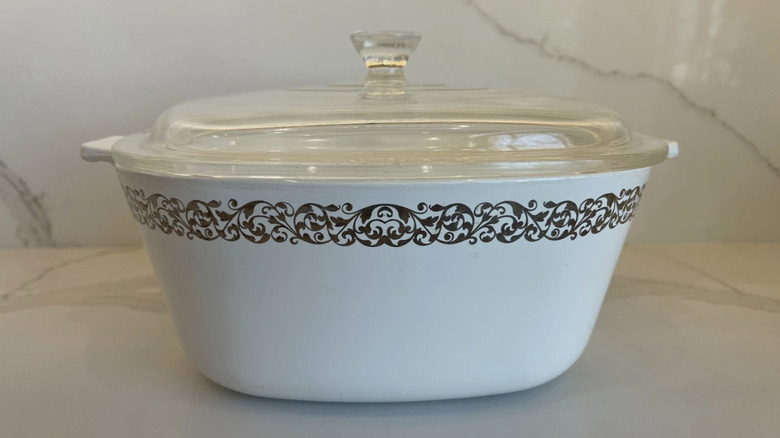
When looking for valuable kitchenware at thrift stores, you need to know a bit more about the pieces themselves rather than just the pattern. You don't want to fall for a dupe, do you? As is the case with all pre-2000 CorningWare, the platinum filigree line was crafted from Pyroceram glass, which was a groundbreaking material that allowed for instant heat transition. (If your piece says "Not for stovetop, it's not Pyroceram.) Turn the piece over to look at its markings: If there's a "Corning Ware" (two words) and "Made in the U.S.A" you're in good shape and dealing with the real thing. You'll also notice a letter followed by a dash and numbers to indicate the model and series.
Should this be a little difficult to track down, unlike the hallmark of the kitchenware brand, blue cornflower, there is another similar pattern that you might find appealing: the CorningWare starburst pattern, which was available from 1959-1963, though recalled years later. (Should you find this, best to leave it for decor.) It's available in a percolator, and prices can hover around the $50 mark. Though these patterns can be a tad difficult to track down, why not open your options by scanning for both?