

Countertop Trends On The Way Out In 2026 (So Far)
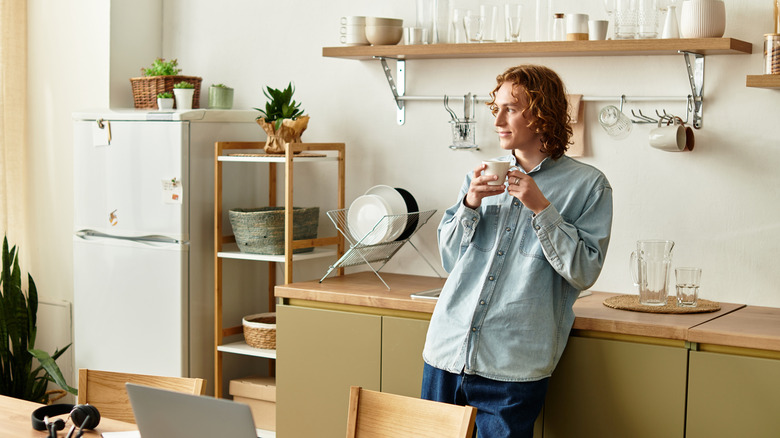
There are great expectations for kitchen countertops. While they need to be durable and able to withstand constant meal prep, spills, and wear and tear, they also serve a function aesthetically. You could have gorgeous cabinetry and modern appliances, but the wrong type of surface will throw off the entire flow of the room. There are timeless kitchen countertops — think white marble and soapstone — and then there are countertops that are... not.
In 2026, homeowners are doing away with the kitchen's utilitarian atmosphere and bringing back a sense of coziness à la Grandma's house. As people are craving a lived-in feel for the busiest room, they're moving away from certain countertop choices, like concrete and straight edges, and gravitating towards others. According to the experts, particular trends will meet their demise this year due to looks, costs, practicality, and needs. You can bid adieu to styles that lack character, discourage easy maintenance, and make the space feel rigid.
White quartz surfaces lack character
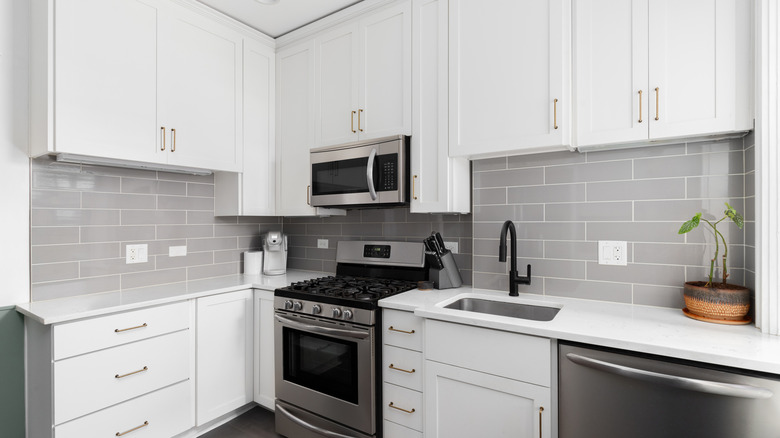
White quartz can be deceiving. It might allude to a fresh, clean surface when, in actuality, the results feel sterile and uptight — especially when paired with white cabinets and backsplashes. Food & Wine refers to the 2000s trend of all-white kitchens as "the great white-out," a style choice that eventually graduated to newsfeeds years later and signaled a pristine environment far removed from the realities of a busy kitchen.
White quartz slabs had a strong hand in the minimalism trend that took hold of cooking spaces roughly 20 years ago, but homeowners aren't going the stark route anymore. Now, they're opting for a bit more liveliness that feels welcoming rather than cold. "Clients are moving away from highly manufactured looks and gravitating toward warmer, more natural materials with softer movement and texture," interior designer Corinne Ekle told Homes & Gardens.
Soapstone, granite, and marble are a few materials that are taking quartz's place. But this switch doesn't necessarily mean white kitchens are completely out — it just means you need to soften them up with natural, wooden accents, various textures by way of rugs and textiles, and a mixture of metals with a warm aesthetic. Keep these tricks in mind if you're unable to get rid of your own quartz countertop.
Concrete countertops require too much maintenance
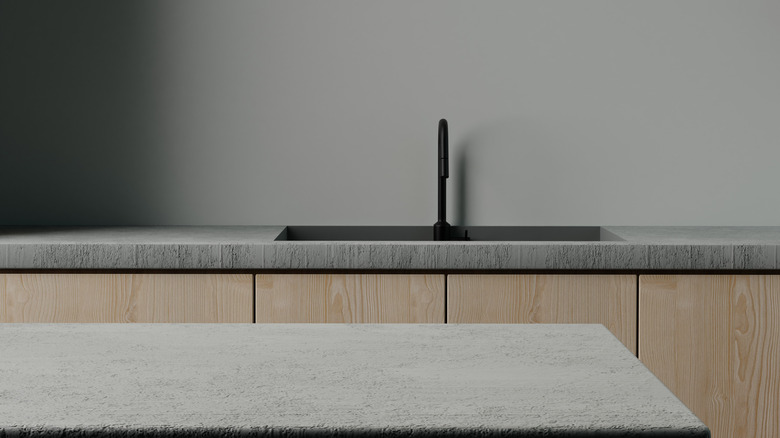
Some would argue that concrete kitchen countertops have their perks. "They're strong, weighty, and undeniably modern," interior designer Steven Cooper told Homes & Gardens. "There's also a handmade element to them, and no two pours of concrete are ever quite the same, which gives the surface a bespoke, one-of-a-kind character." But are they built for the long haul, or just a trend?
The concrete curiosity started in the 2010s when other sleek, pristine environments were enviable. It's safe to say that interest continued when Kim Kardashian's bare, neutral, and concrete Hidden Hills estate made the rounds on the internet in the early 2020s. But as is the case with other minimalist approaches, interest in concrete countertops has died down in 2026. Plus, they're quite difficult to maintain. "They sound cool in theory, but they are terribly porous, easily marked, chipped, scratched, and stained," interior designer Andrea Sinkin told Martha Stewart.
The installation is also likely to be pricey, and it's entirely possible you'll need cabinetry support for such a heavy material, adding to your costs. Due to the wear and tear it'll go through, you can expect shell out even more to seal your concrete countertop regularly. It just might be more demanding than the recipes you're whipping up.
Tiles are dated, not nostalgic
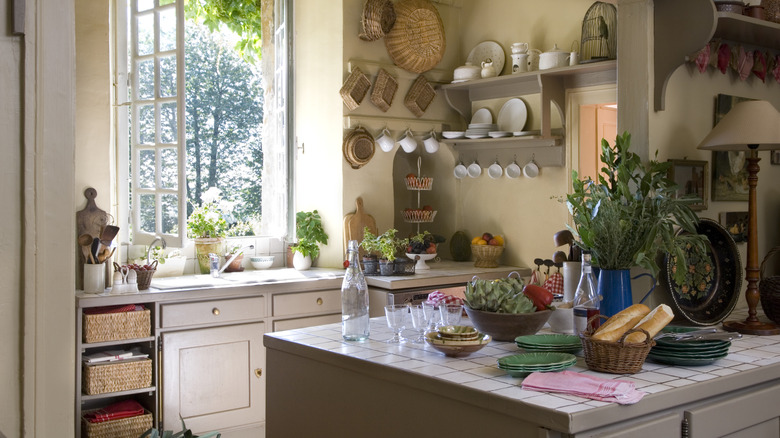
The '90s are making a comeback — from the re-emergence of Longaberger baskets and Grandma's doilies to pops of gingham and chintz accents. But the one dated feature that can stay in the past? Design experts agree it's tiled countertops in the kitchen. "Beyond the dated grid pattern, no one wants grout lines on a work surface," kitchen designer Cyndy Cantley told Better Homes & Gardens. "They stain, crack, and are notoriously hard to keep clean."
Nowadays, when a similar pattern is in question, the lines are more modernized and the texture strays away from the glossy material from back in the day. Should you want to consider a new form of tile countertops for your space, earthy tones and matte finishes are the best way to pursue the framework. If you have an old tile countertop that you can't replace, experts say let the quirky feature shine, but make sure your other style choices are tame in comparison.
Straight countertop edges are rigid
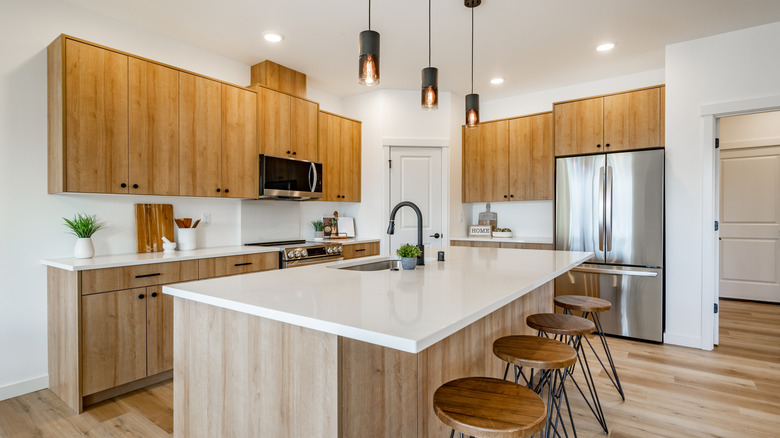
An '80s kitchen trend is heating up like the meatloaf and green bean casserole you're whipping up for dinner: curved edges. Straight edges on countertops and islands represent a sharp, utilitarian aesthetic that can make the kitchen feel closed off and uninviting in 2026, whereas curves soften things up and encourage gatherings by allowing the space to flow seamlessly. Now that eat-in-kitchens are making a comeback and kitchens are being seen as a place not just for prep but for meaningful quality time, they should be as inviting as possible.
"Rounded islands naturally improve circulation because people flow around them more comfortably, particularly in busy family kitchens," Ginger Curtis, founder of Urbanology, told Living etc. "They also soften the atmosphere psychologically — curved forms feel more relaxed and sociable than sharp corners and rigid geometry."