

Be Warned: This Ground Cover Is Like A Magnet For Ticks In Your Yard
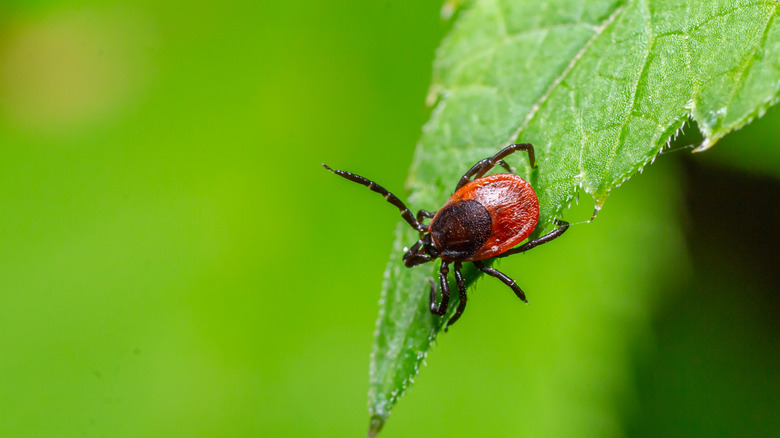
According to the CDC, an estimated 31 million people are bitten by a tick in the United States every year, with over 450,000 of those bitten contracting tick-borne illnesses like Lyme disease. And with the number of ticks expected to increase in the next few years, it would behoove you to think of ways to help naturally repel ticks from your yard. One common ground cover may already be acting like a magnet for ticks in your yard: ground ivy (Glechoma hederacea).
Also called creeping Charlie, ground ivy grows in dense green patches that can spread several feet and reach up to a foot tall. It prefers to grow under tree canopies, where it is cool, moist, and shaded. However, it's also a common lawn weed that will take over an area if it isn't managed properly. Owing to its invasive nature, it can choke out native vegetation and cause environmental damage.
But what does this have to do with ticks? Ground ivy thrives in and creates the same kind of environment ticks love. These densely shaded areas provide plenty of cover and humidity. Ground ivy also provides habitat for small rodents that serve as hosts for ticks. This makes creeping Charlie similar to common buckthorn (Rhamnus cathartica), another invasive tick-magnet plant that scientists are urging homeowners to remove.
How to manage ground ivy to reduce ticks
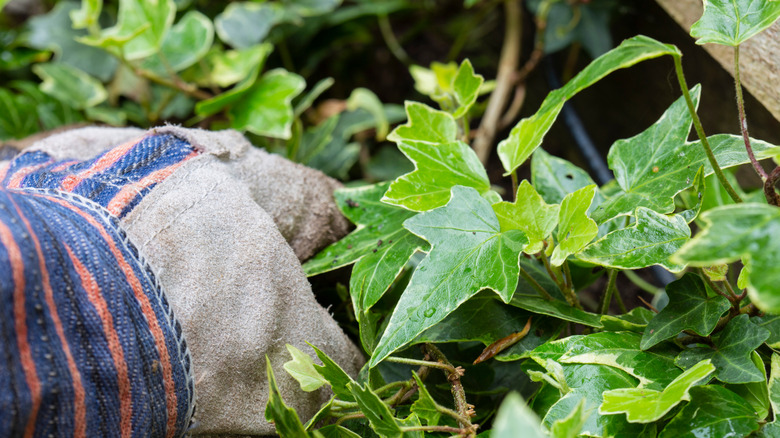
Owing to its invasive nature, managing creeping Charlie is best done by removing it altogether. First, however, you should check whether there are actually ticks in the ivy patch. To do this, make a simple DIY tool known as a tick drag using rope, PVC pipe, and a light-colored cloth. Drag it over the ivy to overturn the vegetation and catch any ticks that might be hiding inside. Once you're confident it's clear, remove the ivy by hand. Just be sure to wear tick-preventative clothing such as gloves and long sleeves.
Another way to keep ground ivy and ticks at bay is to create a barrier between them and your yard. One great way to keep ticks out of your yard is to use a common mulching material: wood chips. The CDC recommends creating at least a three-foot border between your lawn and the ivy. The wood chips act as a barrier that helps deter ticks from entering your property. You could even treat them with insecticide if needed.
Ground ivy can also be treated with a post-emergent herbicide, which can be applied directly to newly sprouted growth. Just make sure whatever product you use contains triclopyr, the chemical most effective at killing this broadleaf ivy and reducing its use as a tick hotel.