

Find Out If There Are Ticks In Your Yard Using A DIY Tool That's So Simple

We may receive a commission on purchases made from links.
Horror stories about ticks fill the internet these days, from the lone star tick's bite that can cause a dangerous meat allergy to the black-legged tick that spreads Lyme disease, to the American dog tick that causes potentially fatal Rocky Mountain Spotted Fever. You may already be tick savvy on hikes and outdoor adventures (preventative methods include using tick repellent made from essential oils and wearing light-colored clothing to easily spot these tiny bugs before they can dig into your skin). But you could have ticks hanging out much closer to home, posing a threat to pets and family members right there in your backyard. So, how do you know if you have a tick problem?
Scientists use something called a "tick drag" in their studies to collect ticks from suspected locations, and you can apply this same technology with a low-cost, DIY tool for your yard. A tick drag is just a large piece of light-colored cloth that you pull over tick habitats, like patches of tall grass. Any ticks around will grab onto this cloth, letting you quickly see what kind of infestation you may have.
While there isn't a state in the U.S. totally free of ticks, it doesn't mean your yard is crawling with them. Ticks need moisture and humidity to thrive, and are therefore less common in high elevations or arid climates. But if you've spotted some ticks on your pets or yourself and you worry they may be hanging around your home, a quick tick drag can let you know what level of problem you might have.
How to make and use a tick drag
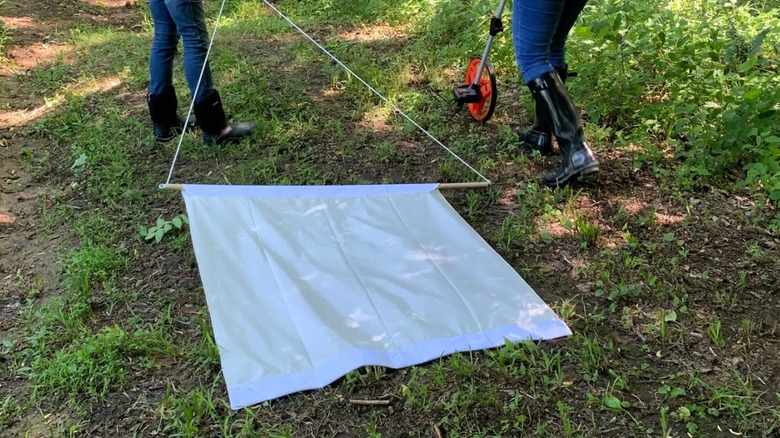
A tick drag works because it catches ticks where they are lying in wait, at the tips of vegetation where they sit poised to latch onto any prey that brushes past. Make your own drag with a few inexpensive supplies from the hardware or craft store. You'll need a long wooden dowel or piece of PVC pipe, some rope, a large piece of light-colored cloth, and some clips or tape. For the cloth, choose a corduroy or flannel material that ticks can easily grab.
The Illinois Natural History Survey Medical Entomology Lab publishes a handy guide on tick dragging. They recommend attaching fabric to your dowel using removable plumbing clips (like these Shark Bite clips sold on Amazon), but you can also simply use tape to attach your material. Tie your rope to each end of the wooden dowel or thread it through your PVC pipe, and then you are ready to drag. Adding weights to the end of the drag will help keep it from flapping around as you move it through the brush, but if you have a heavier cloth this may not be necessary.
Walk through your yard pulling the drag behind you so that it skims the top of any vegetation. Pause and check the cloth frequently. If your drag reveals a lot of ticks, you may need to invest in an effective pesticide to kill them. If only a few ticks show up, there are simpler things you can do to discourage ticks from your yard, like keeping your grass mowed short and introducing plants like sage and lavender, as the scents may keep ticks at bay.