

Help Keep Ticks Out With A Common Mulching Material
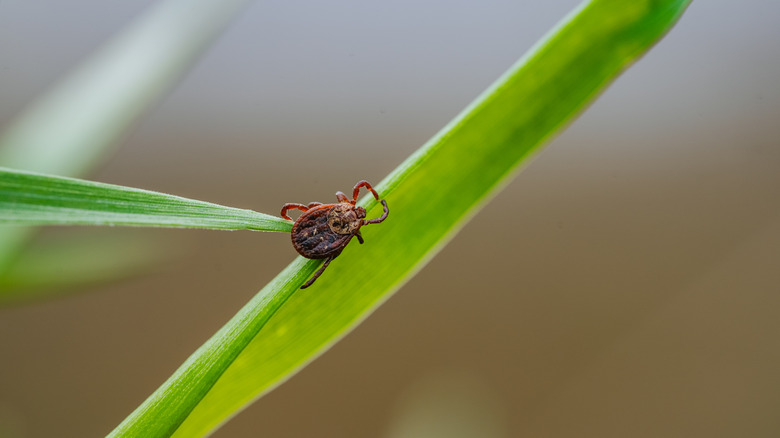
With summer and tick season in full swing, you'd be forgiven for having concerns about the populations of these insects and the horrific diseases they spread. In Canada and the United States, deer ticks and blacklegged ticks are common carriers of the Borrelia burgdorferi bacteria, which causes Lyme disease. If you're looking for ways to help keep ticks out of your yard and outdoor spaces, a popular type of mulch could be a big help. According to a recent study published in the Journal of Ticks and Tick-borne Diseases, simple wood chips could make a big impact toward reducing the amount of ticks alongside hiking trails. While this research focused on making trails through wooded areas safer, wood chips may help to protect your property, too.
The study, which was published in April 2026, tested both plain wood chips and wood chips treated with the insecticide deltamethrin. Field tests were conducted over a period of two years along trails in Ottawa, Canada, dealing primarily with the dangerous Ixodes scapularis ticks. Researchers found that both types of mulch were able to greatly lessen the amount of ticks present. While the pesticide-treated wood chips reduced the tick population by 99%, the untreated mulch lessened the insects' numbers by 48%. Based on this evidence, wood chips can be a valuable and inexpensive tool for protecting yourself from potentially harmful ticks.
How to use wood chips to help protect your yard from ticks
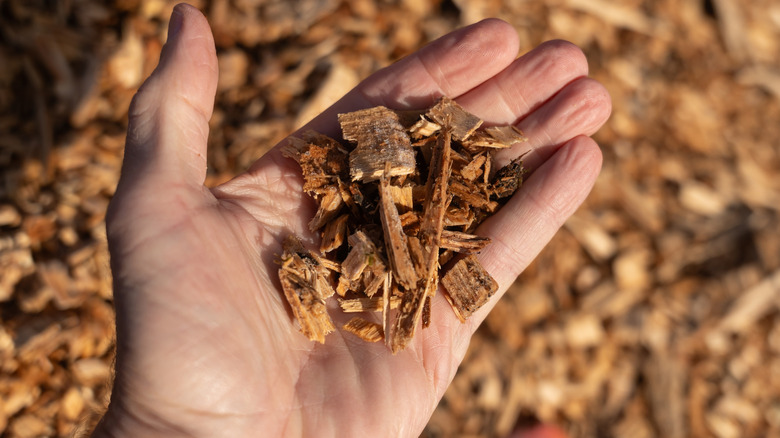
Wood chips are a natural solution to keep ticks out of your yard, and it's a rather easy method to implement in your own space. In the aforementioned study, the wood chip border along each tested trail was 1 meter wide and 5 centimeters deep. According to the Centers for Disease Control and Prevention, a similar application of a 3-foot-wide mulch border is effective for helping to prevent these nasty pests from waltzing onto your lawn. After acquiring your wood chips, spread them in a thick, wide border around your yard. This is a crucial step for separating your lawn from wooded areas, making it more difficult for ticks to enter your space. Lay wood chips around children's play sets or seating areas as well to add a layer of protection around the areas where you spend the most time.
While plain wood chips are still a good option, you could choose to treat them with deltamethrin. Insecticidal dusts and sprays containing this specific pesticide can be purchased and applied to your wood chip borders. Since these mulch piles are more of a preventive solution, it's still vital to take measures to deter these insects from your space — and always check yourself for ticks.
Things to keep in mind when deterring ticks with mulch
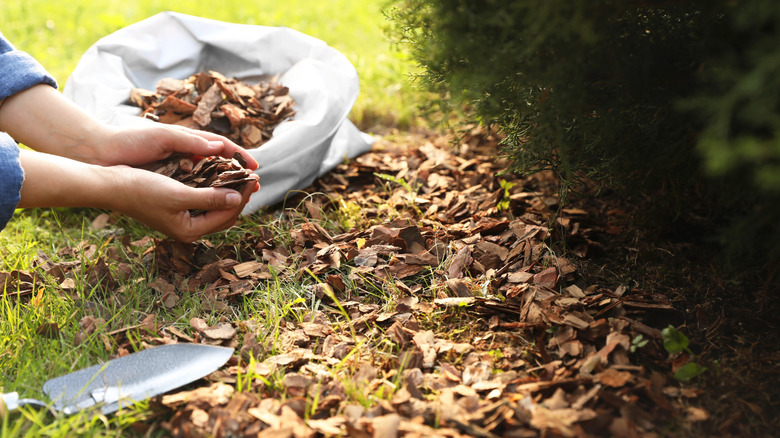
While the study utilized wood chips from ash trees, other types of wood chips, gravel, and even different kinds of dry mulch will also help to create a border that helps keep ticks away this season. For folks who struggle with high numbers of ticks invading outdoor areas, consider laying out more than 3 feet of wood chips. Expand the width of your border to up to 7 feet for a better barrier. Keeping your grass trimmed and cleaning up yard debris will also help to make your lawn less habitable for ticks.
If you plan to use an insecticide in tandem with your natural mulch, be sure to follow the package directions. You may be concerned about treated wood chips affecting your pets, but it's probably unlikely. The primary author of the previously mentioned study, Katarina Ost, told CBC Radio's Ottawa Morning that deltamethrin isn't a big risk for pets walking along the trail. She explained that this insecticide should stick to the surface of the wood chips. Since the chemicals shouldn't rub off when pets walk over them, she claimed it's a generally safe option. Still, those with curious children and pets should use caution when working with chemical insecticides.