

Help Keep Ticks Out Of Your Yard With An Easy DIY Solution
We may receive a commission on purchases made from links.
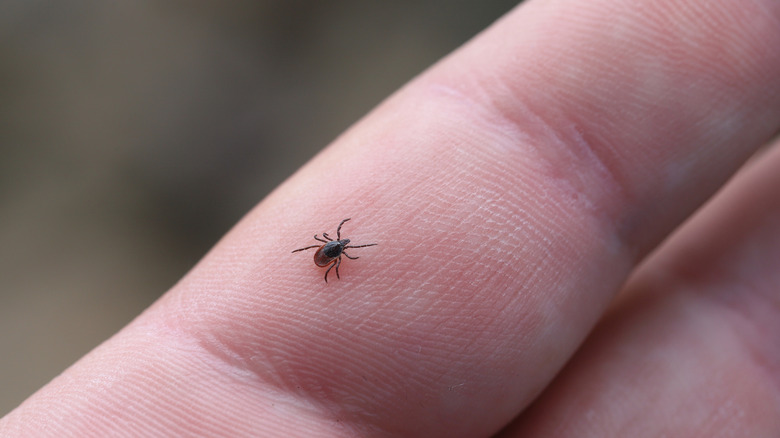
Sometimes, the best course of action is direct. If you spot a tick on yourself, a pet, or another family member, the best thing to do is immediately remove it and flush it, or wrap it in tape to destroy it. To keep ticks from climbing on you, you can make a DIY repellent using essential oils. In other cases, indirect action is the way to go. Rather than wait for the ticks to come near you, take steps to disrupt their life cycles and keep them far away.
Homemade tick tubes are an inexpensive and simple way to control ticks and keep them from getting into your yard or on your person. The tubes work by enlisting the help of animals many often consider to be pests: mice. You fill empty toilet paper tubes with cotton or dryer lint that has been soaked with permethrin, the most effective pesticide against ticks. Mice take the cotton or lint from the tube to build their nests. Along the way, the permethrin rubs off on their fur, killing any ticks that would otherwise try to hitch a ride.
While permethrin is toxic to ticks, it's generally safe for people and most mammals. However, it can be toxic to cats if the permethrin used has a concentration greater than 5%. To be safe, avoid this DIY if cats roam in your backyard. Use caution when handling permethrin and always follow the directions on the packaging. Wear gloves, a mask, and eye protection when building your tick tubes. Note that pre-made tick tubes, such as Thermacell Tick Control Tubes exist, but building your own is simple and considerably less expensive.
How to build tick tubes
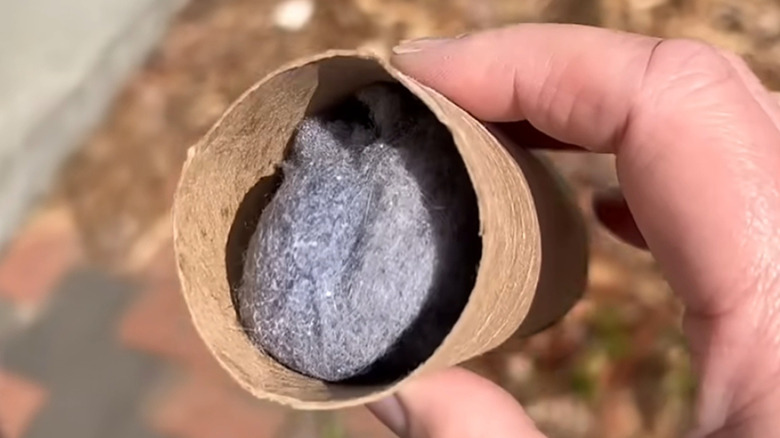
Put on your gloves, mask, and eye protection and spray either cotton balls or dryer lint with the permethrin. When the lint or cotton is thoroughly dry, push it into the toilet paper tubes, filling them about two-thirds of the way full but leaving space on each end so mice or other small rodents can enter the tube. If you've been saving your toilet paper rolls, this project is a great way to use them up. But, if you don't have any lying around, you can cut empty paper towel rolls in half, cut up the inner tube from wrapping or contact paper, or use a 6 to 8-inch length of PVC pipe instead.
Repeat, filling as many tubes as you think you need, based on the size of your yard. Place the tubes in areas where mice typically go, such as near garden beds, sheds, or other structures. Keep an eye on the tubes. You should be able to see if mice or other rodents are taking the cotton or lint out of them. If not, reposition the tube to another spot in your yard after a few weeks.
How long will it take before you see results? You'll likely notice a reduction in the number of ticks within a season. Also, mice are likely to increase their use of the tubes as time goes on. So, be sure to refill the cotton or lint every so often.