

The Fast-Growing, Flavorful Herb You Should Plant If You Like Rosemary
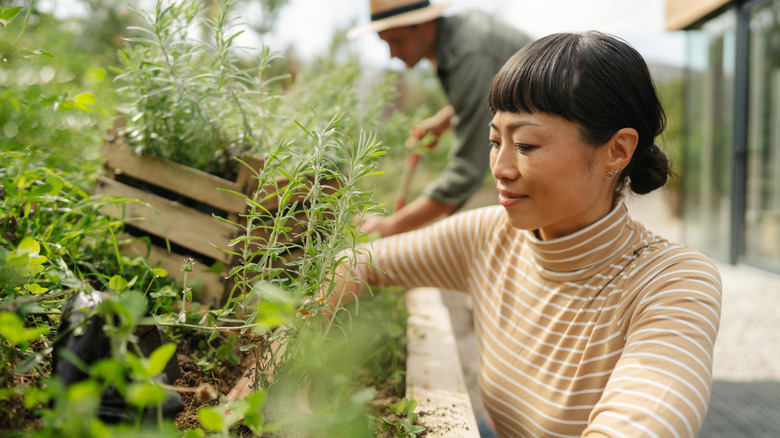
Rosemary (Salvia rosmarinus), with its spiky stems and strong, distinctive aroma, is an ideal herb to grow for beginner and more experienced gardeners alike. The herb has few needs in the garden, and as long as it has enough sun, you can basically plant it and (almost) forget it. That said, giving rosemary a few companion plants can help it thrive even more, and can enhance your garden.
If you can't get enough of rosemary's scent or flavor, another easy-going, aromatic herb to add to your garden is thyme (Thymus vulgaris). While they may be night and day when it comes to looks, rosemary is tall and spiky, and thyme is low-growing with tiny leaves — the two herbs have a lot in common. Both are members of the mint family. Both need full sun and can tolerate drought. And both are prominent players in Mediterranean-style cooking and herbs de Provence blends.
Grow rosemary and thyme together in a herb garden on your kitchen windowsill or outdoors in a raised bed or containers. One notable difference between the two herbs is their hardiness zones. Rosemary is hardy in zones 8 through 10, while thyme is hardy in zones 5 through 9. If you're in a cooler zone, you may need to grow both of the herbs as annuals or bring them indoors to overwinter.
How to grow thyme
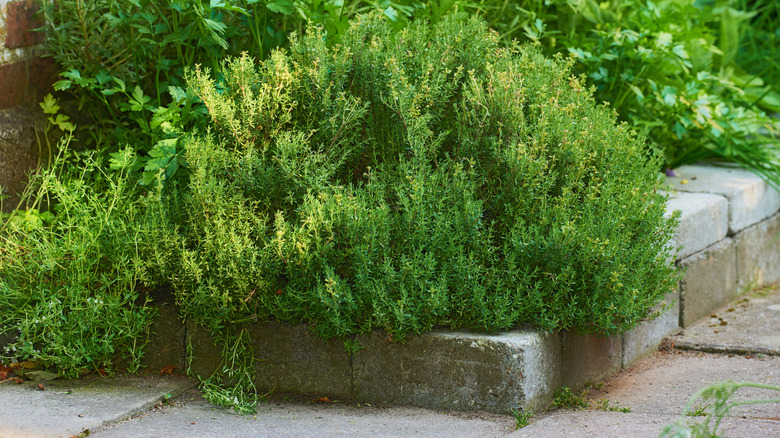
Thyme, like its buddy rosemary, is an herb to start from a seedling, rather than from seed. Its seeds can take up to four weeks to germinate, and even then, you may not get the results you want. Purchase a seedling from a nursery or regrow the seedling using a cutting from someone who already has an established plant.
If you're going to plant thyme with rosemary, place the thyme in front, as it has a low, mounding growth habit. Choose a garden spot that gets at least six hours of direct sunlight daily. For container-grown thyme, choose a soil mix that drains well. You may consider adding perlite to the mix or to the soil in a raised bed to further improve drainage.
As for watering, it's better to err on the side of too little rather than too much. Both plants barely need watering after they've been set in the garden. The thyme and rosemary flowers attract pollinators to the garden and can add pretty color to the space. However, if you plan to use the herbs for cooking, harvest their leaves before the flowers bloom, usually in the spring.