

20 Perennials To Plant In March For A Color-Packed Spring Garden
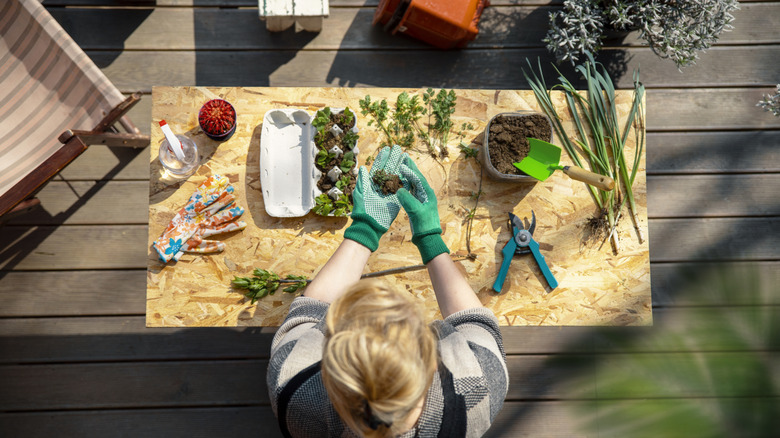
March is the month when gardeners finally get to scratch the planting itch they've been having all winter. While the beginning of March is usually quite cold, by the middle and end of the month in many USDA climate zones, it is warm enough to get some plants in the ground. If you're working to establish your first garden, or are looking to add more to the garden you have, planting some sturdy perennials in March is an excellent way to ensure you get a color-packed spring garden year after year.
Different from annuals, which grow and die within the span of a single planting season, perennials are a collection of flowers, vegetables, trees, herbs, and shrubs that will return with vigor year after year. Perennials are great for setting up a low-maintenance, sustainable garden that will last a long time, improve the health of your soil, and bring a whole host of beneficial pollinators buzzing to your yard. And doing so in March allows your perennials to establish their roots so that they're ready to bloom come late spring and summer.
Whether you're interested in growing a number of different roses, attract butterflies with tall coneflowers, create vibrant ground cover with creeping thyme, or plan on going old school with classic daffodils, all of the following 20 perennials are guaranteed to bring amazing color to your garden season after season.
Roses
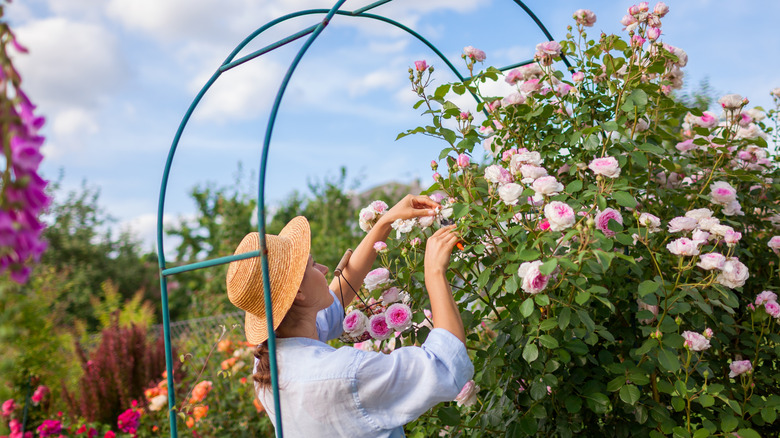
If roses (Rosa spp.) are notoriously finicky to prune, they can be even trickier to plant at the right time. If you live in USDA climate zones 7 and 8, you can count on March air and soil temperatures being warm enough to plant bare root roses without any issue. March also aligns with when roses naturally break their dormancy, and, with the softer soil, they have plenty of time to get their roots established before the more intense temperatures of summer arrive. For color, choose a Lady of Shallott or Gabriel Oak from David Austin.
Azaleas
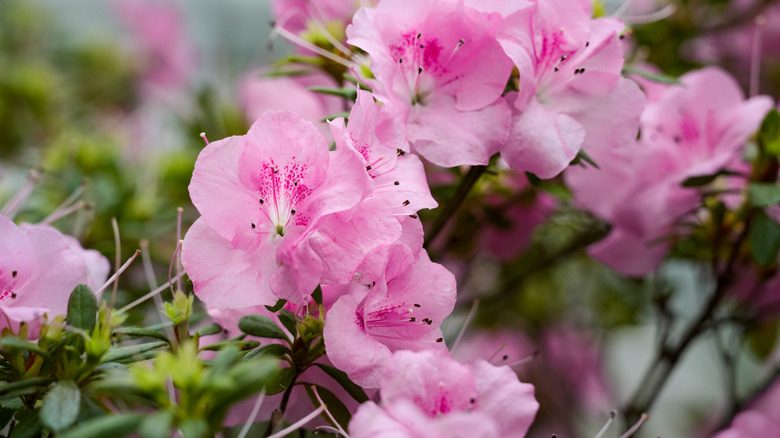
When it comes to azaleas (Rhododendron spp.), you have no shortage of color. Arguably, the best for any gardeners who want to bring wisps of pink set against deep green foliage into their yard would be the R. 'Gumpo Pink'. Hardy between zones 5 and 9, the best time to plant azaleas would be early springtime in mid-March, as the ground is soft enough for the roots to establish themselves before blooming in summer. There is some debate over whether azaleas are annuals or perennials, but since they flower every year, we'll count them as the latter.
Black-eyed Susans
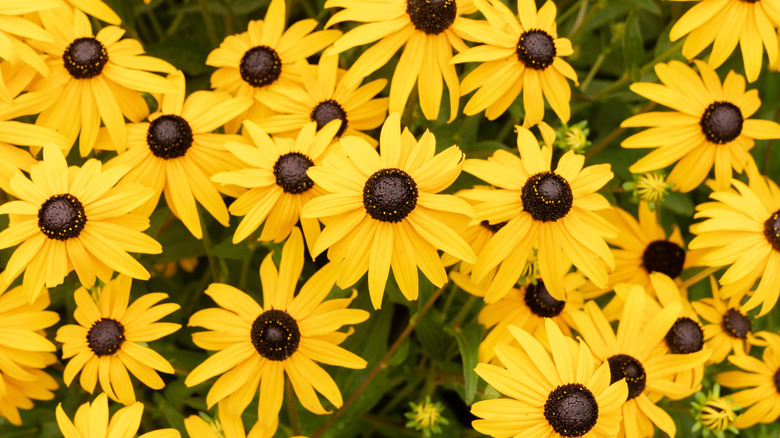
They might not look it with their thin green stems and delicate yellow petals, but black-eyed Susans (Rudbeckia hirta) are among the toughest and longest lasting perennial flowers out there. A member of the daisy family, black-eyed Susans can be grown in hardiness zones 3 to 9. Owing to this widespread adaptability, seed starting black-eyed Susans should be done in early March, or six to eight weeks before your last frost date. Once the threat of frost has passed, you can bring your new plants outside and plant them in an area that gets plenty of sun to ensure proper soil temperature.
Coneflower
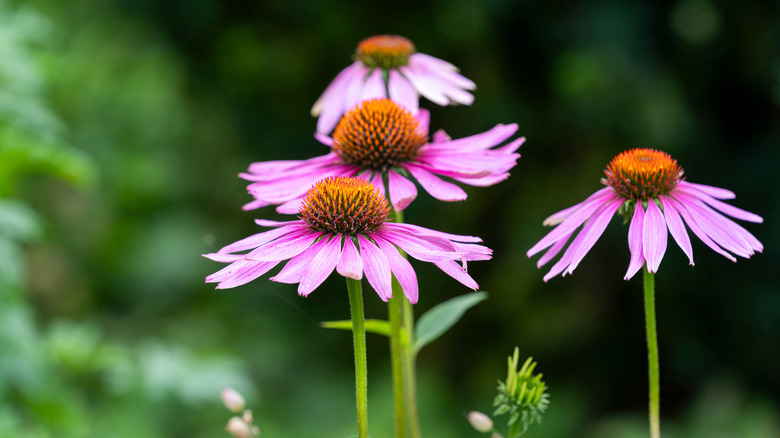
Another member of the daisy family that is hardy between the colds of zone 3 and the heat of zone 9, coneflowers (Echinacea spp.) should be on the list of anyone looking to build the perfect cottage garden. Preferring full sun and well-drained soil, planting coneflowers in March is essential for them to establish their roots. This is done in the cooler soil temps of spring to prevent stressful transplanting in summer heat. Once planted, these perennials need very little looking after, though blooms from seed-started plants should not be expected for a few years.
Creeping thyme
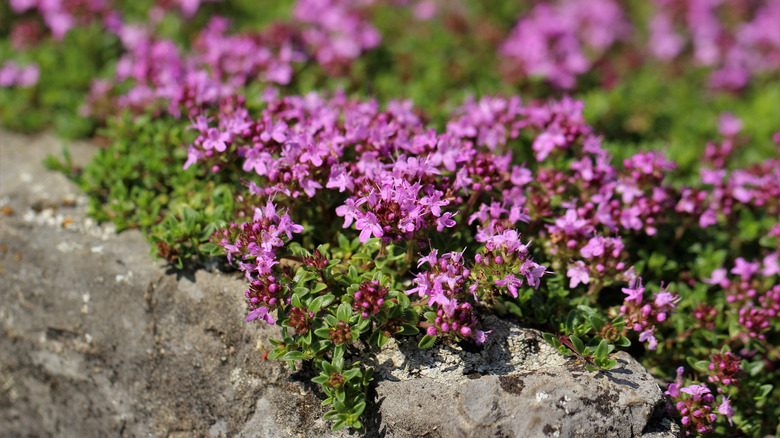
Anyone looking to plant a ground cover crop that is going to be both easy to care for and absolutely beautiful to look at would do well to sow some creeping thyme (Thymus serpyllum). Only growing about 2-3 inches off the ground in a sunny spot, creeping thyme will spread across an area and provide a stunning ground cover of green foliage and pink or purple flowers. Hardy from zones 4 to 9, late March is excellent for sowing creeping thyme seeds, as temperatures will likely be above the minimum 60 degrees requirement.
Hollyhocks
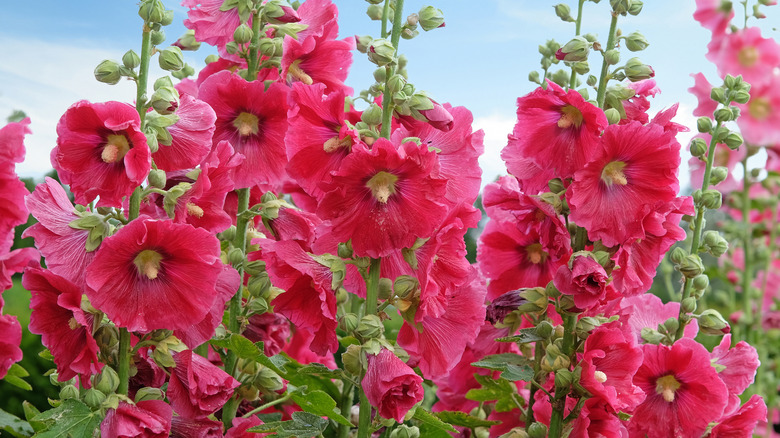
While hollyhocks (Alcea rosea) are technically a biennial, which is neither an annual nor perennial but instead has a 2-year cycle, we're including them on this list because of the fact that, once planted, they will self-seed and can absolutely transform any bare garden space. Hardy between zones 3 and 8, the best time to plant hollyhocks would be in March, when the threat of frost has passed. This date differs depending on the region, so be sure to check your zone and upcoming forecast before planting these tall, exceptionally colorful flowers.
Delphinium
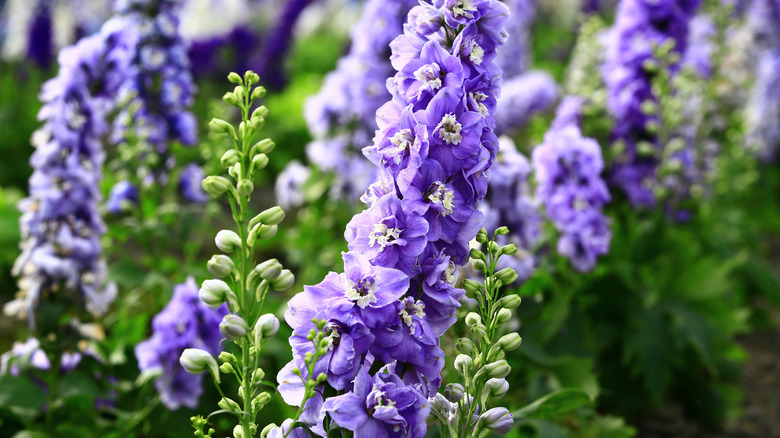
Though commonly referred to as larkspurs, delphinium flowers can actually be sown in the wintertime as insurance for a garden bursting with spring blooms. Hardy between zones 3 to 7, these naturally blue flowers can actually be started inside 10 weeks before your last predicted frost date. For the upper end of the hardiness zones, this will be sometime during late winter or early spring. As soon as the cold temps are down in March, get delphiniums in the ground, as it provides them with optimal cool soil temperatures and plenty of time to get their roots established before blooming later in the season.
Lupine
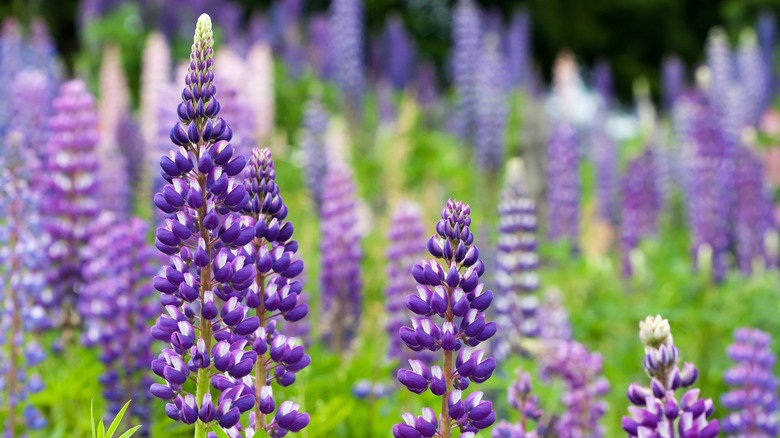
While lupine (Lupinus spp.) does better when allowed the opportunity to overwinter, you can still plant the seeds in early March if you want to get their tall, colorful flowers up out of the ground. Owing to the fact that they have a tough seed coat, it'd be best to soak the seeds for at least 24 hours before planting. Since they grow with long taproots, lupines prefer direct planting over transplanting, so this system is not disturbed. Once the soil has warmed up some, scatter your seeds, tamp them down, and leave them to grow.
English lavender
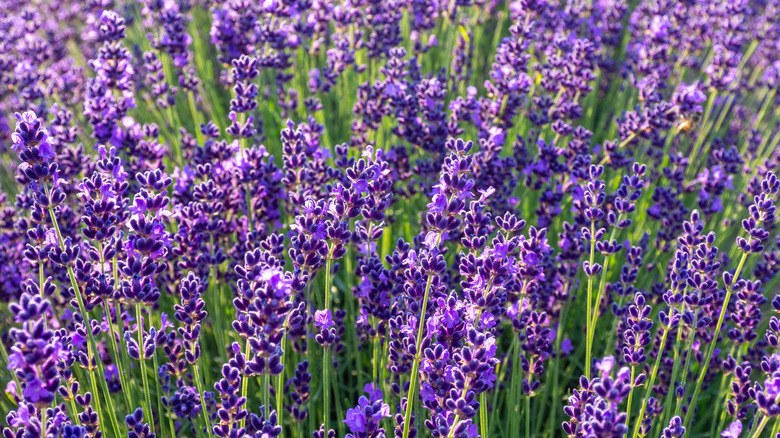
Of all the species of lavender (Lavandula spp.) that can be grown in your herb garden, by far the most cold-hardy is English lavender (L. angustifolia). With a growing range between zones 5 and 10, English lavender can be sown in March to allow the roots time to establish and begin to grow as the temperatures warm up. This needs to occur once the frost has passed, so check your zone for the last predicted frost date. Though it does like warm weather and sun, planting English lavender in the summer could be too stressful due to the heat.
Sweet alyssum
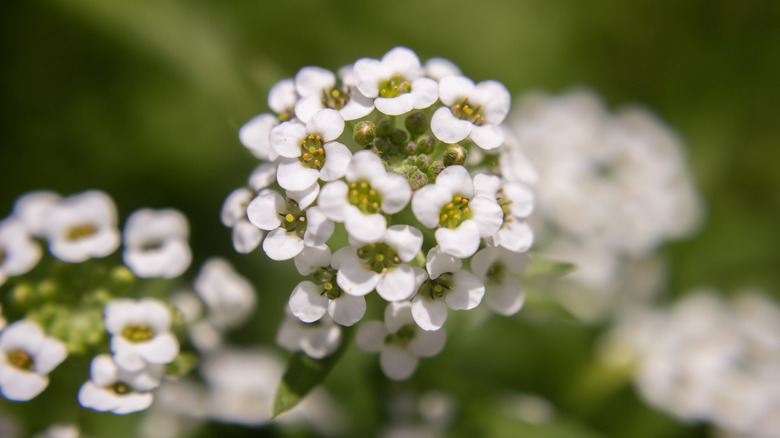
Among the fastest-growing flowers from seed to bloom, sweet alyssum (Lobularia maritima) will pop up from the ground about eight weeks after being planted. Able to grow between hardiness zones 2 to 11, these short white flowers have an incredible range, and prefer being planted in cooler weather owing to the fact that they will wilt in high heat. March is the perfect time of year to plant sweet alyssum, thanks to the cooler temperatures and gentle warming. Just be sure to plant as soon as the frost passes.
Tickseed
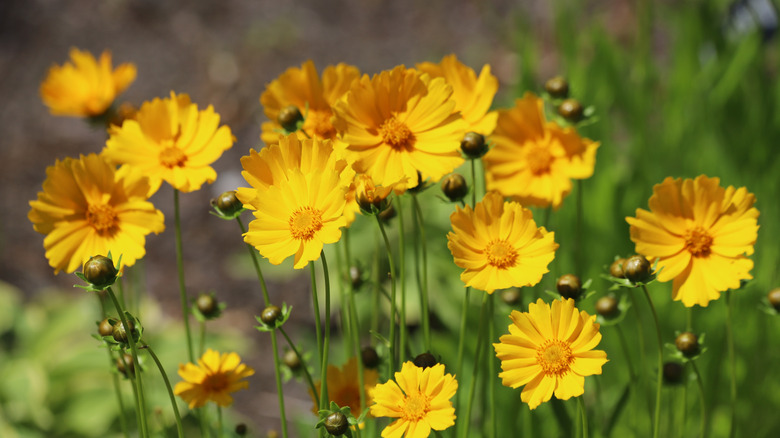
Don't worry. In spite of its evocative name, tickseed (Coreopsis spp.) doesn't actually attract ticks. Instead, it brings far more beneficial pollinators into your yard, like butterflies and bumblebees. And, even better, these bright yellow flowers prefer to be planted in March so they can spread their joyous color to the rest of the garden. Though hardy between zones 3 and 9, tickseed can only be planted outdoors in March in warmer zones where the soil is workable. Otherwise, start seeds indoors six to eight weeks before your final frost date.
Joe Pye Weed
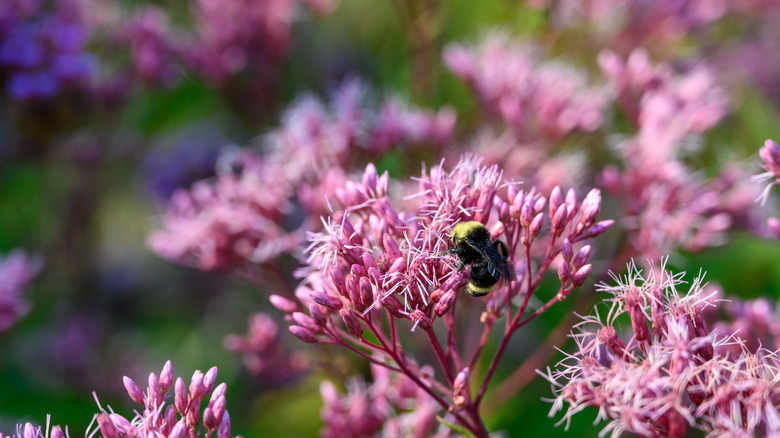
Owing to its status as a sturdy perennial wildflower, Joe Pye Weed (Eutrochium maculatum) will be guaranteed to return to your meadows or flower beds year after year. Its characteristic purple flowers are set on thick stems bursting with great green leaves. You can start seeds indoors six to eight weeks before your last frost date, making March a great planting time for those living on the colder end of the Joe Pye weed 4 to 9 range climate zone because they need cold stratification in order to germinate. Later in the month, once the soil is workable, the starts can be easily transplanted.
Hardy geraniums
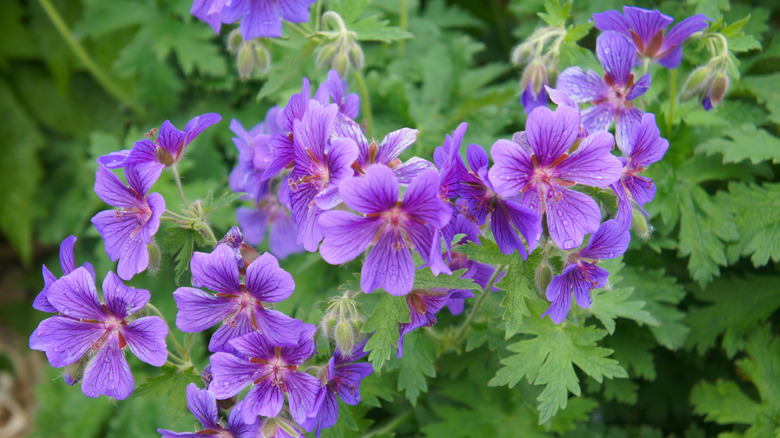
Hardy geraniums (Geranium spp.), also known as cranebills, are among the most long-lasting and versatile of all geraniums. Certain varieties, such as G. 'Rozanne', G. pratense 'Splish Splash', and G. pratense 'Double Jewel', are excellent for planting in March and can be grown in hardiness zones down to zones 4 and 5. The reason early spring is good for these plants is that they need to establish their roots before blooming in the summertime. This way, once the warmer temperatures hit, the roots are ready to produce flowers.
Daffodils
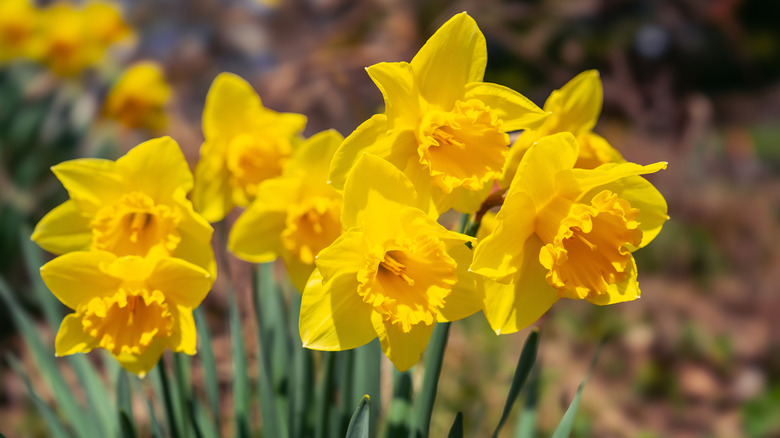
There are a few things that scream spring more than daffodils (Narcissus spp.), exposing their beautiful yellow blooms to the sunshine. Typically, you want to plant your daffodil bulbs in the fall so that they have time to stratify over winter and emerge in the spring. However, you can plant these perennials in March, but it is the final time of the year to do it. Earlier in the month is better so the daffodil bulbs are exposed to the cold. You likely won't get any blooms this first spring, but you can all but count on them to appear the following year.
Sneezeweed
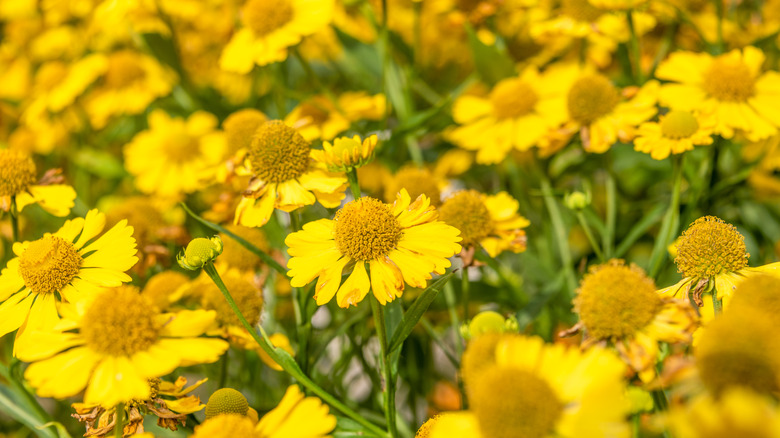
Though they tend to bloom in late summer and into fall, planting sneezeweed (Helenium autumnale) in March is a great way to ensure that their colorful blooms do arrive in time for you to enjoy them. These flowers can be sown into warm soil towards the end of the month; however, they do much better when sown in pots six to eight weeks before your final frost date. They will germinate in a few weeks and showcase their grand blooms in summer.
Painted daisies
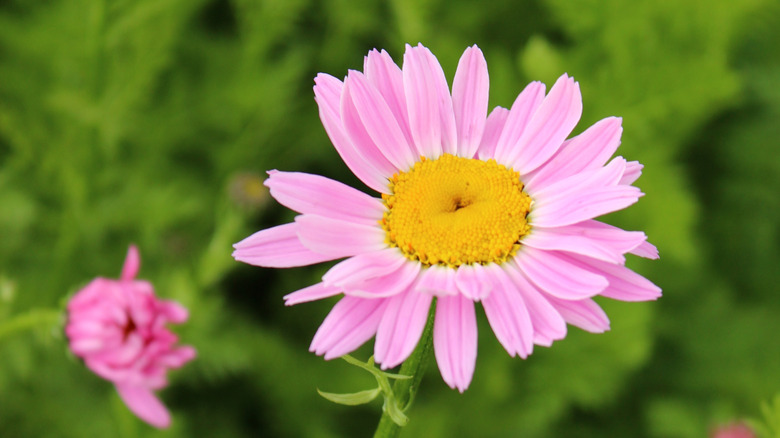
When planted in dense clusters, painted daisies (Tanacetum coccineum) can grow out to 3 feet high and 2 feet wide when planted in areas that get a good amount of sun. Able to thrive in zones 3 to 7, painted daisies are ideal candidates for seed starting in early March, then transplanting once the threat of frost is long gone. Like other plants on this list, allowing painted daisies time to establish their roots and naturally warm with the seasons is going to be the best way to ensure colorful blooms of pink, red, and white later on.
Yarrow
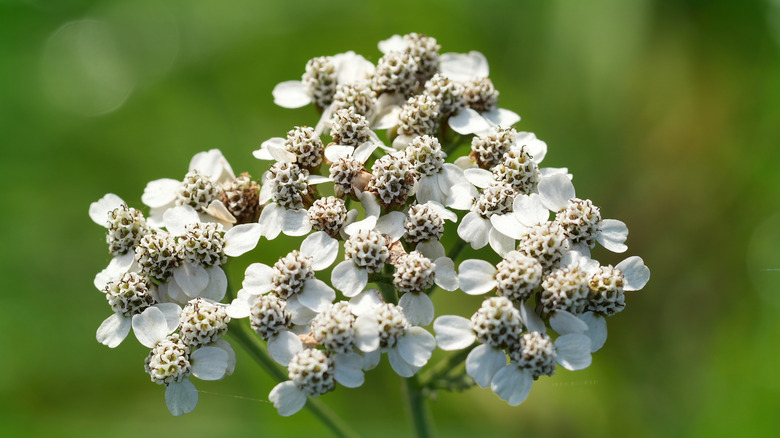
It is important to make sure that you are checking your calendar not only for fair weather conditions, but also for your last frost date. In upper climate zones, this can happen in March, making it a great time to plant some yarrow (Achillea millefolium). Though hardy between zones 3 to 9, you can really only plant yarrow in the ground in the upper zones. Otherwise, it'd be best to start them in pots many weeks before your final frost date. When you do plant them in the ground, make sure it's an area with well-drained soil and plenty of sun.
Masterwort
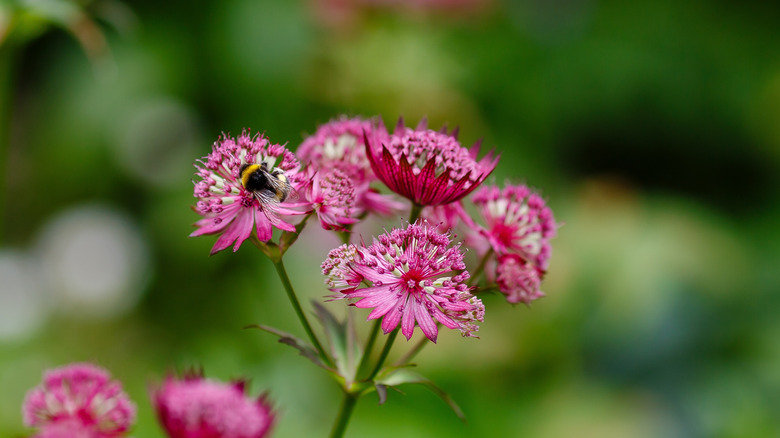
Native to grasslands, wood sides, and sunny meadows, masterwort (Astrantia major) is a sturdy perennial with bright, but small, purple flowers. It grows best in areas that have rich, loamy soil, and will thrive in climate zones 4 to 9. In terms of planting, early March is ideal for seeds you've started during the winter. They need cold stratification in order to germinate, so leaving them outside as freshly planted seeds is ideal. You can put them in the ground later in the month in warmer zones after frost fears are past.
Blue flax
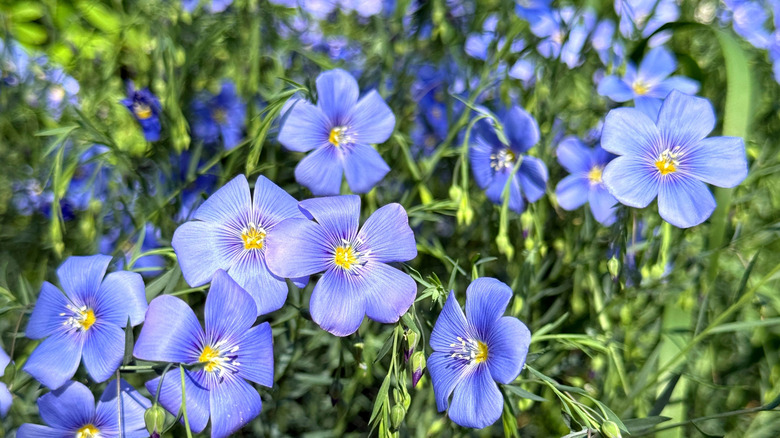
When planted in close proximity, blue flax (Linum perenne) will create a great ground cover spread that showcases the small, bright blue flowers. In terms of planting, later in March is ideal for the warm air temps and cooler, moist soil. You can simply spread the blue flax seeds directly onto the soil without having to worry about covering them. So long as the soil remains damp, you should see the blue flax flowers popping up in no time. They can be grown in hardiness zones 5 to 9.
Bellflower
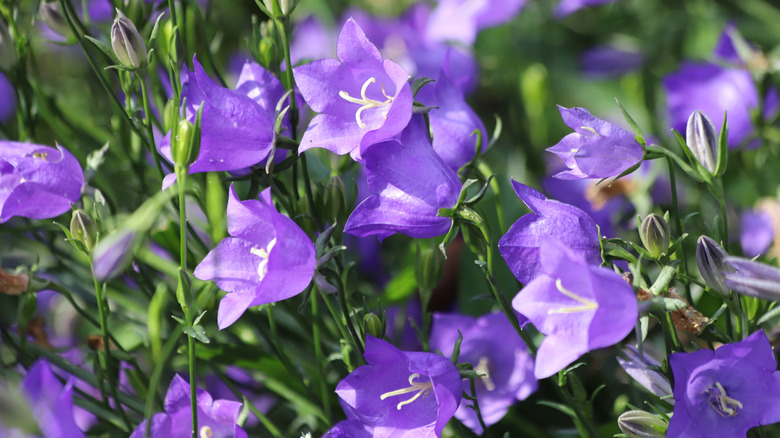
There are two ways you can go about planting bellflower (Campanula spp.) to ensure that you have good color come springtime. You can plant them prior to the last frost in the fall to allow them to establish their roots before winter. You can also plant them in pots four to six weeks before the final frost date and then plant them in the ground later in March. As the soil and temperatures warm, the roots will grow and be ready for blooms come late spring and summer. These will grow in hardiness zones 4 to 9.