

The 9 Best (And Easiest) Ways To Keep Your Bird Bath From Freezing This Winter
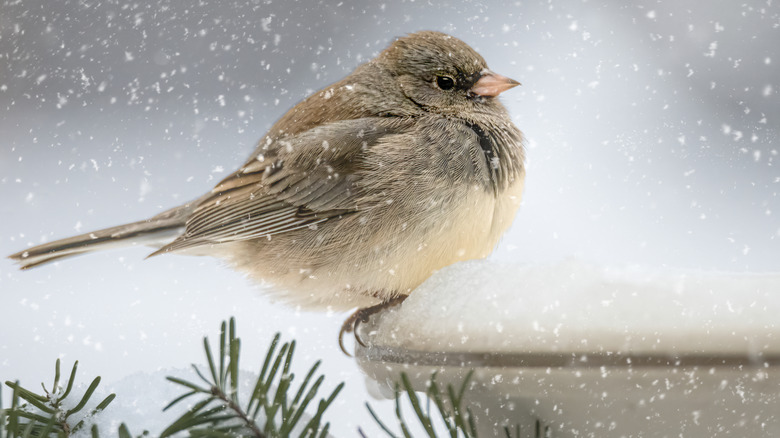
Winter is a difficult season for all wild animals, especially your local songbird population. While there are plenty of cold-hardy birds like cardinals, tufted titmice, blue jays, and juncos, the cold weather still makes their typical routines difficult. Nowhere is this more true than your bird bath. The birds come looking for a refreshing drink or to bathe, and they find an ice rink instead. And while you may think that it is useless to try to keep your bird bath from freezing during the winter, there are actually some pretty easy methods you can implement to keep it from happening.
Apart from feeders, bird baths are one of the best methods of getting loads of beautiful, twittering song birds to visit your yard. Birds need water in order to properly clean themselves, and having a bird bath incorporated into your landscaping will help keep your local songbird population healthy and hydrated. This is true all year round, even in the winter.
In order to keep your birdbath from freezing, you are going to need to prepare it for the winter and keep an eye on it over the season. The key to keeping your bird bath from freezing is consistent care, as well as having a few tricks up your sleeve to prevent the water from freezing at all.
Choose the right kind of bird bath
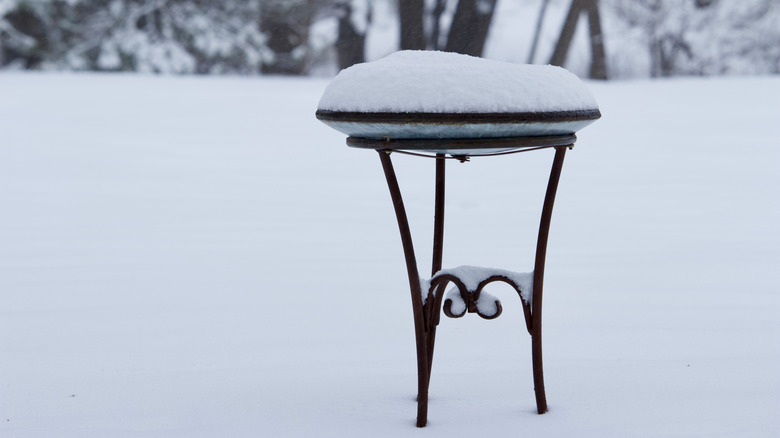
When choosing a bird bath for your yard, it is important to make sure you are purchasing one made out of the right materials. While you could go through the trouble of making yourself a DIY bird bath, most of us are going to be purchasing bird baths from local garden centers or hardware stores. As such, knowing what materials will hold up over the winter is the first step in ensuring that your songbird friends won't be chipping away at ice all season.
In terms of weather-resistant material, you are best off with bird baths made out of metal, heavy-duty plastics, or resins. These are least likely to crack from the consistent freezing and thawing of the water inside the basin itself. This stands in stark contrast to bird baths made from glass, concrete, or stone. Water can find its way into the smallest of cracks. When it freezes, it expands and can make those cracks even larger, compromising the structural integrity of the bird bath and potentially even causing it to break.
Now, if you prefer the aesthetic look of the stone or concrete, you can always have one for seasonal purposes. Just swap it out in the winter for a bird bath made from the materials we just described, and you should not have a structural problem if the water freezes.
Keep surfaces dark
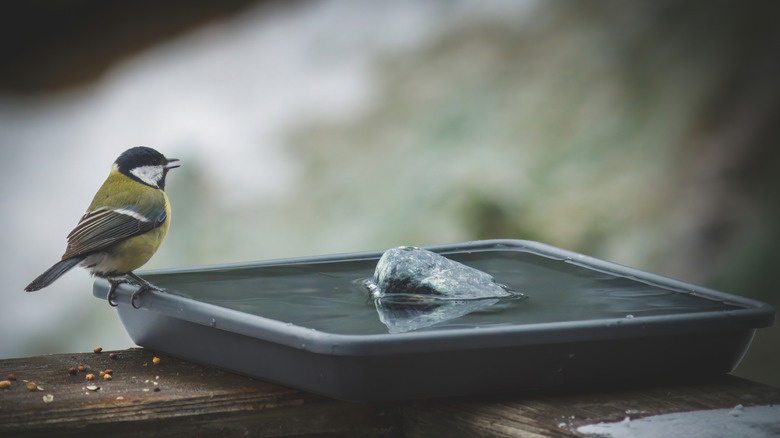
Another reason you will want choose a metal or reinforced plastic bird bath over a concrete one is that they come in a wider array of colors. Opt for darker ones, as they do not reflect light, meaning they absorb more heat. This is why a darker-colored car is more likely to be blisteringly hot during the summer. Darker-colored bird bath materials can also keep the water in your basin from freezing.
However, if you only have a stone or concrete bird bath, there are still ways you can incorporate darker colors into the basin. One of the best ways is to line the bottom of the basin with dark stones. You could also use a black plastic lining to achieve the same heat absorption effect, only it won't look as aesthetically pleasing.
It should be noted that while this is going to help prevent freezing, it won't stop it permanently. A lot depends on where you live and just how cold your winters get. In milder climates where winters only occasionally dip below freezing, this is a perfect solution. If you live in, say, deepest Alaska or northern Idaho, this isn't going to do the trick.
Location matters

Just as in real estate, what really matters about your bird bath is location, location, location! Now, in the spring and summer, when the bath is most active, it is important that you place your bird bath in a correct, shaded location. This provides the cool, protected atmosphere the birds prefer, and you'll end up seeing sizable crowds of birds make their way to the bath. In the winter, however, you need to think exactly the opposite.
In order to maximize what little sunlight you manage to get on a winter's day, you need to place your bird bath in the sunniest spot in your yard. For those in the Northern Hemisphere, this is going to be the south side of your yard. Even in colder temperatures, the light emitted from the sun is going to do its fair share of thawing. The more sunlight you can concentrate on your bird bath, the better.
It would also be wise to make sure that there is a decent windbreak to protect your bird bath. If you can find an area with plenty of sun that is protected from winds by a few trees or garden infrastructure, this will help prevent snow from blowing over into your bird bath, and from freezing winds making keeping the water thawed more difficult.
Keep the water moving

Have you ever gone for a walk along a river in the wintertime and wondered why it hadn't frozen completely? While rivers may have some small ice from across the top, they will never freeze completely. This is because the natural flow of the river keeps the water moving, meaning that it will never be able to reach a consistently low temperature that will cause it to freeze. This is a principle you can apply to your bird bath.
If you already have a fountain attachment on your bird bath, it might be enough to keep it from freezing, depending on how cold the winters get in your location. You can also purchase some kind of bird bath wiggler or agitator that will keep the water inside the basin moving constantly.
Because the area of a bird bath is so small, you really only need gentle agitation to keep it from freezing if your winters aren't too harsh. However, any place that sees temperatures constantly dipping well below 32 degrees Fahrenheit is going to require different methods to keep the water from freezing.
Use an ice breaker
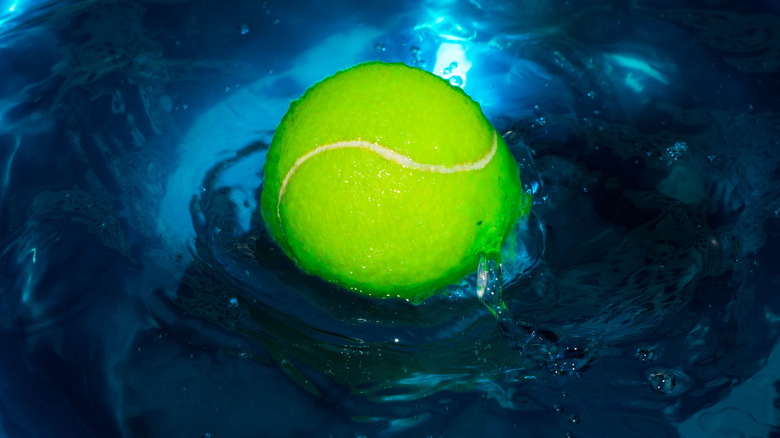
This trick is similar to the last one in that its purpose is to keep water moving, but it also breaks up any ice that might be starting to form. The term "ice breaker" is synonymous with those enormous ships that sail through Arctic waters breaking ocean ice apart as they move along. While you can't fit one of these ships in your bird feeder, the theory remains the same.
The idea of having an ice breaker in your bird bath is to have a floating item that will move around in the water, agitating it and breaking up any forming ice. In some cases, this can be a ping pong ball, or if your basin is deep enough, a tennis ball. The wind will do the work of keeping the breaker in motion, which will then keep the water moving enough to not freeze entirely.
Once again, however, we have the issue of geographical applicability. No ping pong or tennis ball is going to keep the water in your bird bath from freezing if you live somewhere that sees incredibly cold winters year after year, like New England or Minnesota. Still, if you live in milder climates where freezing is not consistent, then this trick will be more than sufficient for your needs.
Invest in heating
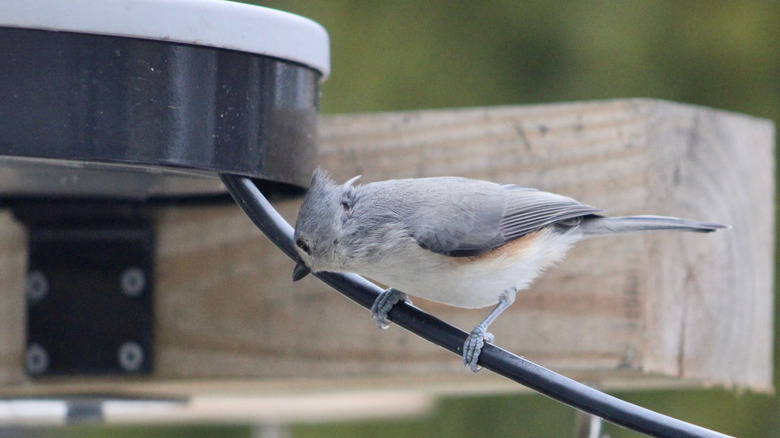
This one should come as a no-brainer for anyone who lives in the colder climates we've been mentioning. Having a heated bird feeder is going to be an absolute game-changer in the winter. You won't have to worry about the water freezing, and you will provide an excellent place for your winter bird population to stop for a drink or a bath.
That being said, there are a few different directions you could go with heated bird baths. You could make an upfront investment and purchase a bird bath with an integrated heating system. These are all-in-one units that are easily moveable and don't require any additional equipment to operate. However, if you own a bird bath you already like, you can purchase any number of smaller water heaters that are easily portable and can connect to your home power grid.
Depending on the type of heater you have, you can control the temperature of the heater via a thermostat. This is beneficial, as it will be good for your bird friends to not have water that is too hot for them to drink or bathe in.
Refill constantly
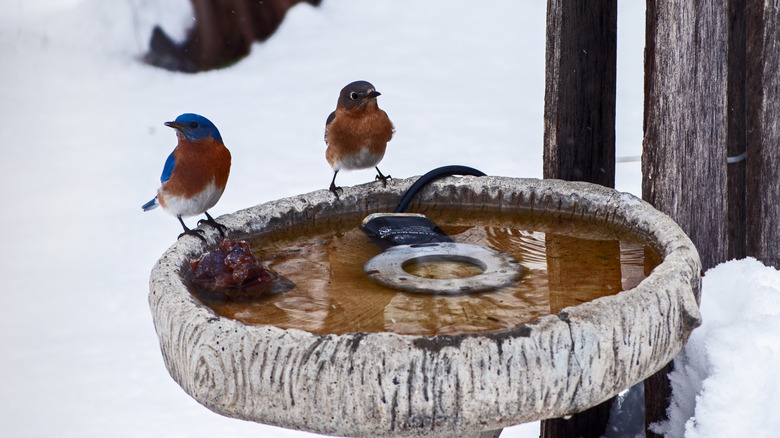
Another way to prevent your bird bath from freezing is to constantly check it for ice throughout the day and fill it with warm water. This will keep the bath at a consistently warmer temperature, so the cold air outside won't be able to freeze the water completely.
It's important that you use warm water as opposed to boiling hot. Adding boiling water to a frozen bird bath can cause the ice to thaw too quickly. This can lead to fractures in the concrete or stone, and even shatter glass in some cases. If you can, remove any ice before you refill your bird bath. Otherwise, the warm water will provide a gentle thawing that will likely be aided by any sunshine in the vicinity.
The consistent fresh water will also serve as a health benefit for the birds. Water that is allowed to become stagnant can carry disease and parasites, neither of which you want invading your local bird population.
Insulate your bird bath
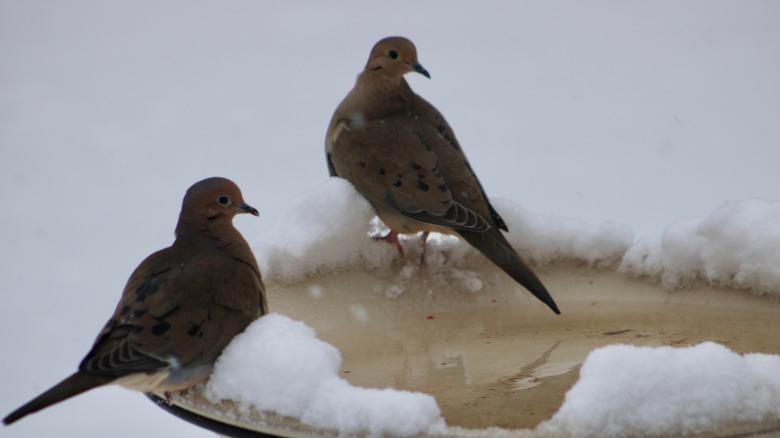
Another thing that could really help you out in terms of preventing your bird bath from freezing is to insulate it. There are a number of different ways you could go about this, but the main goal is to retain as much natural heat as possible. It's the same principle as insulating your house or garden shed. The less cold that seeps in and the less heat that escapes, the better the heat retention in the bird bath will be.
In terms of materials, you could use heavy blankets, straw bales, or burlap to wrap the base and underside of the bird bath basin. Having these here will slow down the freezing process significantly, and also improve the structural integrity of stone or concrete baths by preventing cracks caused by freezing.
Heat loss will also occur through the cold ground. One thing I've personally tried is to place a blanket, bathroom towel, or a thick tarp underneath my bird bath. This acts as an insulating block that keeps the freezing ground temperatures from rising up through the bird bath and causing the water in the basin to freeze.
Keep your bird bath clean

There is much to be said for keeping your bird bath as clean as possible in the winter. For starters, it is good for the birds. When birds bathe or drink from baths that have been contaminated with feces, dirt, or bacteria caused by lack of cleaning, they are at serious risk of developing infection or diseases that could spread throughout the nearby population.
To clean, give the basin a good scrub with a water and vinegar solution or a baking soda slurry. Make sure the basin is thoroughly rinsed out before adding water back into it. You can make this part of your refilling routine. It also gives you the opportunity to inspect for any cracks or structural issues in your bird bath. Removing debris is also said to help keep the water from freezing.
While a lot of these methods do depend on geography and your local winter weather, you can still implement them and see what kind of success you have. Some will work better than others. Heaters are necessary for places like New England, while in somewhere like Virginia or Texas, you can get away with the ping pong ball trick. Wherever you live and whatever methods you use, the colorful birds that populate your area will be glad for a clean, unfrozen bird bath to congregate around.