

The Property Brothers Say These Home Upgrades Are A Total Waste Of Money

Drew and Jonathan Scott, the twins who host HGTV's "Property Brothers" shows, have strong opinions about home renovations. Their disagreements over design details might be the most enjoyable component of "Brother vs. Brother," in which they face off to see who can flip a house for a higher price. Though these conflicts are mined for television drama, the brothers often see eye to eye when it comes to remodeling decisions. For instance, both Property Brothers think that quartz is the best material for kitchen countertops and that oversized porcelain tiles can increase a home's resale value. They also team up to share tips on what to avoid to maximize the value of renovations. In general, the siblings advise viewers to prioritize function and flow over fads and purely aesthetic choices. One of the best examples of this is their suggestion to skip forking out money on inefficient wood-burning fireplaces.
The Property Brothers typically encourage homeowners to consider preferences related to cleaning, repairs, and sustainability when preparing to renovate. If they were standing in your house right now, they'd probably urge you to think about how you actually use your home, not how you think a pretty new floor or appliance might inspire you to change your habits. For example, if you're someone who rushes to clean up a spill, you're more likely to succeed at maintaining a hardwood floor than someone who avoids this task. The duo may also ask how soon you'd be willing to renovate again. If you don't want to pay for more updates soon, you should choose room configurations, materials, and finishes that won't look outdated for quite a while. To save even more money over the long term, consider durability and energy efficiency as well.
Wood-burning fireplaces aren't very energy efficient
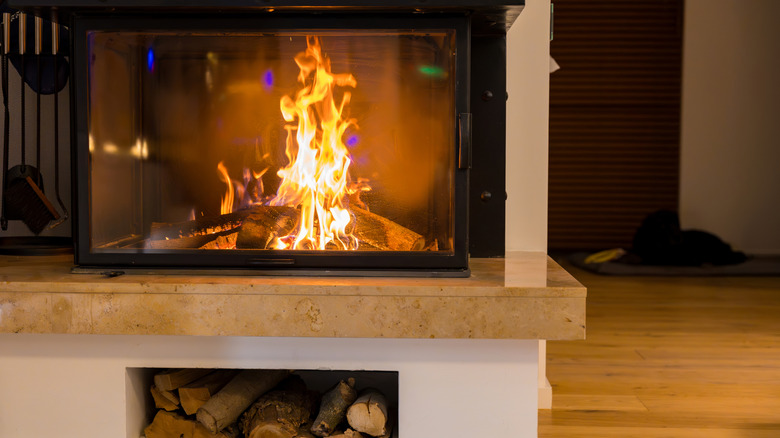
Many people love the idea of heating a living space with a roaring fire, but they're not ready for the reality of a wood-burning fireplace. Summoning the will to gather firewood isn't the only barrier to enjoying this feature. According to the Property Brothers, homeowners are often unhappy to discover that their expensive new wood-burning fireplace — or the old one that convinced them to buy their home — is an energy hog. "Every single client who we've ever had who said, 'I need to keep a wood-burning fireplace' has come back six months later and said, 'I wish I went to a more efficient either gas or electric unit,'" Jonathan Scott told Parade Home & Garden. The less efficient the fireplace is, the more fuel it will require. It will also accumulate more creosote, which raises the risk of flames engulfing your chimney and spews larger amounts of pollutants into your home.
According to the U.S. Environmental Protection Agency, wood-burning fireplaces can even make your home colder when they're not in use. That's because they sometimes encourage warm air to rise through the chimney, where it can't reach the parts of your house that need it most. What's more, a blazing wood-burning fireplace may make your central heating system work harder to keep your home's temperature steady, resulting in higher utility bills. Fortunately, better options are available. Though you can buy an EPA-certified wood stove to reduce pollution and fuel use, gas and electric fireplaces tend to be cleaner, more efficient, and easier to maintain. You can even operate a gas fireplace during a power outage.
Gas stoves can pollute indoor air
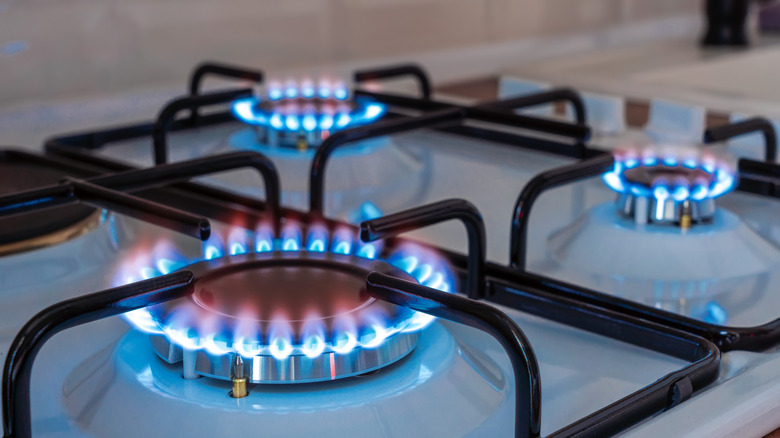
Like wood-burning fireplaces, gas stoves are an unwise investment because they compromise indoor air quality. These appliances release hazardous levels of nitrogen dioxide, a compound linked to childhood asthma, as well as the carcinogen benzene and other pollutants you don't want inside your home. The Property Brothers are on a mission to convince homeowners to choose safer options when remodeling their kitchens.
In their interview with Parade Home & Garden, the twins noted that many people aren't aware of these health risks, leave pollutant-dispersing fans off when cooking, and assume that gas stoves are better because they're supposedly what cooking experts prefer. As Jonathan Scott told the publication, many professional chefs actually use induction stoves powered by electromagnetic fields: "That's what's in a lot of the major restaurants. That's what they have. And now, anyone who finally gets used to using induction doesn't want to go back. They realize it's superior."
Induction options run the gamut from 30-inch models that resemble glass-top electric ranges to futuristic invisible cooktops. Purchasing an electric range is another way to avoid harmful emissions. Glass-top varieties tend to be easier to clean than those with coils, and some models have a handy self-cleaning feature. No matter what style of electric range you choose, it's likely to heat water quicker than its gas counterparts.
Wall-to-wall living room carpet deteriorates fast
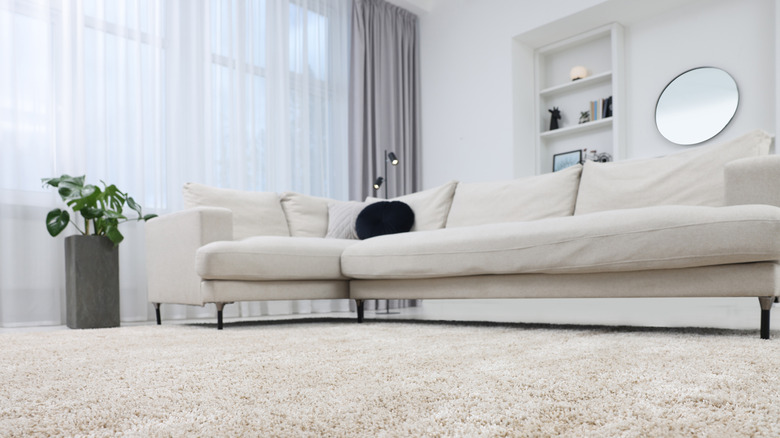
The Property Brothers don't feel exactly the same about wall-to-wall carpet, but they can agree on one thing: It doesn't belong in any living space you use frequently. In an interview with HGTV, Drew Scott emphasized that this remodeling choice can make your home harder to sell because so few people are fans of it. "These days no one says, 'My dream home has wall-to-wall carpeting.' Carpets are a trap for dirt, dust, and other allergens, and they wear easily," he explained. In other words, if your sea of carpet lasts long enough to greet a prospective homebuyer, it's likely to scare them off. The more foot traffic it experiences, the more grungy and beat-up it's likely to get.
Looking for an alternative that's more hygienic and less reminiscent of the 1980s? Hardwood planks — the flooring preferred by Chip Gaines of HGTV's "Fixer Upper" — are one beautiful option that attracts lots of buyers but not many allergens. They can be pricey to install, though. This may be why Drew tends to gravitate toward tile and laminate. "I prefer plank-style porcelain tile or high-quality laminate that looks like wood," he told HGTV. "Both withstand heavy foot traffic better — just top them with an area rug for softness."
Large overhead can lights tend to look dated
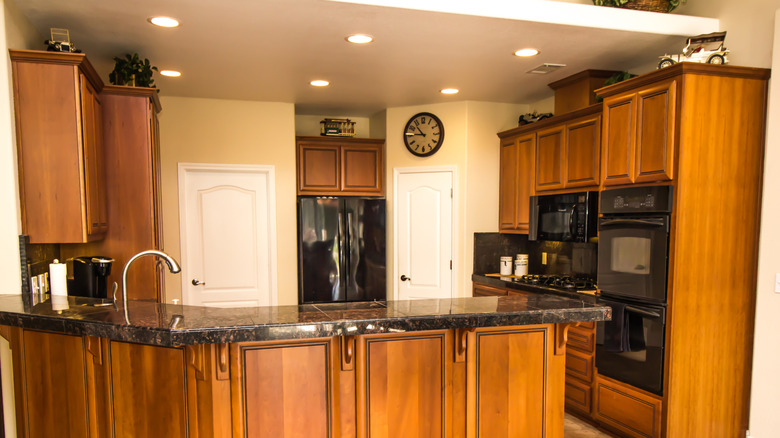
Like wall-to-wall carpet, many overhead can lights emanate '80s vibes that just don't speak to modern-day homebuyers. Drew Scott tends to avoid them altogether, while Jonathan Scott selects smaller ones for a more contemporary look. "Six-inch can lights are too '80s, but I do like four-inch and five-inch recessed lights, especially in a low ceiling-say, less than eight feet. That way you don't lose headroom like you would with a hanging fixture," Jonathan told HGTV, adding that materials such as chrome and brushed metal also help this style of lighting feel less dated.
Since lighting has such a big impact on the mood of a space, consider going an entirely different route. For instance, you could take a cue from Drew and choose fixture lighting. "I prefer fixture lighting that's more of a design element, like a chandelier or pendant, for ceilings of all heights," he explained in the interview with HGTV. If you're seeking a new way to illuminate a living space, try incorporating more lamps. This creates layers of lighting that add warmth to the room.
Super-bold countertops don't stand the test of time
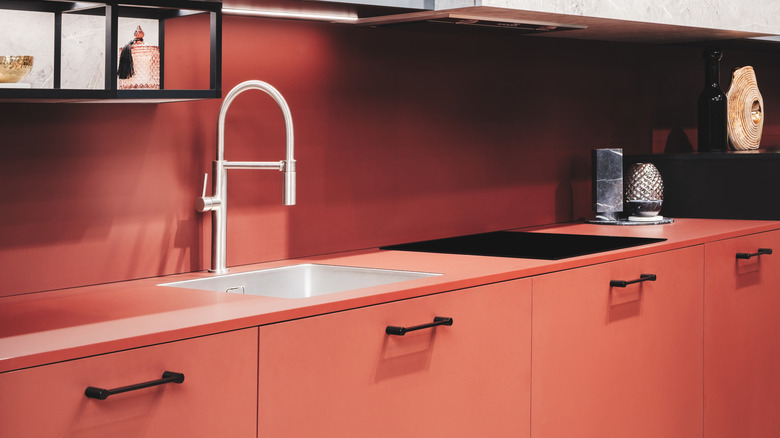
There are all kind of ways to play with color and pattern in your kitchen, from a floor lined with charming Moroccan tiles to a vibrant backsplash placed beneath white cabinets. Just don't go too wild with your countertops, the Property Brothers warn. As Drew Scott told NBC's Today, "Try not to go too bold on the more expensive items like countertops because the more bold you go, the quicker they'll go out of style." And if you put your house on the market after a trendy countertop design has become passé, you may hurt your chances of getting top dollar.
A durable, easy-to-maintain countertop with a neutral hue or pattern is likely to serve you well for years. Though the quartz countertops the Property Brothers love so much check all of these boxes, there are plenty of other options worth considering as well. For example, you could select a gray soapstone countertop with attractive white veining, then incorporate pops of color with kitchen textiles and a toaster in an unexpected hue such as coral or turquoise.