

Why Riding Lawn Mowers Lose Power When Cutting Thick Grass (And How To Fix It)
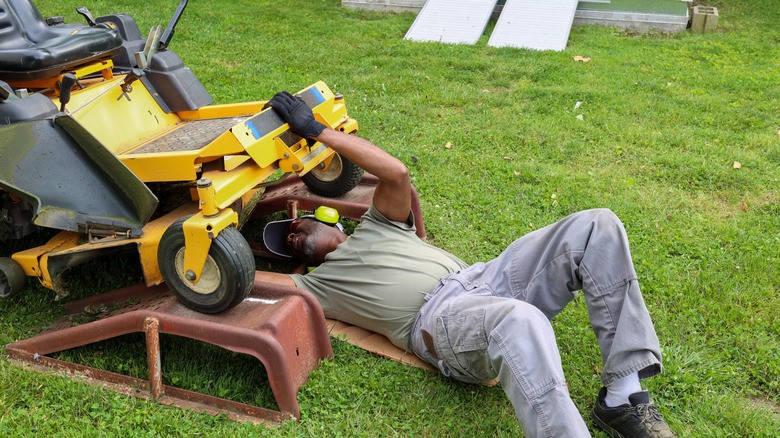
You mount up your trusty riding lawn mower to trim the verge. The engine roars to life, and it sounds ready to go. But as soon as you hit a patch of thick grass, the engine loses power and struggles to perform. You look back to survey the work, and nothing. At this point, you may be asking yourself which riding lawn mower earned the top spot in Consumer Reports' 2026 rankings, because yours is clearly a dud. But before you do, you should know that there are many reasons why riding lawn mowers lose power when cutting thick grass, and just as many ways to fix them without shelling out for expensive repairs or a brand new rig — as tempting as that may be.
Topping the list, a dull, dented, or damaged blade is one of the most common causes of a riding lawn mower giving up the ghost in thick grass. A blunt blade won't cut dense turf. It will just whack it around and overload the engine, causing power loss. Start by disconnecting the spark plug wire, then carefully tip the mower and remove the lawn mower blades safely to prep them for filing time.
There's no end of no-brainer ways to sharpen lawn mower blades, but if they're bent or seriously damaged, you may need to spring for replacement. Although you can DIY, probably the easiest way to get the edge back is to leave it to the professionals, especially if you just don't feel comfortable getting hands-on with a tool designed to chop things in half. Riding lawn mower experts recommend sharpening the blades once every 25 hours of mowing time, so if it's been a while, it's probably about time.
Dirty decks and filthy filters
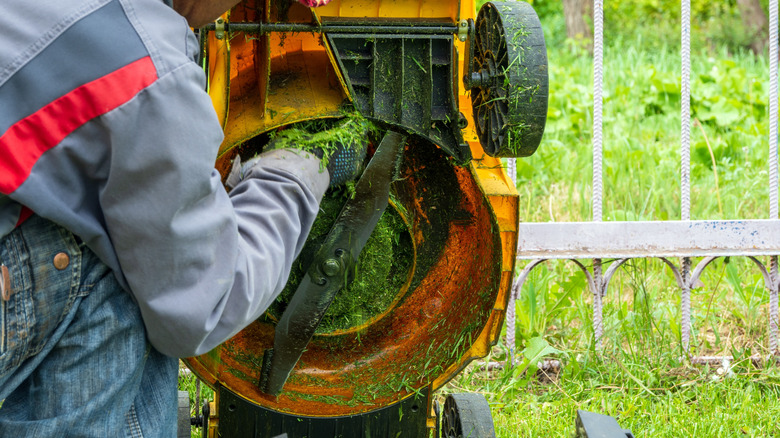
Next up on the troubleshooting list is a clogged deck. The deck is the housing that holds the blades, and it can get clogged, particularly if you often cut thick, wet grass. Once the grass has built up, it can jam the rotor that spins the blades, leading the engine to struggle and lose power.
Fortunately, many modern riding lawn mowers come with an ingenious feature that makes it easy to remove grass clippings from your lawn mower deck: the deck wash port. Simply attach a garden hose to the wash port on the top of the deck and open the floodgates. The water does the work of cleaning the deck of stuck-on grass. If your mower doesn't have a deck wash port, you'll need to remove the grass with one of these handy tools. And while you're down there, you may want to apply a product to keep grass from sticking in the future.
After a clogged deck, a dirty air filter is the next most common cause of power loss when mowing an overly lush lawn. When the going gets tough, your lawn mower engine needs airflow to keep churning along. A dirty air filter will cause the engine to choke and lose power, especially when cutting through thick grass. The fix here is the simplest thus far. Take out the air filter and, if it's foam, clean and dry it. If it's paper, replace it. Your lawn mower can breathe a sigh of relief and make short work of the next patch of thick grass that gets in its way.
Check your fluids
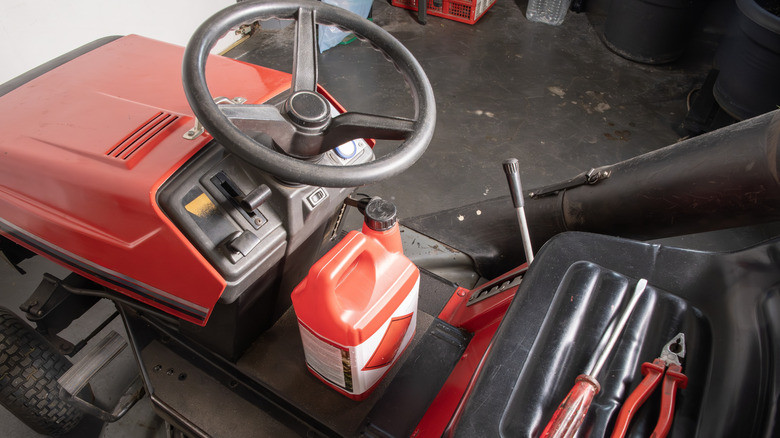
If you've made it this far through the list of common causes of riding lawn mowers losing power when cutting thick grass and you still haven't nailed down the guilty part(y), you're probably dealing with a fluid issue: either stale gasoline or low oil. Gasoline has a fairly limited shelf life, which high temperatures can shorten even further. If you don't take your riding lawn mower out for a spin that often, the gas can go stale and fail to drive the engine when you need it the most. In that case, simply drain out the old fuel and replace it. But if that still doesn't solve the issue, you might be dealing with a dirty carburetor, which measures, mixes, and delivers the right ratio of gas to air to the engine.
Last but certainly not least, low or dirty oil is often to blame for a riding lawn mower struggling to clear a path through thick grass. If you're wondering how often to change your lawn mower oil, most riding lawn mowers will need an oil change after every 50 to 100 hours of running time. Check your oil level before you ride out, every time. Make sure your riding lawn mower's oil level is full before you start it up. Running on low is a surefire way to permanently damage the engine.