

The Timeless CorningWare Style Secondhand Collectors Still Hunt For

We may receive a commission on purchases made from links.
Tastes may change and recipes will evolve, but when it comes to a tried-and-true dish — and the cookware in which it was prepared — the classics are just that. It can feel overwhelming attempting to track down valuable vintage kitchenware, especially when there are so many brands, patterns, and colors to sift through. While you are in the midst of the thrifting process, make sure to keep a timeless gem on your radar: the CorningWare French White pattern. It might be simple, but it's a chic option that will be a significant addition to any collection, so don't disregard it.
Created in 1978, the vintage CorningWare dish became a widely-used accessory. During this time, Nouvelle cuisine evolved as a simple and fresh yet elegant way to prepare French meals. The cookware itself takes on a similar approach to the dishes it helped prepare, courtesy of its creamy white aesthetic, delicate fluted lines on the Pyroceram glass, and pristine appearance. Though it doesn't include any floral or rustic motifs, it will still make a statement in your kitchen thanks to its timeless appearance.
How to spot a vintage French White CorningWare piece
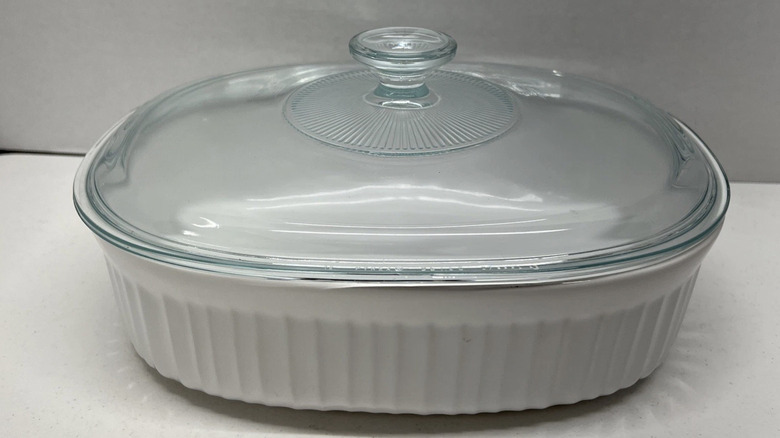
Unlike discontinued CorningWare patterns that are few and far between, vintage French White pieces are still accessible and average from $10 to $40 at thrift stores and second-hand web retailers, depending on the size, quality, and whether or not a lid is included. Additionally, new French White accessories, like ramekins and casserole dishes, are available today via Corelle, the brand that owns CorningWare and Chicago Cutlery. If you have your heart set on the original, this is where your super-sharp thrifting skills will come in handy. To spot a '70s French White CorningWare, start by assessing the material. If it's not Pyroceram glass, which ceased production in 2000, then you're likely not dealing with an OG. Keep in mind, the groundbreaking glass allowed for quick heat transitions, and if you find a piece with markings that say "not for stovetop" use, you didn't find a '70s accessory.
Speaking of markings, original CorningWare pieces from the '70s often included a stamped "Corning Ware" (two words, not one) on the bottom of each dish, as well as some combination of letters and numbers, indicating the series and models of each piece. You'll also spot a "Made in the USA" or "Made in Canada" marking on the back. What makes French White a little trickier to spot than the norm is its close cousin, the All White/Just White line, which retailed from 1965 to 1968. It has a starker appearance than the French White CorningWare and does not include fluted lines.