

The Quickly Discontinued CorningWare Pattern Secondhand Collectors Still Hunt For

We may receive a commission on purchases made from links.
Interiors are in the thick of a '90s renaissance where cozy, Grandma-approved accents are leading the way. Fittingly, the nostalgia wave has crashed into the kitchen, leaving homeowners with a hankering for trademarks of the decade like oak cabinets, chintz textiles, and old-school cookware. If you're a thrifter who can't resist a charming casserole dish or baking pan, there's an elusive CorningWare pattern from the era that's worth putting on your radar. Whether you're looking for a new addition to your collection or a new cooking accessory (depending on its condition), CorningWare's Fresh Cut pattern has that charming, lived-in feel reminiscent of the '90s.
While it's not one of the most valuable CorningWare patterns on thrift store shelves, Fresh Cut is considered one of the least common. And, unexpectedly, it's one of the most budget-friendly finds from the iconic brand. You can spot the white Pyroceram kitchenware adorned with a red tulip stationed between blue and amber-colored petals on each side. It was a short-lived design that debuted in 1997 and was quickly discontinued one year later. But like other signs of the time, it deserves a second look, especially considering a casserole dish in the pattern averages roughly $25 to $30 — even with lids (a.k.a. a defining factor in determining the piece's value). Some CorningWare accessories have sold for upwards of $23,000, so why not take the less expensive route to achieve the same aesthetic, without forgoing quality?
How to spot and style CorningWare's Fresh Cut pattern
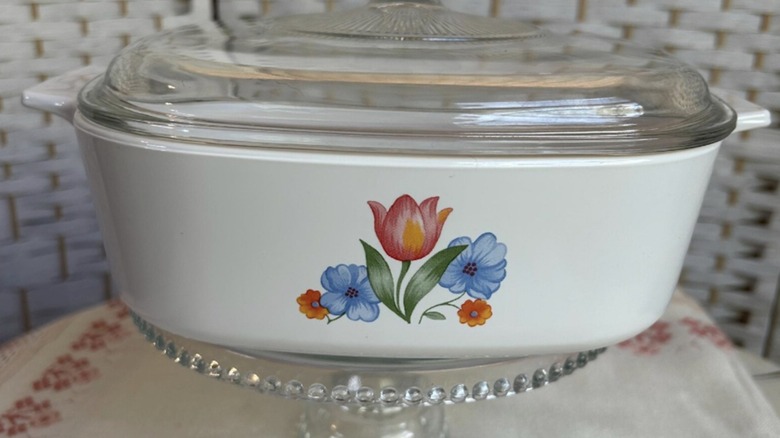
If you're aiming to find vintage CorningWare pieces when thrifting, there are a few important factors to take into consideration. The brand made its debut in 1958 and changed the game with its non-porous Pyroceram glass-ceramic, which allowed for extreme temperature changes immediately. The company ceased the production of the material in 2000, which can indicate whether or not you're dealing with the real thing. Check the bottom of the vintage kitchenware find to see its markings. If there's a P (for Pyroceram) followed by a dash and a number, indicating sizing, it's an OG CorningWare piece. (P-43-E, for example.) Additionally, the bottom of various accessories will have "Corning Ware" (two words) emblazoned on the glass.
Should you come across the Fresh Cut line at a thrift store or an online retailer, be sure to give it the '90s revamp it deserves. If you're not using it for any recipes — which you shouldn't if the piece has extensive cracks or damage — complement it by stationing it next to those fun elements of the era, including woven baskets, patterned curtains, placemats, etc., and wooden accents, be it dishware or cabinetry. They make great additions to shelves or hutches, and mixing and matching the piece with the rest of your goods is highly encouraged.