

Common Driveway Materials Ranked Worst To Best
Choosing the right materials for your home involves weighing upfront costs against long-term maintenance considerations. Some property owners might experience difficulty weighing these factors when shopping for driveway materials, given that there are several choices.
Below, we'll compare the four most common driveway materials ranked worst to best based on four crucial criteria: upfront cost, functional lifespan, maintenance requirements, and customization potential. In other words, how much money will it set you back to get your driveway up and running? How long does it last before needing serious repair or replacement? How much maintenance is necessary to preserve its form and function? Lastly, how well can you modify it to suit your personal preferences?
We chose not to consider default "looks" since everyone's tastes are different. For example, some like gravel, some like asphalt. However, there are some objective measures of quality that we'll outline. Let's go for a drive(way).
Gravel: the rocky road to never-ending upkeep
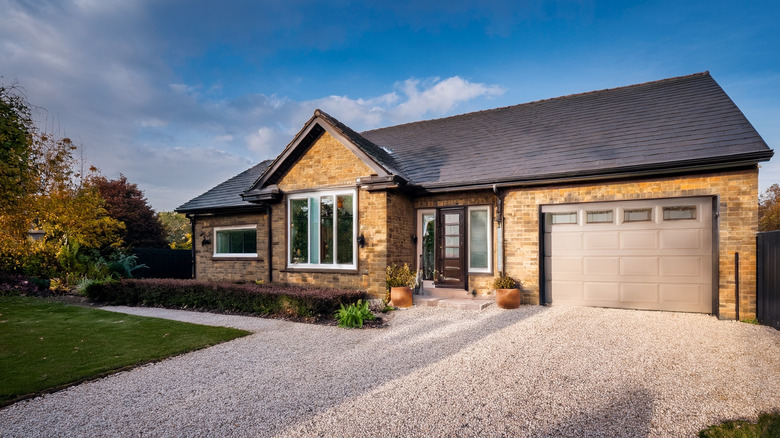
Gravel wins hands-down in the cost category: it is the cheapest residential driveway material you can buy, unless you count dirt. Putting in a gravel driveway will set you back about $2 to $4 per square foot, including labor. Installation is relatively quick, but not as easy as just dumping rocks on the ground if you want it to last. A gravel driveway can last indefinitely if properly installed and routinely maintained. The trouble is that maintenance never really ends.
So, why does gravel maintenance lose out to other common driveway materials? Grading and a fresh top layer are recommended at least every one to three years. Potholes and low points can be filled in and tamped down as needed, but heavy rain, snow, and excessive wear can accelerate your maintenance schedule. The reality is that even a finished gravel driveway is a work in progress.
Still, contrary to popular belief, you have more choices for your top layer than just standard crusher run. For instance, decomposed granite is gaining traction in the driveway market, especially decomposed granite with resin or poly pavement.
Asphalt: it's popular for good reasons, but won't last forever
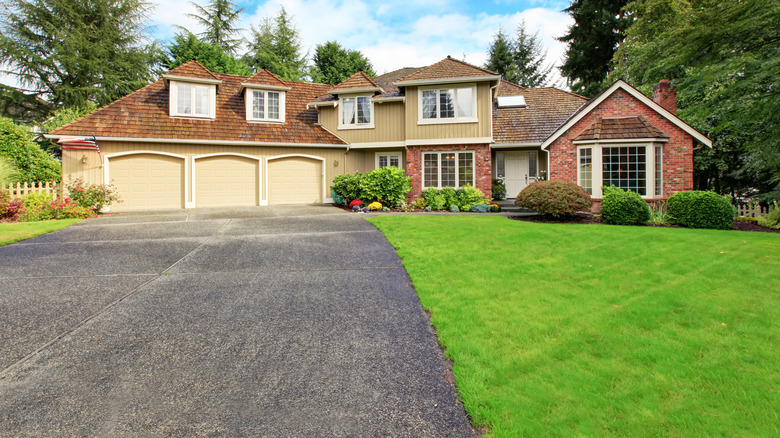
Low upfront cost, easy installation, and moderate upkeep make asphalt the default for many homeowners seeking a new driveway. The cost to install a new asphalt driveway ranges from $7 to $13 per square foot, including materials and labor, per Angi. Most asphalt driveways will last about 20 years, and possibly even longer with timely maintenance.
Installers recommend resealing your asphalt driveway every two to three years. Fortunately, if you're a DIY enthusiast, this project isn't super time-consuming. You can likely reseal an asphalt driveway over a weekend. Small cracks typically start to show after about 5 years, but you can easily patch them as needed.
While asphalt beats gravel in maintenance, it's not as customizable. Blacktop is just blacktop, but stamped asphalt is a way to leave traditional asphalt behind for less than what you'd spend on stone pavers or brick.
Concrete: set it and (almost) forget it
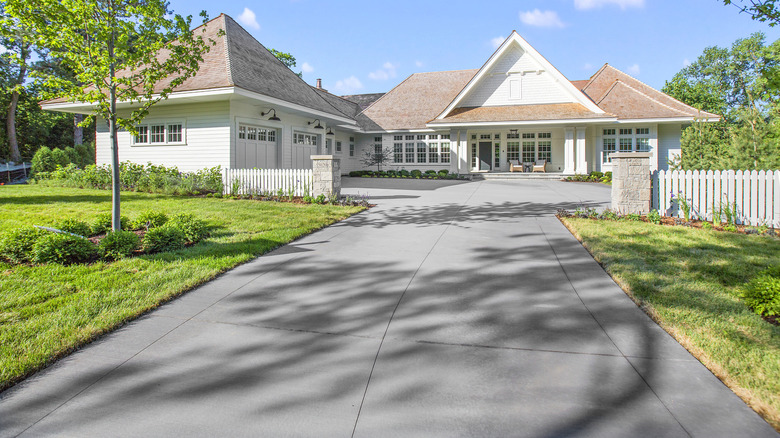
The cost for a concrete driveway is between $8 and $20 per square foot, making it a bit more pricey than asphalt. What you pay for upfront, you get back with a longer functional lifespan.
Most properly installed concrete driveways will last around 30 years without needing major repairs. Further, you'll save on the "weekend tax" that gravel and asphalt carry.
Gravel needs grading, and asphalt needs more frequent patching and sealing. In contrast, concrete usually gets by with resealing every two to 10 years, along with a pressure washing at least once a year.
However, when you start to have problems with concrete, they are generally more expensive to fix than asphalt or gravel. You can easily fix minor cracks in your concrete driveway, but major cracking (which can be caused by anything from improper curing and tree roots to water intrusion and freeze-thaw cycles) usually means replacing the whole thing.
Homeowners might tolerate pricey concrete repairs if customization is a priority. This material offers broom finishes, exposed aggregate, stamping, and staining, allowing you to ditch traditional concrete driveway styles.
Pavers: pay now, enjoy forever
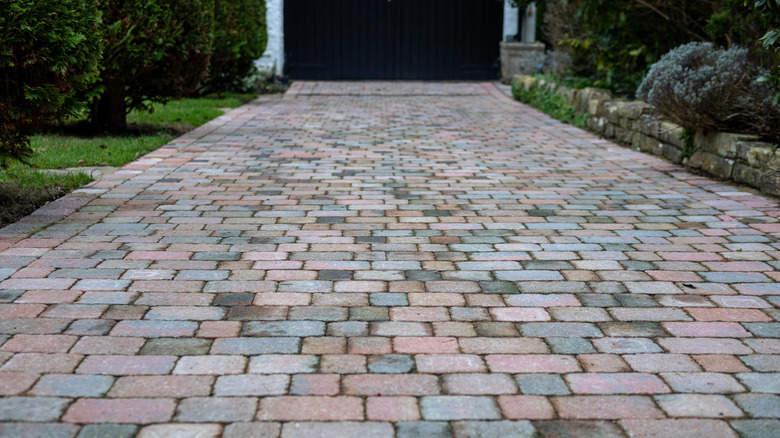
Last, but certainly not least in dollar terms, are pavers. Per Homewyse, the average cost to install a paver driveway is about $18 to $24 per square foot, including labor. Regarding durability, nothing beats them, with a functional lifespan of up to 50 years. Paver driveways last long because they are made of individual pieces designed to shift slightly with natural movement, unlike asphalt or concrete. This design also sheds water safely and optimizes freeze-thaw cycle resistance, which prevents cracking and buckling. If somebody happens to drop a bowling ball on your driveway and smash a few individual units, they're easy to remove and pretty cheap to replace.
As far as maintenance goes, installers recommend power washing annually and getting professional resealing every three to four years, depending on how much traffic your driveway gets. A deep cleaning with a re-sand is only necessary every two to three years.
Another area where pavers crush the competition is customizability. Since units are individually placed, you can mix and match various sizes, colors, and shapes. Half the fun (and a good chunk of the cost) of installing a paver driveway is designing it to suit your taste and budget. After they're installed, they can raise your property's curb appeal and, therefore, its value.