

Leave Boring Asphalt Driveways Behind: A Budget-Friendly Way To Make Yours Look Nice
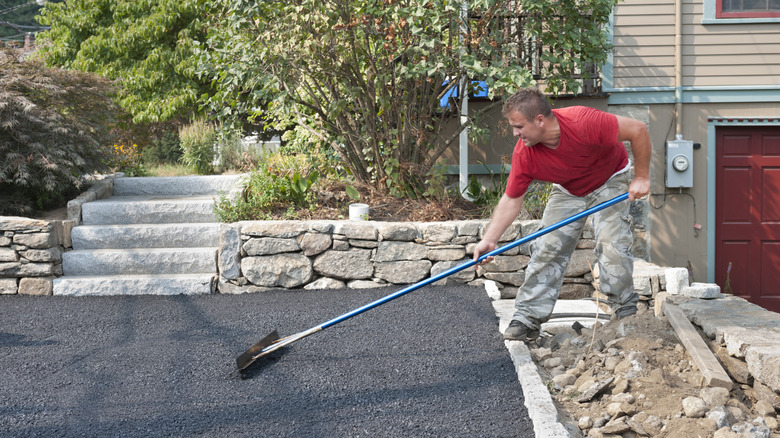
Love the look of a cobblestone or paver driveway but can't afford the price tag? Cobblestone driveways often cost between $20 and $70 per square foot, while stone and paver ones range from $10 to $50 per square foot, according to Angi. Meanwhile, asphalt driveways only cost between $7 and $15 per square foot. If you're on a budget, you might not have much of a choice. But you can meet somewhere in the middle by choosing a stamped asphalt driveway instead. That option usually runs between $10 and $17 per square foot. Before you resurface an asphalt driveway or look into other materials, consider this option first.
Stamped asphalt replicates the look of textured cobblestone, brick, or slate without the high cost. And it's a definite upgrade over a plain asphalt surface. It's also faster to install than individual stones or pavers — the driveway is usually finished within 48 hours. The process involves laying the asphalt first. Then, while the material is still pliable, the pattern is pressed into the asphalt using heated metal templates. The final step is applying a coating over the imprinted driveway. Being able to change the color from the usual black is another way that this technique upgrades asphalt. While there are often limited colors available, you can significantly change the look of the driveway, which helps improve curb appeal.
Decide if a stamped asphalt driveway is right for you
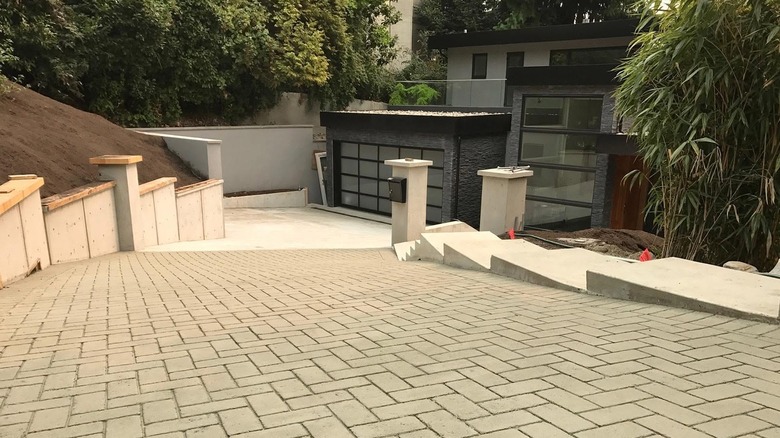
With patterns ranging from herringbone to scallops, stamped asphalt can take your driveway from simple to stunning on a budget, but that's not all it has to offer. Since it's a solid surface, asphalt doesn't let weeds grow in your driveway like they can between stones and pavers. Plus, it provides a smooth and stable surface that won't shift or sink like individual blocks — unless in extreme heat.
Of course, it won't be an exact replica of the real thing. The pattern may wear down over time, especially if the driveway is constantly exposed to heavy vehicle traffic. Adding to that, stones are natural, which means they're not all identical in terms of shape and coloring. Since stamped asphalt uses templates and the base material is still asphalt, it tends to look more manufactured — or sleek, depending on how you look at it.
The longevity can also be an issue. Stamped asphalt may only last 10 to 15 years and could develop cracks, even though it's typically less prone to cracking than concrete (something you should know when comparing the durability of concrete versus asphalt driveways). This can be a problem particularly if frost heaving is an issue where you live. Last but not least, the coloring on top of the stamping can dull or fade, and it requires regular resealing to make the driveway last.