

Concrete Vs. Asphalt Driveways: Which Is More Durable?
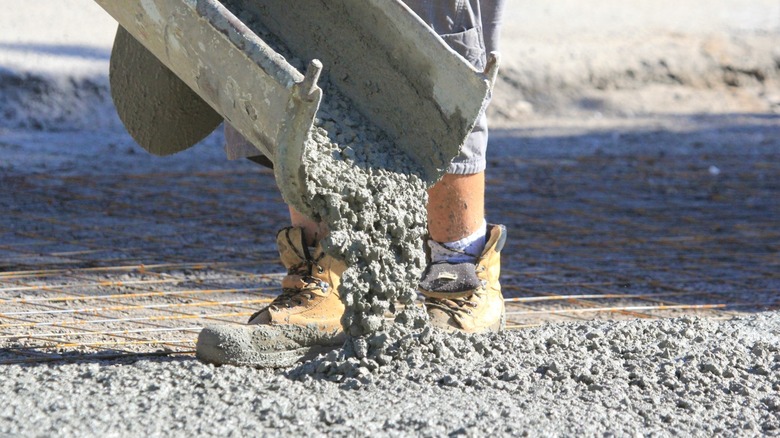
Are you planning to build a driveway? If yes, chances are you have thought about which materials to use, and when it comes to choosing a driveway material, concrete and asphalt are popular choices. They both look good, and they are both plenty strong. But what if you want the most durable option? Well, in that case, choose concrete. If properly made and set, the typical lifespan of a concrete pathway is nearly 30 to 50 years, according to Angi. Asphalt, on the other hand, only lasts about 15 to 20.
But what makes concrete so strong? Well, the answer lies in its composition. Concrete is made from a mix of cement, sand, gravel, and water, and when these things are mixed and allowed to cure, they become rock-hard. This lets concrete manage physical impact without deforming. As for asphalt, it is made by mixing bitumen with stone and gravel, and the result is a much softer and more flexible surface, which, even though plenty hard, is still weaker than concrete. Put simply, if raw strength and durability are the only thing that matters, concrete is the obvious winner.
Concrete, however, does not perform well everywhere. In places with frequent freeze-thaw cycles, for instance, concrete driveways are more at risk of cracking. Asphalt has its own weakness, too. It struggles in extremely hot climates, as seen during the 2026 European heat waves when some roads became soft and even started melting. Put simply, durability is not the only thing that matters when it comes to choosing between a concrete and asphalt driveway. You must make sure that you have a material that matches your climate as well.
How climate affects concrete and asphalt driveways
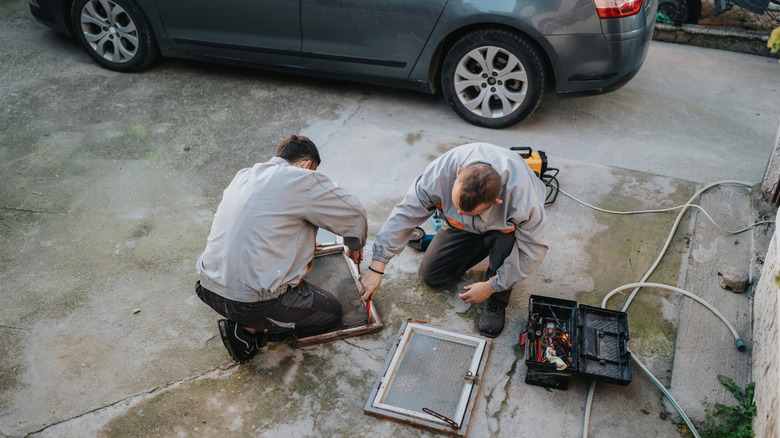
In cold areas, where freeze-thaw cycles are a common occurrence, the stiffness of concrete works against it. That is because in regions where temperatures regularly go below the freezing point, when it rains, the water enters the tiny cracks of concrete, freezes, and expands. This, in turn, puts immense pressure on the concrete and can even break it apart. Over time, this can dramatically cut into concrete's lifespan. In other words, in cold, rainy regions, concrete driveways might not be a good choice. In such places, asphalt performs better, as its flexibility allows it to shift and bend slightly without fracturing.
However, asphalt loses in hot climates. Sustained heat causes asphalt to soften and become sticky, making it prone to rutting under the weight of vehicles. Concrete, however, holds its structure even in intense heat. So, if you are planning a driveway and you live in a place with hot, sunny summers, it might be preferable to build a concrete driveway.
Lastly, when it comes to repairing, asphalt wins over concrete. Repairing it is cheaper, and the repairs on the asphalt vanish pretty easily. Repairing concrete, however, is a bit expensive, and no matter what you do, the patchwork on concrete is nearly impossible to hide. It will always be there to stare you in the face. Where concrete wins, though, is when it comes to how soon you need to repair or refurbish each surface. Asphalt needs resealing every three to five years. If you don't do it, it will dry, and then it will deteriorate much faster.