

Say Goodbye To Cracks In Your Concrete Driveway: The Easy, Affordable DIY Fix
We may receive a commission on purchases made from links.
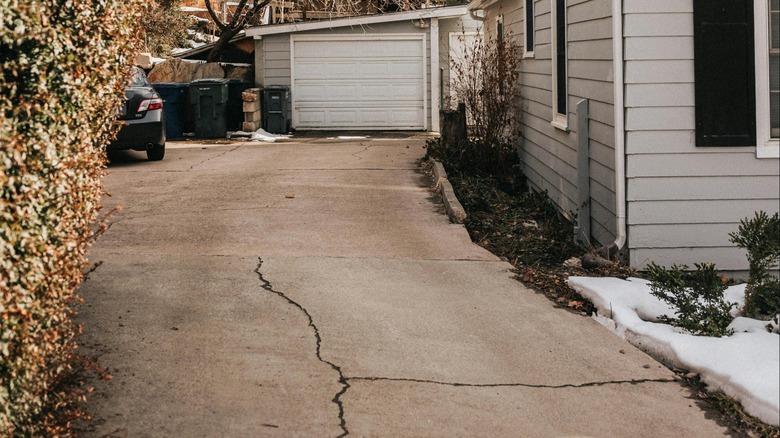
You may put extra energy into keeping the exterior of your home trim and tidy, but cracks in your concrete driveway can negate all your efforts. Deep and wide cracks indicate a possible underlying problem that needs professional attention, but smaller ones just need filling, and you can do that yourself. All you need is a caulk gun and flexible polyurethane caulk. This is one of many concrete repair products you should know about, and it's one of the easiest to use.
How do you know when to repair cracks with polyurethane caulk and when to use something more robust, like concrete patch or hydraulic cement? As a rule of thumb, cracks less than ½ inch in width are good candidates for caulk, as long as both sides of the crack are at the same level and the crack doesn't appear to be widening. Wider cracks and multiple cracks that interconnect often signify damage from heaving, soil movements, and poor drainage. If these conditions exist, it's time to call in the pros.
Repairing cracks with caulk doesn't make them disappear entirely. Polyurethane caulk might be gray, but it usually has a slightly different hue than weathered concrete, and it's glossier. Still, sealing the cracks is a good idea because it prevents water from seeping under the driveway and undermining it. If your goal is to make it look like new, you can always resurface your driveway after repairing the cracks.
How to choose and use the right caulk to fix your concrete driveway
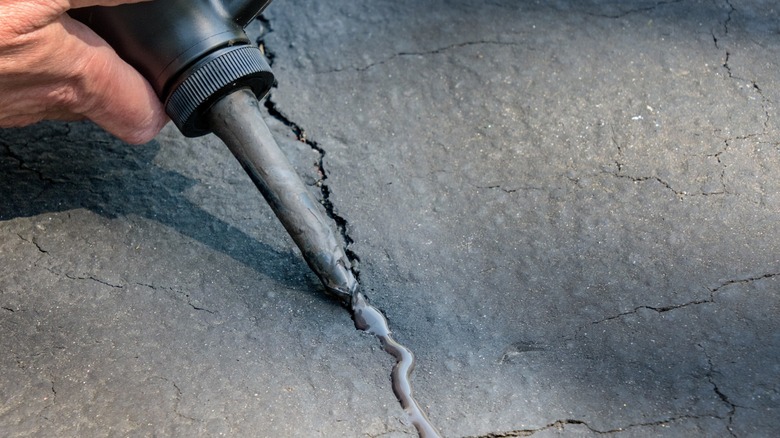
When you go to the hardware store, you'll find more than one type of driveway sealant in a caulk tube. Skip the products intended for asphalt repair and choose a flexible concrete sealant containing polyurethane, such as SIKA Sikaflex Self-Leveling Sealant. Most come in tubes that fit into a standard caulk gun.
It's essential to prepare cracks before caulking them. You want to make the sides of wider cracks V-shaped to provide good adhesion, and you can do this with a hammer and chisel. Don't go overboard and widen the crack even more; just remove the overhangs on the top edges. Remove loose debris from inside the crack, then give the driveway a good cleaning with a pressure washer, focusing on the areas around the cracks. Wait for the concrete to dry completely (about 24 hours in dry weather) before proceeding.
The procedure for caulking the cracks isn't much different from caulking other things, like baseboards. Keep the tip of the tube in the crack while you depress the trigger, and when caulk starts coming out, draw the tube along the crack and keep it moving. Don't forget to release the pressure each time you stop, or you'll get caulk all over the driveway. When the application is finished, level the caulk with a putty knife or with your finger, then stay off the driveway until the product dries (usually 24 to 48 hours, but check the instructions on the tube).