

Not Just Concrete Or Brick: 10 Types Of Pavers For Your Patio

It's no secret as to why paver patios are a popular choice for backyards. Not only do they look good, but they're very easy to maintain and can last for decades if you take care of them properly. Some of the most common options are concrete pavers and classic bricks. While both of these materials are excellent in their own right, they are hardly the only choices you could make to build your dream outdoor patio space.
There is a wide range of patio pavers to choose from, each with their own unique aesthetic and durability. Natural stone can give your patio a timeless, organic feel, while manufactured materials offer more flexibility if you're after a modern look or specific performance benefits. If you live in a particularly wet area or have dealt with runoff in the past, permeable pavers are a gorgeous, eco-friendly alternative. They have a polished look while allowing water to seep through the surface, which can help prevent drainage issues.
If you're more inclined to natural stone, factor in your local climate and maintenance requirements before purchase. Manufactured pavers can be purchased and installed practically anywhere, though you still need to think about your local climate since they'll be exposed outdoors. We'll go over the available concrete and brick alternatives, including their cost and durability, to give you a clearer picture of your patio paver options.
Limestone
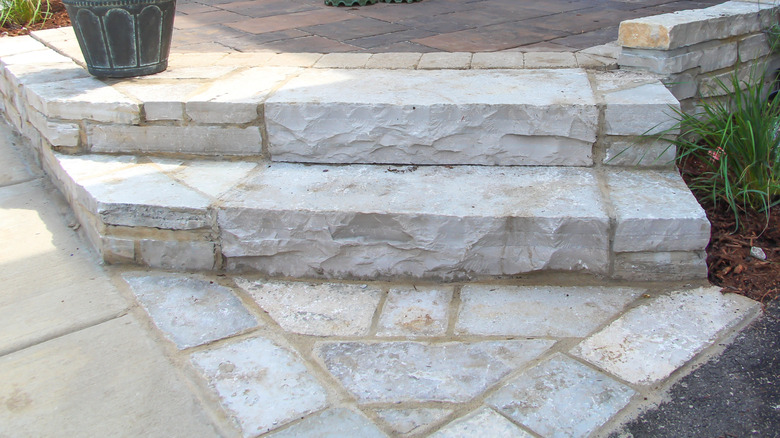
Found in most of the United States, limestone is a naturally soft rock that can be buffed to create a smooth surface. It can also be left with its rough edging intact which gives it a more primitive appearance. Coming mostly in creamy neutral colors, limestone is very cool underfoot and won't burn bare feet in full sun. Costing between $7 and $15 per square foot, limestone is one of the more affordable options. It is also highly durable, though its soft, porous nature makes it is more susceptible to cracking or stains.
Granite
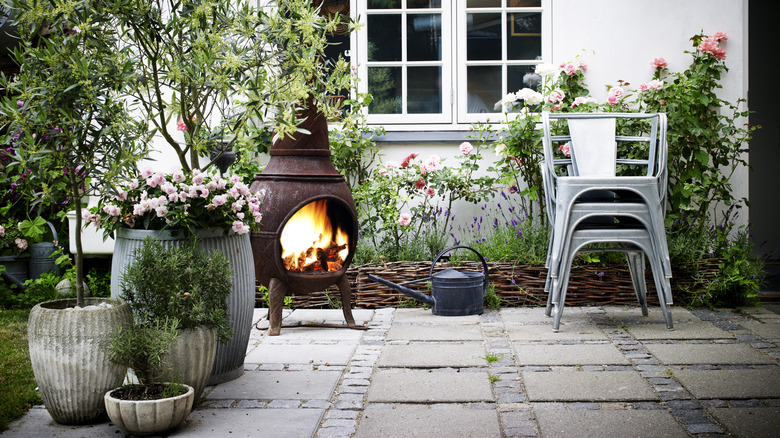
Granite is the most common intrusive igneous rock found in the continental United States. It's known for its density and impressive durability, withstanding decades of foot traffic and harsh weather without fading or cracking. That same density can make granite more difficult to work with, contributing to its higher price of $10 to $35 per square foot. Granite pavers come in a variety of colors, including gray, blue, pink, yellow, white, and black, making them easy to incorporate into a range of patio styles. You can also choose between smooth slabs and bricks with rough, natural edges.
Flagstone
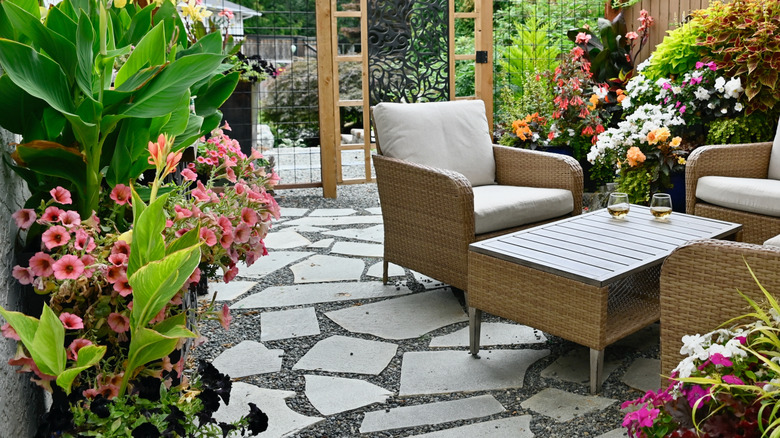
Flagstone is less a type of rock and more a style of cutting stone. It can be made from sandstone, bluestone, limestone, and other types of natural rock. What sets flagstone apart is the splitting process, which creates a smooth walking surface while often leaving the stone's natural edges intact for a more rustic look. Depending on the type, flagstone can cost anywhere from $12 to $40 per square foot. Arizona flagstone is particularly distinctive, with sandstone that features red and pink hues perfect for a Southwestern-style aesthetic. As a natural stone, flagstone can last for centuries with minimal upkeep.
Cobblestone
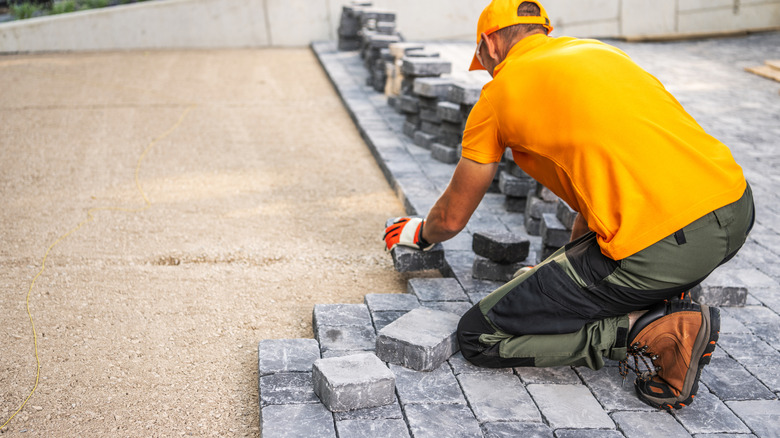
Like flagstones, cobblestones are not their own unique type of rock but rather a style of rock. Derived from granite, basalt, or sandstone, cobblestone's rounded shape comes from eons of being smoothed over by erosion, usually from waterways. Today, however, cobblestones are often quarried or even DIYed with concrete and plastic bags to mimic these natural looks. Highly durable, cobblestone patios can last well over 100 years and be patterned into a wide array of designs. Depending on the type you choose, it can cost between $20 to $70 per square foot, making cobblestone a more expensive option.
Bluestone
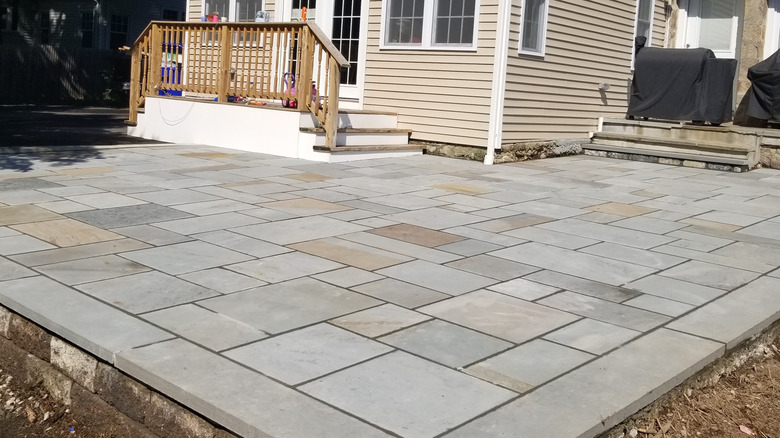
A type of sandstone composed of compressed sand, mica, feldspar, and quartz, bluestone is dense, strong, and stable. It is typically cut in a flagstone fashion, meaning that the surface is smooth and uniform. As its name suggests, bluestone has a natural blue hue that gives patios a distinctive look.. The stone also comes in slabs or as mosaic cuttings which can create a more angular, rustic appearance. It's also water resistant, Bluestone is also water-resistant, making it an excellent option for a pool patio, and averages around $12 per square foot.
Permeable pavers
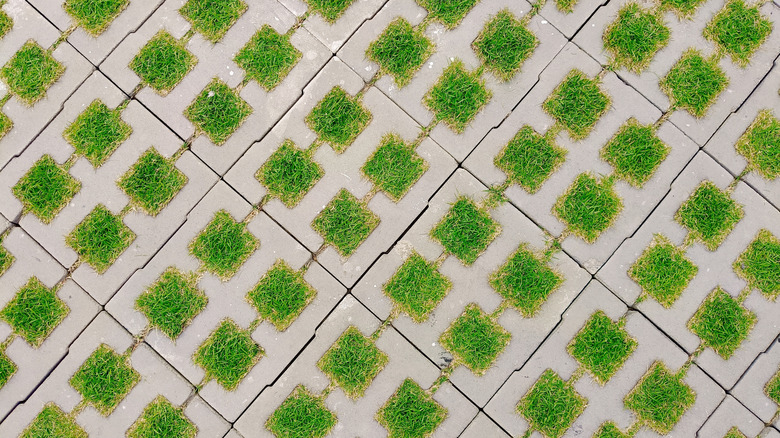
Though most permeable pavers are made from concrete, they differ from traditional pavers in that they use wider joints or an interlocking grid system installed over a layer of loose aggregate. This setup allows storm water to drain through the surface rather than pooling on top. Permeable pavers are also available as plastic grid systems that are filled with loose aggregate. Concrete options cost around $6 to $18 per square foot, while plastic grids range from $5 to $10.
Slate
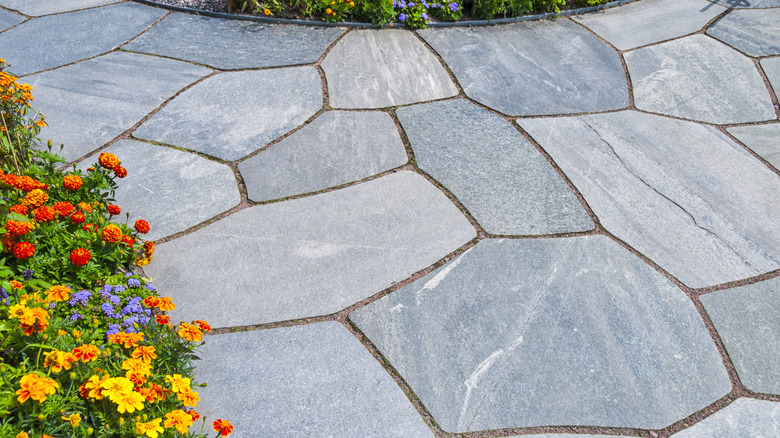
Another quarried stone, slate is formed when layers of clay and volcanic ash are compressed over thousands of years. It's made primarily from quartz and muscovite, along with other minerals such as graphite and manganite. While slate is often associated with dark colors, it also comes in shades of purple and green. Though durable and weather resistant when sealed, slate can get hot under the summer sun, so additional shade would be advisable if you choose this material. Slate costs between $9 to $25 per square foot and can easily last 100 years.
Porcelain
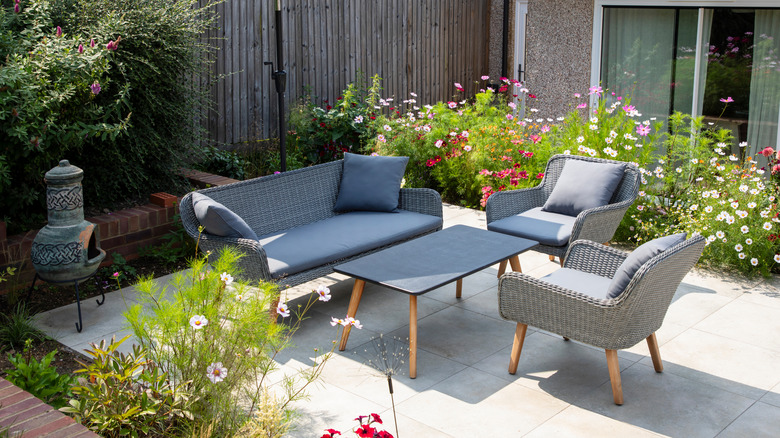
Made from kiln-fired refined clay, porcelain pavers are incredibly strong and durable. This manufacturing process makes porcelain highly water-resistant, stain and mold resistant, and won't crack under the freeze-thaw cycle which makes them great for colder climates. As a factory-manufactured product, porcelain pavers have perfectly straight edges that give patios a modern, refined look. However, those precise edges can also highlight any inconsistencies in the patio's subbase, so careful installation is essential. Porcelain pavers average $35 per square foot.
Travertine
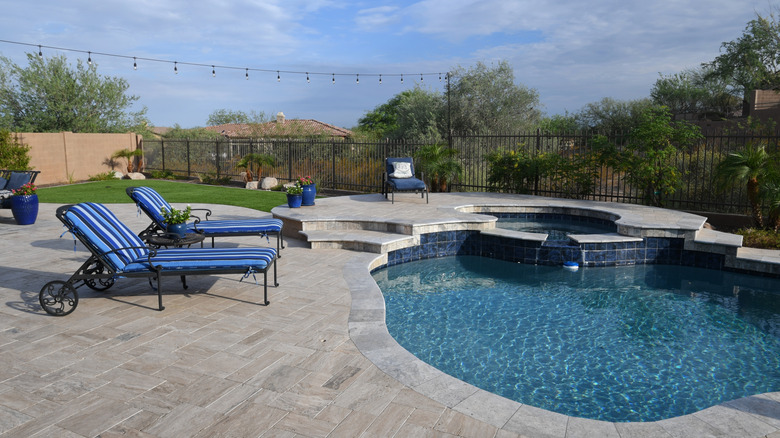
If you have an in-ground pool, travertine is an excellent patio material to consider. A type of limestone that has been used in construction since Ancient Roman times, travertine is highly durable and has a naturally rough texture that makes it slip-resistant when wet. It comes in neutral shades such as beige, brown, and silver, while its lighter colors help keep the stone cool under the sun. That makes travertine especially well-suited to pool patios, where hot pavers can be uncomfortable underfoot. Travertine averages between $3 to $7 per square foot, making an exceptionally affordable paver material.
Composite
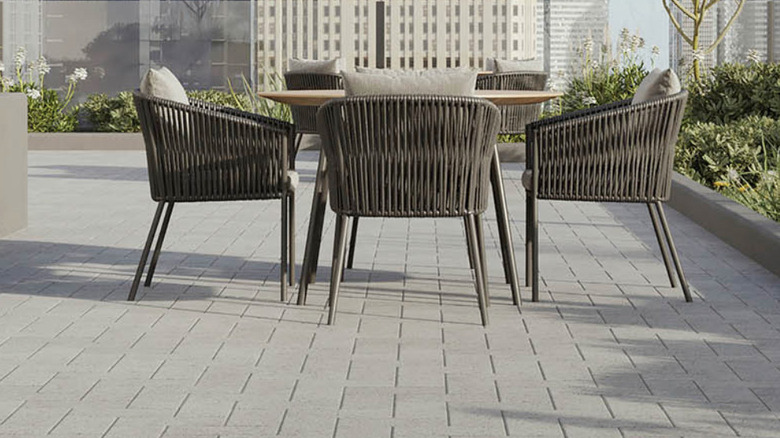
Because most composite pavers are made from recycled rubber tires or plastic, they offer an eco-friendly alternative to concrete pavers. The composite material is also lightweight, which means it can be used as rooftop patio material for city dwellers. Composite pavers come in a wide variety of colors and can be designed to mimic many of the natural materials listed ovibe. They can even be installed over an existing concrete slab or wooden deck, reducing the need for excavation or material removal.