

Skip Concrete: 7 Gorgeous, More Eco-Friendly Alternatives For Your Patio
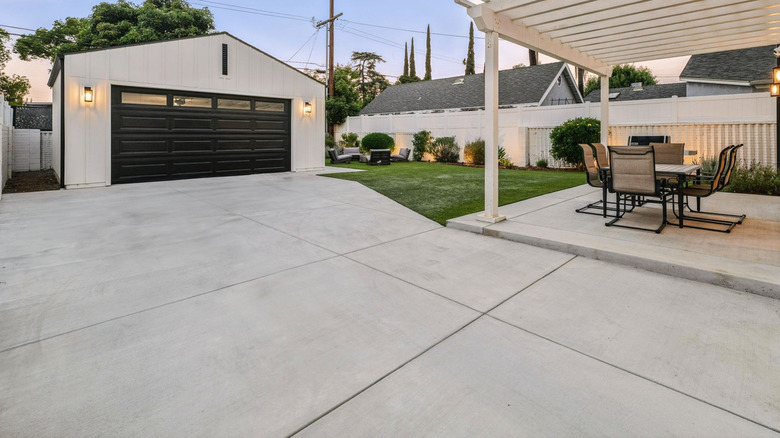
Having a nice patio to relax or entertain guests on is a good way to make use of your backyard, but not every patio is good for the environment. There are plenty of eco-friendly patio ideas you can use when it comes to picking your furniture and decor, but what about the patio itself? The material you choose can have a serious impact on the environmental footprint of this outdoor area. Concrete is a common choice, but unfortunately, the process of making it is harmful to the environment. Luckily, there are other options that are better for the environment! Reclaimed or recycled materials are always a good choice, and natural materials are often more eco-friendly as well.
There are even some ways you can make concrete more eco-friendly, although they may still not be ideal for you. Reclaimed or crushed concrete, which is taken from previous construction sites, can be used for new projects rather than going to waste. In fact, if you currently have a concrete patio you're trying to replace with something more sustainable, this may be a good option for you. You can give your old concrete away or find a local service that takes discarded concrete to crush and reuse, which can mitigate some of the environmental impacts of this material. However, if you're building a new patio from scratch, it's better in the long run to pick a material that's easier to recycle or will break down naturally without polluting the environment.
Reclaimed bricks
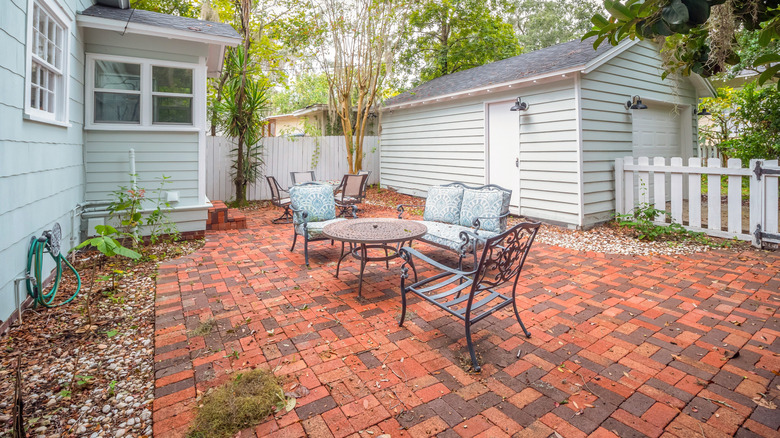
Bricks in general are more eco-friendly than concrete, as they're primarily made of clay with a few extra additives. However, reclaimed bricks have the extra benefit of being recycled, so you only need to worry about the environmental impact of transporting them to your home. Not to mention they can bring a sense of history and personality to your patio. Depending on where they came from, you could get bricks with interesting markings left from how they were made or the wear and tear of previous use. This makes them the perfect material for a warm, rustic patio.
Permeable pavers
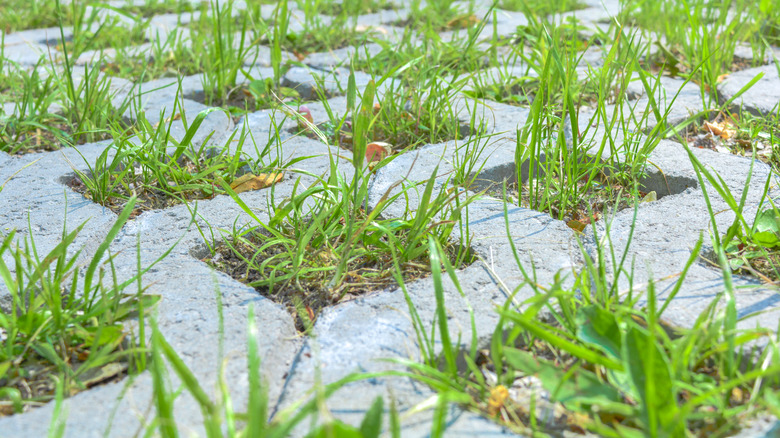
Permeable pavers can be made from a range of materials, but what makes them eco-friendly is that they allow water to pass through them, reducing the amount of runoff from your patio. They're also a great choice if you want something both eco-friendly and beautiful, as they're designed to allow grass or other plants to grow through their holes. The only downside is positioning your furniture is a bit more difficult, as you won't want some legs on the paver and some in the grass.
Clay pavers
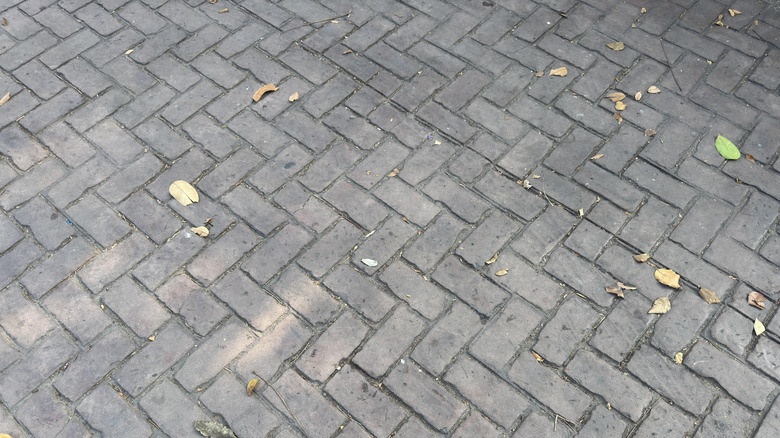
Eco-friendly clay pavers are a fantastic alternative to concrete. They're similar to bricks, but in addition to the classic rectangular shape, clay pavers can be found in other shapes, colors, and styles. Since they're made from natural clay, you can commonly find them in shades of red, brown, gray, and black. Clay pavers can be recycled, and their natural ingredients mean they're unlikely to harm the environment as they break down. Locally sourced clay is ideal for keeping your environmental footprint as small as possible, and you may be able to find reclaimed clay pavers as well.
Gravel
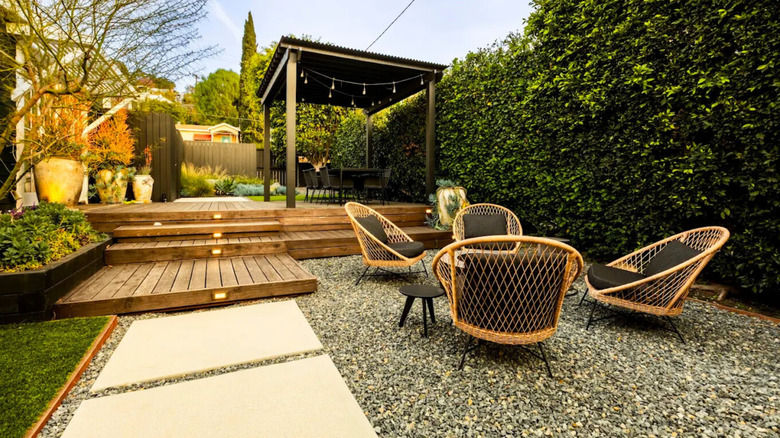
Gravel may not be the perfect material, but it is more eco-friendly than concrete. Its porous nature allows water to soak through it, and being made of natural stone means it's less likely to do serious harm as it breaks down. There may also be some local sources of recycled or reclaimed gravel that you can use instead. Be sure to look at the specifications of what you're buying, as recycled gravel sometimes refers to crushed reclaimed concrete and asphalt. While this is still more eco-friendly than using new concrete, it may not be quite what you're looking for.
Recycled rubber pavers
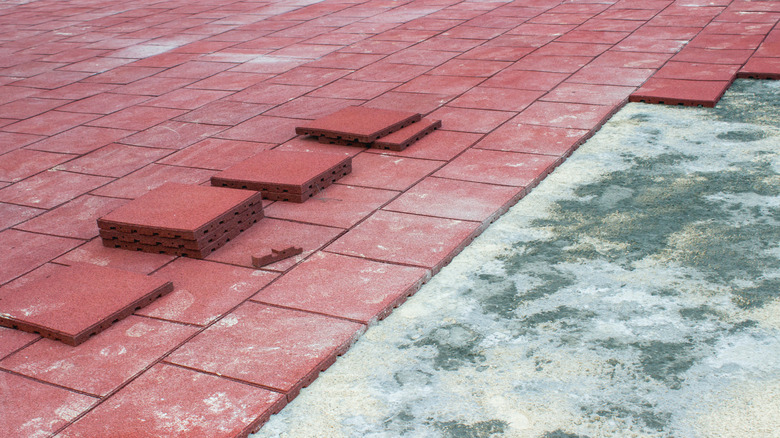
Though rubber on its own may not be eco-friendly, pavers made from recycled rubber help reduce the amount of the material sitting in a landfill. The recycled rubber commonly comes from old tires, and the pavers are durable and softer than stone or concrete. Since they're synethetic, they come in a wide variety of colors and shapes, making them a good fit for people who want a more whimsical or fun patio. With that said, you can also find recycled rubber pavers that mimic the look of brick or stone if you want a more toned-down aesthetic.
Natural stone
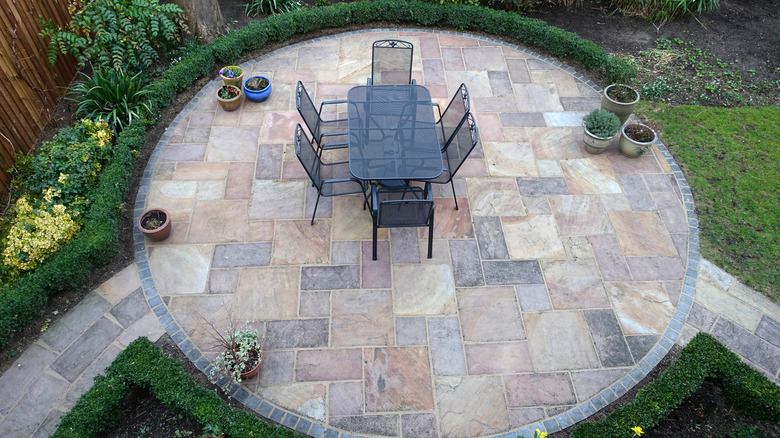
Similarly to gravel, natural stone patios are not perfectly eco-friendly, but they're still a better option than concrete. The process of creating them produces less pollution, and natural stone has a longer lifespan, meaning it can be reused more often. Reclaimed stone pavers are a great option if you want to take your environmental impact even lower. Plus, they may be more weathered, offering a more unique look by giving your patio a lovely rustic vibe.
Wood
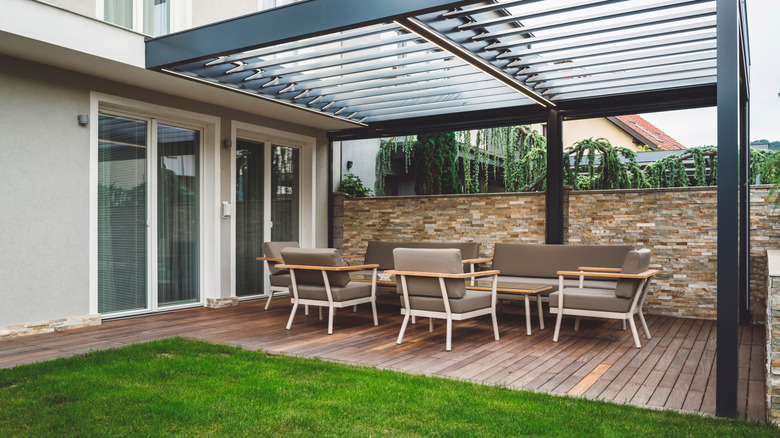
Wood is often used for standard decks, but it can be used for your patio or low-profile deck as well. The material is eco-friendly due to being a renewable resource and biodegradable. For the lowest possible impact, look for local, sustainably harvested wood. Ideally, your wood patio should have some space underneath it rather than sit directly on the ground to reduce the risk of rot. Just bear in mind that this can make installation a little trickier, since you can't simply lay down boards like you would bricks or stone.