

Skip Concrete — There's A Gorgeous, More Eco-Friendly Option For Your Patio
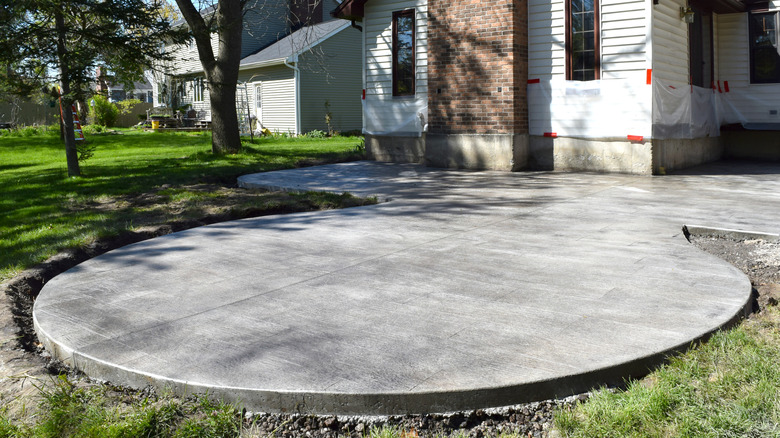
If you're planning a patio, there are so many factors to consider. You have to choose a patio layout, determine what sort of work needs to be done to level the area, and of course decide on a material. Concrete is a common choice, but it isn't the most eco-friendly option. If you want something sturdy, stylish, and better for the environment, why not try natural stone? It creates a beautiful and unique patio while having a smaller impact on the ecosystem than concrete.
You may be wondering what makes natural stone a more eco-friendly alternative to concrete. After all, doesn't it still need to be quarried, processed into the correct shape, and shipped from one place to another? Yes, natural stone does still have an impact on the environment for all those reasons. However, concrete has a much larger impact. Making concrete produces a lot of CO2, and while scientists are hard at work trying to reduce those emissions, the impact is still high for the time being. You can bring the impact even lower by using stone from a local quarry, stone that has had minimal processing, or even reclaimed stone that was used previously in a different project.
Compared to concrete, natural stone has a few other benefits. In terms of aesthetic value, the natural variations in stone are both gorgeous and unique. You may find two stones that are similar, but you'll be hard pressed to find ones that are identical! The range of stone colors also makes them a good choice for more design-minded homeowners. While concrete can be colored with paints, stains, or dyes, it requires extra effort compared to stones that have natural color to them. Stone also tends to be more durable, while concrete may crack or crumble more quickly.
Designing your natural stone patio
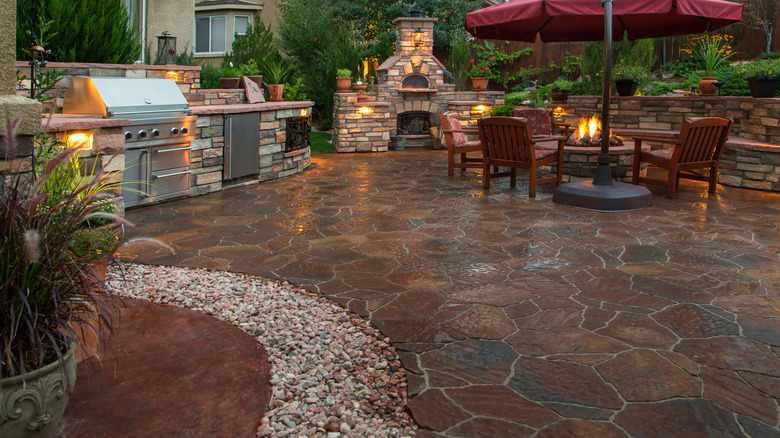
Start by measuring the size and shape of your patio. This can help you determine how many stones you need and may help you rule out certain design options as well. If you want a large patio, then it will take longer to fill it with smaller stone pieces and you might want to consider using larger stone pavers instead. Next, consider the general aesthetic and vibe you're looking for. If you want something more rustic and natural-looking then the classic, irregular shape of flagstone may be a good fit, and you might want to know how to build a flagstone patio. On the other hand, if you love the durability of stone but want something a little more uniform then natural stone pavers that are cut into squares or rectangles might be a better fit.
When it comes to color, commonly used stones tend to be in shades of gray or warm earth tones. For gray stones, consider using granite or bluestone. Travertine, limestone, and sandstone are typically warm, earthy neutrals. Flagstone is commonly available in both, which also makes it a great option if you want a more mottled look for your patio. In addition to color, it's a good idea to see what options can be sourced locally as well as what reclaimed options are currently available. Finally, consider how you want to keep the stones in place. Low-profile edge restraints are a good choice for tight-fitting pavers, while sand, gravel, or stone dust can fill in the larger gaps between irregular stones. While you may be able to install the stones and use your patios without it, your stones may shift and you may end up needing to get rid of grass between your patio stones as it grows.