

Out With Asphalt Driveways: 5 Cheaper Alternatives That Look Just As Good
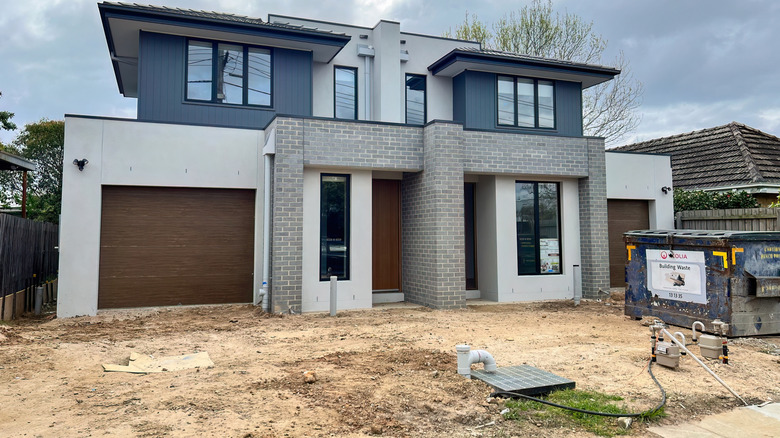
The asphalt driveway has emerged as the default budget option — it's cheaper than concrete by about 33%. You might be thinking that you're limited to comparing the costs of concrete, gravel, and asphalt driveways, but there are a few other options, including recycled asphalt, crushed concrete, and even wood chips.
To be sure, at $4-$8 per square foot, asphalt might not be your idea of a budget option. A single-car driveway can typically be as large as 300 square feet, so asphalt can cost you $2,400 or more, depending on where you live. That doesn't include grading and site preparation, or options such as underlayment. Asphalt has other limitations: it can be damaged by chemicals, water and freeze-thaw cycles, constant exposure to the sun's UV radiation, and high heat. Fortunately, some of the best alternatives to asphalt driveways are no-brainers for durability, style — and cost.
Of course, style is largely a subjective matter. Since we associate it so strongly with roadways and parking lots, asphalt has a finished, somewhat polished look built in, but it can also seem somewhat industrial and less than homey. That's one reason it's sometimes colored and patterned to resemble other materials for high-end applications.
Natural gravel
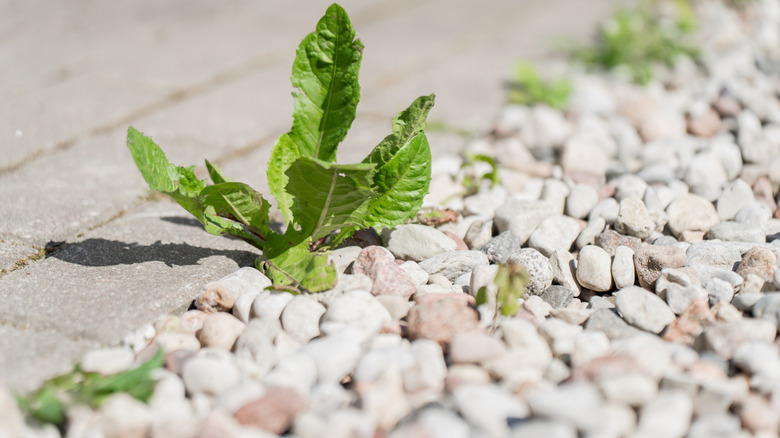
Gravel is a common alternative to asphalt. For a rustic home, or one well-integrated into its gardens or natural environment, it can be even more fitting than asphalt. Gravel can also be a bit confusing. Many in the construction aggregate industry apply the word "gravel" only to naturally occurring, smooth rock, but a more common usage is just about everywhere these days, in which gravel is conflated with crushed rock. As a result, you might see extraordinary ranges in price — from $20 to over $1,000 per ton – when shopping around for gravel.
Here's the traditional distinction: While natural gravel has rounded edges from erosion in riverbeds and fields, crushed stone has sharp edges and is made by crushing limestone, granite, sandstone, quartzite, basalt, and other stone. In driveways, they tend to be used in similar sizes. They can go up to around 1.5 inches in diameter, but they're most commonly ¾ inch to 1 inch. Both create a more naturalistic impression than asphalt.
Perhaps surprisingly, at a cost of $1-$3 per square foot, natural gravel turns out to be the cheapest way to pave your driveway in many situations. Whether it's actually cheaper depends on availability, though local gravel or crushed stone should be the least expensive option in your area. Depending on its dimensions, a natural gravel driveway might cost between $2,000 and $25,000, but you can often expect it to be less than $2,000. This includes the price of labor and materials, but not grading, site prep, drainage improvements, geographical variations in cost, or installation options, such as geotextile fabric or a stabilization grid.
Crushed limestone
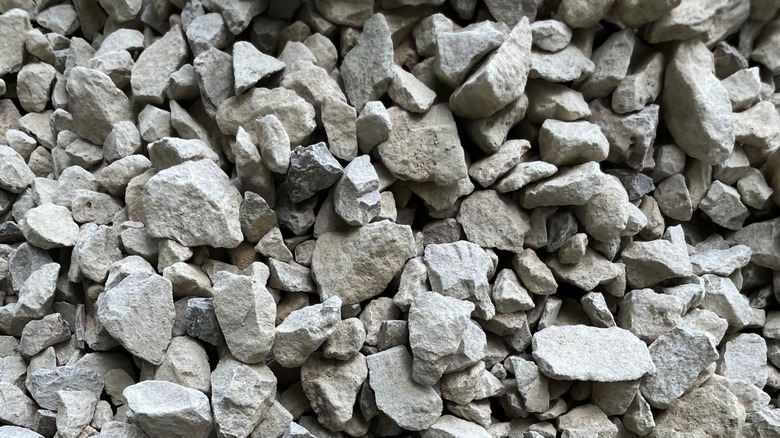
There are many things sold as "gravel" that are really various types and combinations of crushed stone. One that works as a consistently cheaper, more durable alternative to asphalt driveways is crushed limestone, which is mechanically broken, natural sedimentary rock that renders a more solid surface when compacted. It costs about $2-$5 per square foot, or around $120 per ton for #57 (the grade most commonly used for driveways).
Note that crushed stone with a base of crusher run (a grade of highly compactible crushed stone that includes dust and finer particles) is widely considered to be the best gravel option. It can also be deeper and more expensive, since both the compacted base layer and the decorative crushed limestone layer must be deep enough to function properly. A crusher run base costs between $18 and $30 per ton.
While crushed limestone sometimes costs slightly more than natural gravel, it also requires less maintenance. On the other hand, crushed limestone can be dusty, and is susceptible to weeds. As a result, the appearance of crushed limestone is generally rustic and natural in the same way as traditional gravel, but (especially without careful maintenance) can create the impression of a gravel road rather than a country home.
Asphalt millings
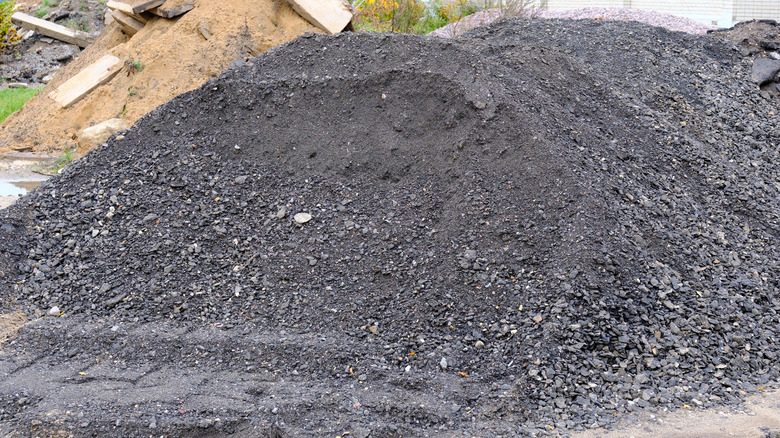
Asphalt millings consist of reclaimed asphalt pavement (RAP) ground down to the size of gravel. While asphalt millings don't drain as well as gravel, they do offer a number of advantages over both crushed stone and natural gravel. The millings are more durable and easier to maintain, and many consider a driveway made from them to have a more pleasing appearance.
After compaction, reclaimed asphalt mostly creates the same impression as virgin hot mix asphalt, but typically has rougher edges and a slightly looser surface. Older asphalt millings can be dried out and, therefore, perform poorly when reused. Try to find screened millings so you can reduce the variations in finish quality and performance. Asphalt millings also tend to be slightly less expensive than the cheapest gravel options, at $1 to $3 per square foot. It's also quite low maintenance.
Recycled asphalt is hard, stable, and strong when compacted, capable of handling heavy trucks thanks to the tendency of the asphalt to bond together around aggregates. It's also quick to install. As a recycled product, asphalt millings are considered a sustainable option for reducing landfill loads and conserving its natural resource components, such as bitumen and aggregates. A driveway made from recycled asphalt drains reasonably well and can last as long as 30 years. The main downside is there's usually little in the way of quality control, so the recycled materials might include materials that reduce its stability, and sometimes harmful contaminants such as oil and lead.
Crushed concrete
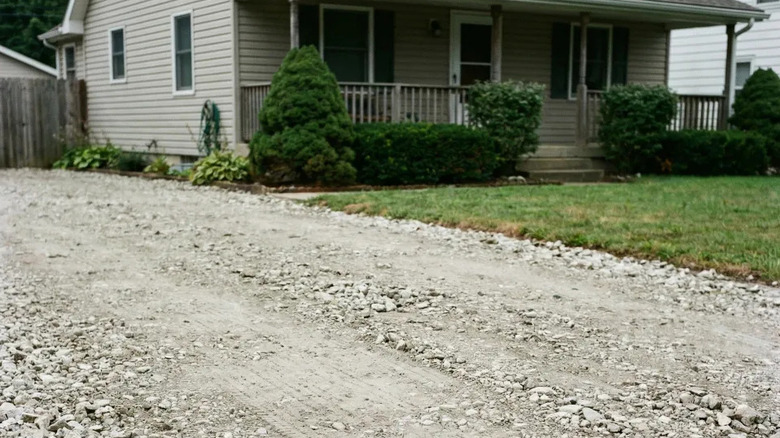
Speaking of recycling, you could also consider crushed concrete for your driveway. It's often referred to as recycled concrete aggregate (RCA). As with crushed stone, the ideal layering of crushed concrete can make it a little challenge to price. RCA is screened to different standardized sizes, and the ideal structure for a driveway includes a base layer of larger RCA and a more refined surface layer of particles that are ¾ inch or less.
Base RCA costs around $18-$30 per ton, while "¾ minus" RCA costs $15-25 per ton. There is, as you might expect, a wide range of appearance options available here, largely depending on the size of recycled aggregates you use. Smaller, uniform screened concrete tends to create a more finished impression, especially when contained by edging, while unscreened and larger aggregates look similar to crushed limestone.
Crushed concrete is extremely stable, owing to its angular shape and its habit of self-cementing as aggregate and concrete dust are exposed to water and compression. The stability makes it appropriate for heavy loads, so it's stronger than gravel and can manage vehicle traffic, long-term weather, and freeze-thaw cycles without damage. RCA typically drains quite well. The main downside of crushed concrete is that inadequately stabilized RCA can have gravel's habit of thinning over time. To avoid this issue, use a stabilizing grid or top-dress the surface every year or so.
Wood chips
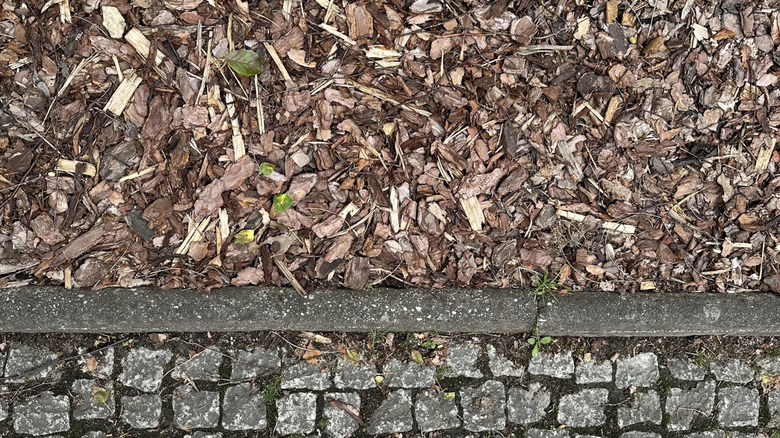
If recycled aggregate and crushed stone are still outside of your budget, there's a rustic alternative to gravel driveways that's cheaper and can even be weed-resistant in the short term. Meet the wood chip driveway, which you might not have heard of — likely because it has some problems.
The upside is that a wood chip driveway has the feel of a well-worn forest path, which is suitable for some rustic rural homes. On the other hand, it doesn't compact or drain as well as gravel, and drainage is important because wood chips have a tendency to deteriorate, float away, or both. This can put a bit more burden on the grading and installation process, so wood chips work best for level driveways. They also attract termites, so they should be placed at a distance from wood structures. They can be slippery when wet as well, creating problems for both foot traffic and vehicle traction. While wood chips initially suppress weeds, they're basically self-composting, making them a prime weed-growing medium in the long term. But they're a good choice for muddy soil, or when the budget simply can't withstand anything more expensive.
A driveway made of wood chips requires regular maintenance; plan to top off a wood chip driveway with 10-15% of the original volume every year to make up for deterioration. Still, you really can't beat the price. Wood chips can sometimes be had for free from arborists and utilities that regularly remove trees and must dispose of them while aggregate suppliers sell wood chips for $27-$60 per cubic yard.