

Skip Gravel Driveways: The Cheaper, Weed-Resistant Material For A Rustic Look
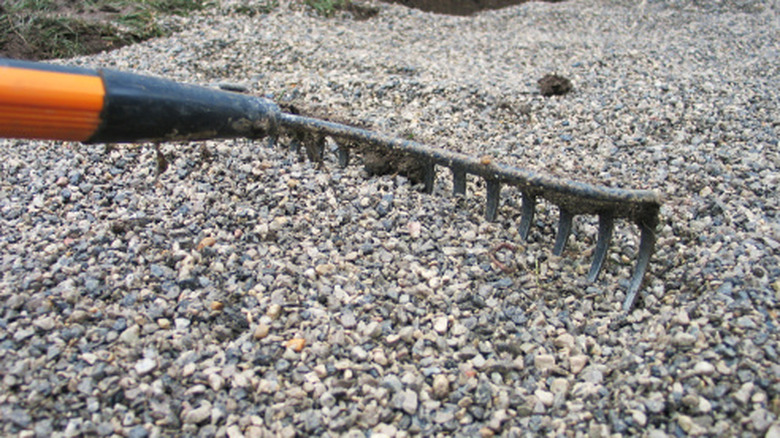
When it comes to paving driveways, many homeowners consider concrete, asphalt, or gravel. When comparing the three, gravel wins out as the most affordable driveway paving material, though upkeep and the potential for weeds are common cons. But what if we told you there is an even cheaper, more weed-resistant alternative to gravel that will give your driveway a rustic look and is more environmentally friendly? And would you believe us if we told you that material was wood chips?
Wood chips are a natural byproduct of tree removal and are a sustainable and highly weed-resistant material that can be used to replace landscape fabric. When laid down several inches thick, wood chips act as a suppressing layer that deprives weeds of the necessary sunlight they need in order to grow. Gravel, by contrast, can allow light in if not compacted properly, which will help the weed seeds germinate.
In terms of pricing, there are ways you can get wood chips for the amazing price of $FREE.99. You can pick them up yourself if your local DPW allows, or you can see if you can make a deal with a tree removal service to drop off its excess chips. If you end up purchasing wood chips, you can find them for around $30 per cubic yard. Prices vary depending on type, but many gravel varieties will cost you $50 per cubic yard or more. That's immediate cost savings that can help you get a beautiful rustic driveway.
How wood chips can create a sustainable and dependable driveway
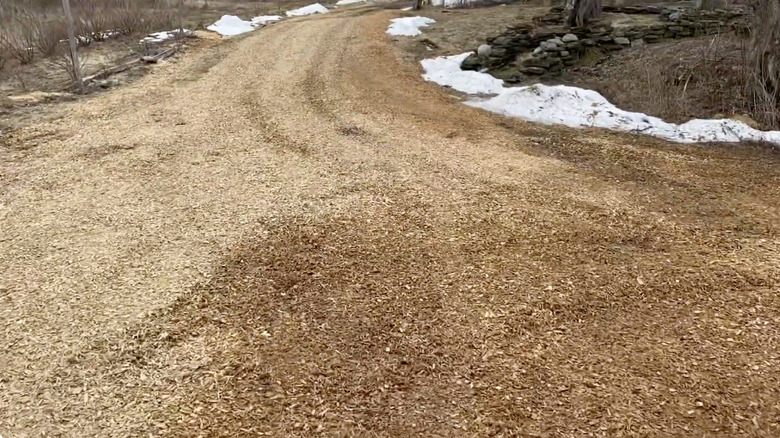
Now, you're likely wondering how a wood chip driveway is going to be as dependable as gravel. Since wood naturally decomposes and feeds the soil with nutrients, you are going to have to replenish your driveway with new wood chips often in order to keep it fresh and usable, whereas gravel will last an average of 10 to 15 years before needing replacement. Depending on your viewpoint, this could be viewed as a con for maintenance or a pro for affordability and environmental sustainability.
As far as actually using them to pave a driveway, wood chips appear to be surprisingly dependable. YouTuber and permaculturist Ben Folk tested this out on his own driveway and noted the wood chips created an insulating layer that prevented the ground from thawing too quickly and creating a muddy mess on his Vermont homestead. By contrast, the dirt/gravel road's lack of this insulating layer allowed the thaw to create a very muddy roadway.
In a follow-up video, Polk said that each year he uses about 5 yards of wood chips to add a fresh top layer to his 150-foot driveway and large parking space. Aesthetically, the wood chips naturally prevent soil compaction, so there are no low spots even after being driven on. Wood chips also come in a wide array of colors and can be very attractive for those in rural areas looking to make a more cost-effective driveway, and for those in suburbs wanting a more rustic look to their homes. However, keep in mind that wood chips are more combustible than gravel, so if you live in an area prone to wildfires, you may want to reconsider this driveway choice — or take precautions and use fire-resistant wood chips.