

Concrete Vs. Gravel Vs. Asphalt Driveways: Which Costs Less?
For most homeowners, the decision of what driveway paving material to use is going to boil down to three common choices: concrete, asphalt, and gravel. Since budget is a huge part of any driveway project, it's critical to know which costs the least in terms of upfront prices for materials and labor, driveway longevity, and maintenance. Gravel is the cheapest option to install, but depending on your situation, it may not be the most cost-effective choice long term. To attain an accurate idea of cost, we'll be basing our calculations on an example two-car driveway that is 24 feet wide by 20 feet long, or 480 square feet.
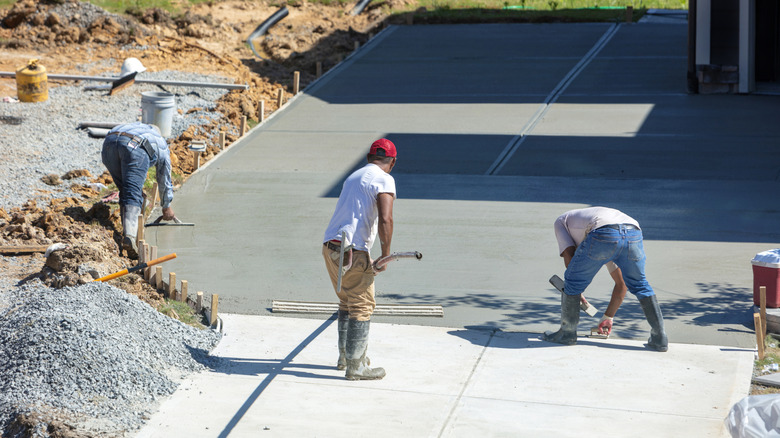
We'll start with concrete, a strong paving material made from aggregates, cement, and water that can hold upwards of 10,000 pounds, depending on the thickness of the slab. The upfront cost for professionally installing concrete is $8 to $20 per square foot, according to Angi, meaning our sample driveway could cost roughly $3,840 to $9,600.
When properly built and maintained, a concrete driveway's typical lifespan is 30 to 40 years. This is only possible with regular upkeep activities like annual cleaning, repairs ($3 to $25 per square foot, depending on repair type), and sealing every two to five years that costs roughly $1.35 to $2.50 per square foot, according to HomeAdvisor. On the high end of our example driveway, you're looking at around $1,200 for resealing, alongside the cost of any necessary repairs or professional cleaning. While not the cheapest option, concrete's lengthy lifespan could end up costing you less over time.
Asphalt is cheaper than concrete but has a shorter life
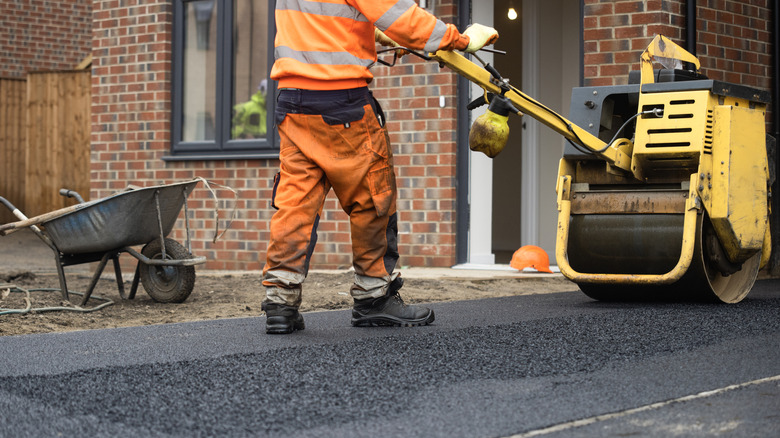
Next we have asphalt, which combines aggregates like crushed rock and sand with a petroleum byproduct known as bitumen that gives asphalt its characteristic black sheen. Asphalt is laid out hot and rolled to compact to the shape of the driveway. Costing $7 to $15 per square foot (per Angi), our 480 square foot example will have an installation cost ranging from $3,360 to $7,200. So, up front, asphalt costs less than concrete. However, there are also some other cost-saving and material benefits to asphalt you might want to consider.
While it only has an average lifespan of about 20 years, asphalt is a much more flexible material than concrete. In colder areas like the northeast, where the freeze-thaw cycle could easily cause cracking in concrete, the asphalt can move with the frost heaves with less damage. That said, damage still occurs in asphalt, but maintenance is going to be cheaper than concrete.
Asphalt repairs like filling potholes, fixing minor sinking, and patching seams and cracks will cost between $2 to $5 per square foot. You should also be sealing your asphalt with protective coating every two to three years, which will cost about $1.25 to $1.50 per square foot. So, for our sample driveway, that's a bi-annual cost of $720 for sealing, and $2,400 on the high end of repairs. So, asphalt is affordable, flexible, and relatively cheap to repair, making it a great paving option despite not having the longevity of concrete.
Gravel is the cheapest (and possibly easiest) option
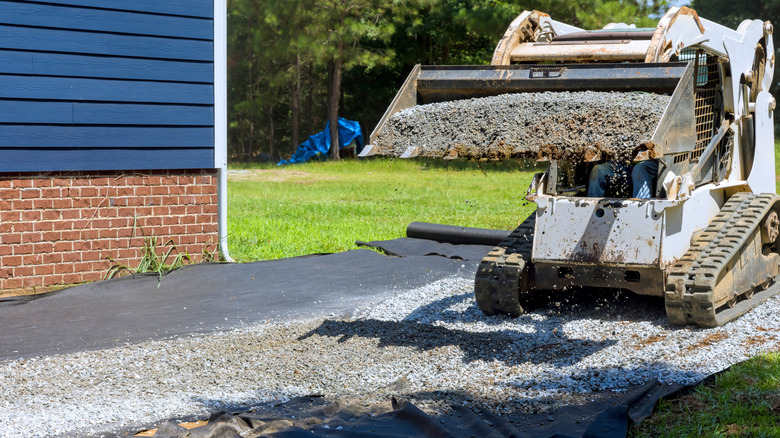
There is no question that gravel, which is compacted loose aggregates, is the cheapest driveway paving material of the trio in terms of upfront costs. According to Angi, gravel has an average price of $1 to $10 per square foot depending on the type of gravel, putting our example 480 square foot driveway at a cost of only $480 to $4,800 to install. Being permeable, gravel is a great choice for rainy areas that need a well-draining surface, though heavy rain can cause washout. As solid surfaces, concrete and asphalt could be laid incorrectly and potentially have drainage issues that become expensive to fix.
In terms of maintenance, a lot of it may be performed by the homeowner, especially if they have a tractor with box-blade or landscape rake attachments. On average, however, typical gravel maintenance like regrading, adding fresh gravel occasionally, and weed control will run the gamut of between $100 and $400 annually. This may sound cheaper than concrete or asphalt, but when you add up the costs, gravel can be expensive and time-consuming to maintain every year.
Then, there is the lifespan to consider. Technically, with additional material and maintenance, a gravel driveway might seemingly last forever. However, most last between 10 to 15 years before needing substantial reworking, which is much lower than asphalt or concrete. Still, considering just how affordable the material is, the shorter lifespan could be worth it. Whichever material you choose, proper installation will be the key factor in whether you get a quality driveway.