

Sharpen These 12 Tools To Keep Them Working As Good As New
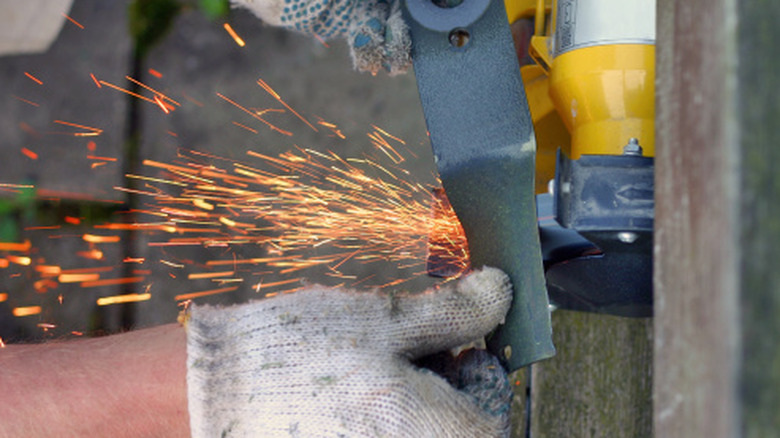
The thing about bladed tools is that they are actually safer and more effective when they are sharp than when they are dull. A blunt blade requires more work to use for its purpose. This added effort increases the potential for accidents. Sharp blades, by contrast, can cut with relative ease, requiring less force and thereby being safer to use. In order to keep your bladed tools working like new, you need to be committed to sharpening them.
There are a wide variety of everyday tools that need frequent sharpening. Outdoor tools like shovels and chainsaws, as well as woodworking tools like chisels and saw blades, all require sharpening in order to work effectively. There are also common indoor tools like kitchen knives and scissors that need to be sharpened on a regular basis.
There are many different tools you might use to sharpen these blades. Everything from sharpening stones to bench grinders or angle grinders can be used on the tools we're about to list. We'll tell you what sharpening techniques work best for each tool, why you should keep them sharp, and how often you should be sharpening to keep them working excellently.
Chainsaw
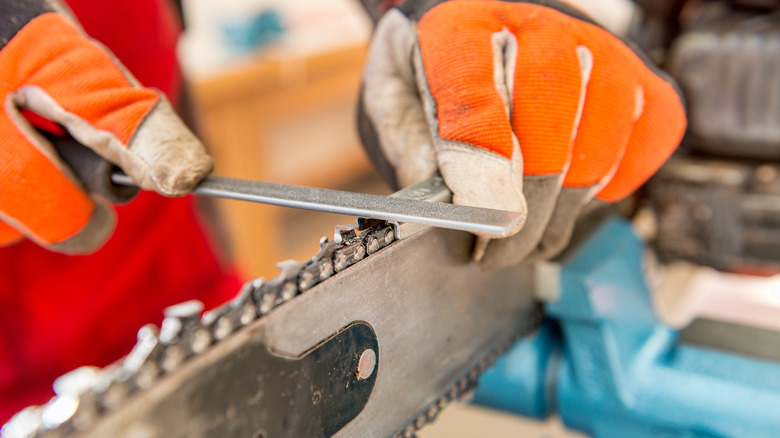
A chainsaw is one of the most effective tools you can have if you've got a property that requires a lot of outdoor work. That said, the blades can get dull depending on how often you use them. Generally, you should sharpen your blades after every use, every few hours if you're working on a big project, or immediately after coming into contact with dirt, rocks, or nails. You can sharpen the blades with metal files or chainsaw blade sharpening kits, but a bench-mounted, electric sharpener might just be the easiest way to sharpen chainsaw blades.
Chisel
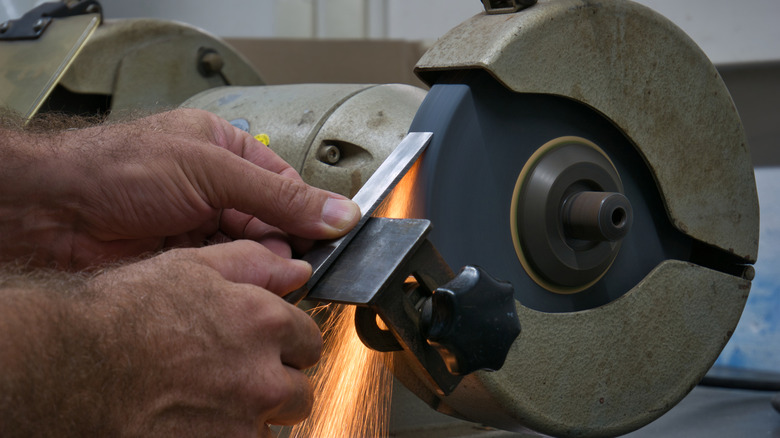
Any woodworker knows the value of a sharpened chisel. It makes slicing intricate cuts into wood far easier, allows for tight-fitting joints, and protects the wood layers beneath. As with other blades, a dull chisel will not cut with as much control or as cleanly, making it more dangerous to use. You can sharpen chisel points using a bench grinder, which is a fast and effective method, but the absolute best way is to use a whetstone to get a super sharp finish. The frequency of your sharpening will depend on how heavily you use your chisels, so just aim to sharpen them when they start to dull.
Kitchen knife

If you've ever tried to slice through raw chicken or a tomato with a dull kitchen knife, you know just how important sharpening these blades can be. As one of the most frequently used tools on this list, your kitchen knives are the hidden key to an efficient and safe kitchen. But exactly how often should they be sharpened? Aim to sharpen your kitchen knives twice a year and hone them with a honing rod after every use to keep them straight and smooth. Sharpening can be accomplished with whetstones and diamond stones, as well as manual or electric sharpeners.
Pruning shears
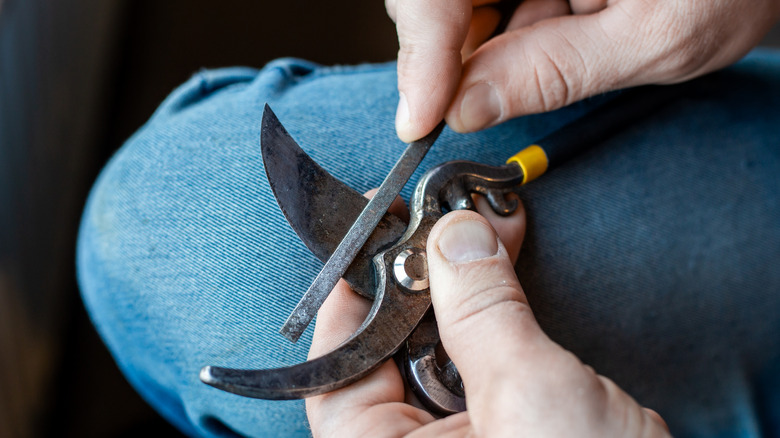
Whether you're pruning trees, shrubs, or flowers, having a good set of sharp pruning shears could mean the difference between a healthy plant and a damaged one. Sharp pruning shears allow clean cuts that heal quickly, whereas dull ones can crush or tear away tissue and lead to further damage. You'll know it's time to sharpen your shears when it takes more effort to cut and they don't cut cleanly. You can perform sharpening touch-ups after heavy usage, but aim for more thorough sharpening with a compact sharpening stone or file at least once a year.
Axe
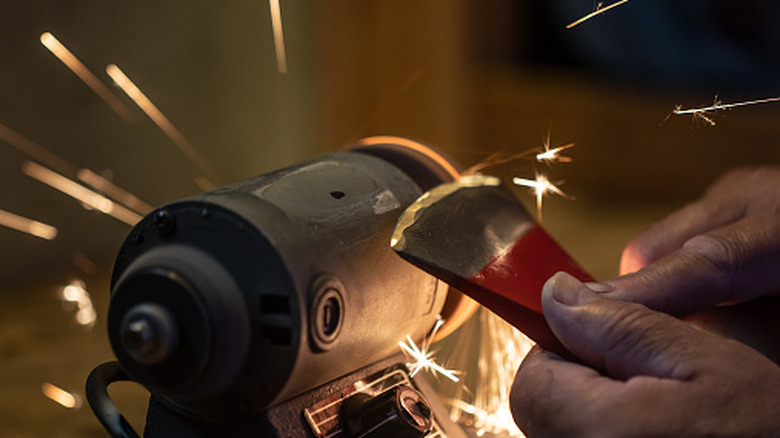
Though they are now in competition with chainsaws, a sharp axe is still worthwhile in case you're ever in need of its brute force. Consisting of a curved, metal cutting edge, an axe should be sharpened every few months in order to keep the blade from forming too dull an edge. This could cause the axe to bounce off the wood and potentially hit you instead. A small sharpening stone is ideal for sharpening while you're using the axe, but a bench grinder is going to be best if you need to remove any dings or dents. This sharpening rule applies even if you don't use the axe that much.
Hedge trimmer
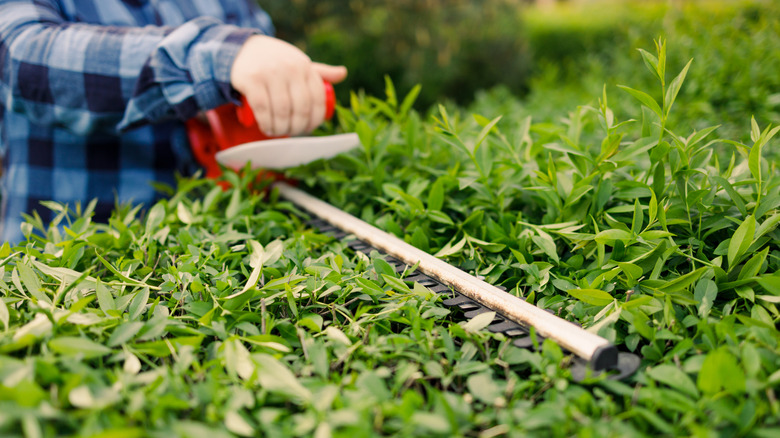
Regularly sharpening a hedge trimmer will prevent the blades from getting consistently jammed and your hedges from having frayed edges or uneven cuts. You can hire a professional to sharpen your hedge trimmer, or you can do it yourself, using a file to clean up the blade face and a whetstone to remove any burrs. The key to this is patience, because it can take a good amount of time to get this tool to the point where it'll start cutting easily again. Aim to sharpen it for every 50 hours of use.
Lawn mower
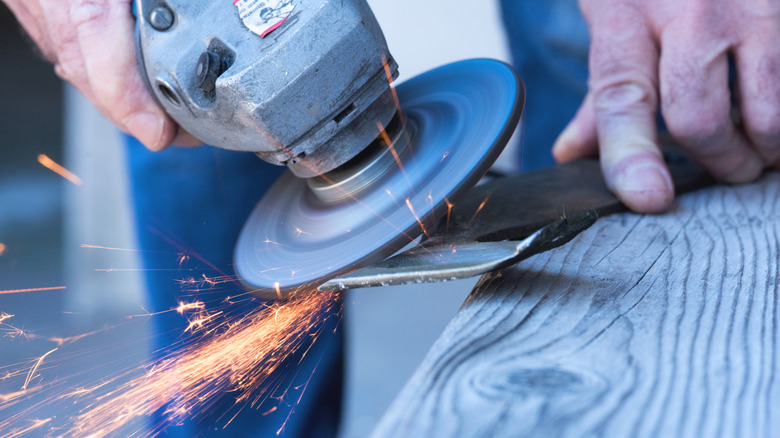
Making sure your lawn mower blades remain sharp throughout the mowing season is one of the best ways you can ensure a healthy lawn. Sharp mower blades cut the grass cleanly and evenly, allowing it to grow back thicker and healthier. While you could use a bench grinder, there are a number of different alternatives, like an angle grinder or a cordless drill corundum stone attachment, that make the process quick and easy. Aim to sharpen your mower blades once a year, as well as whenever you hit something that could easily blunt the blade.
Hand plane
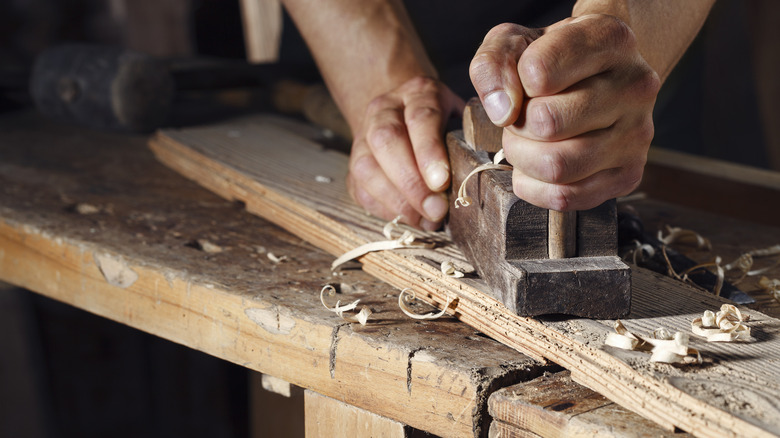
A hand plane remains one of the best ways to make sure that you get smooth, level surfaces and edges. The only way this is possible is for you to have a sharp blade, which is set inside the body of the plane. You can sharpen these the same way you would with a chisel, with a bench grinder or whetstone. How often you do this depends on how often you use your plane. If you use it frequently, sharpen whenever you feel the blade isn't biting into the wood or cutting regularly.
Shovel
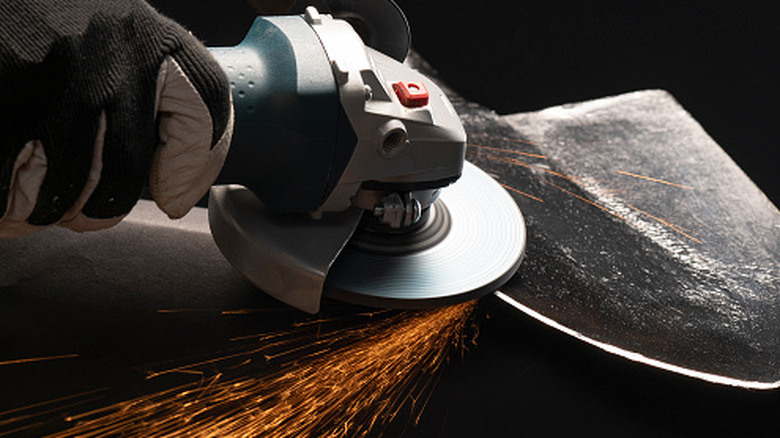
Really? You need to sharpen your garden shovel? Think about it: What is your garden shovel but a big blade that needs to slice its way through the ground? If you've ever had trouble getting your shovel to actually dig, it likely needs to be sharpened. Doing this with a metal file is probably the easiest way, as it is easier to achieve the necessary 45-degree angle the shovel needs. Any sharper, and the blade will actually get duller faster. You can also use an angle grinder if you're comfortable with the speed and power of the machine.
Garden hoe
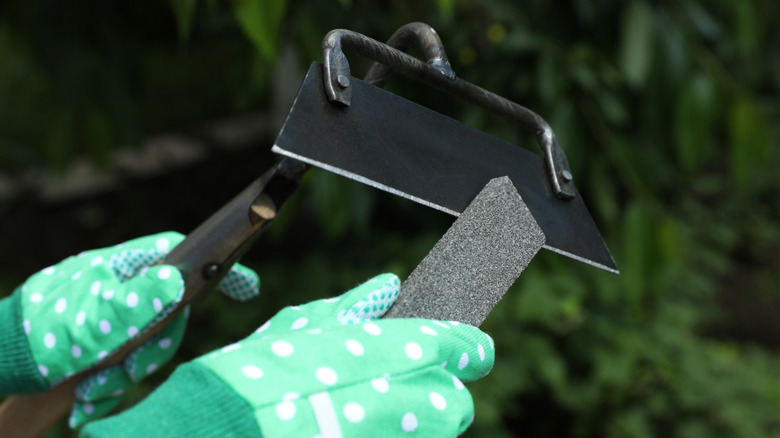
Like shovels, garden hoes also need to be sharpened in order to effectively pull up weeds. Also like shovels, garden hoe blades should be sharpened to a 45-degree angle for general-purpose soil chopping. You can get it finer, between 20 and 30 degrees, if you're using it for fine weeding. Frequency will depend on how often you hoe and the abrasiveness of the soil you encounter. You can sharpen the hoe blade with a metal file, then use 300-grit sandpaper to get rid of any burrs.
Circular saw
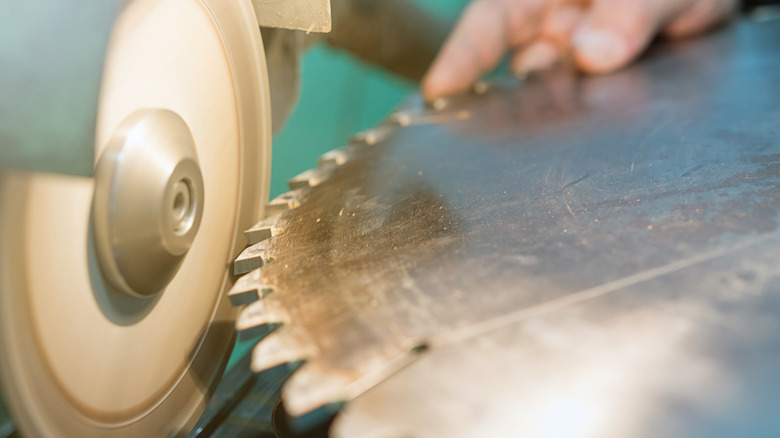
Like chainsaws, circular saw blades have fine metal teeth that will wear with use. You generally want to aim to sharpen a circular saw blade whenever you need to push harder to cut something, the wood starts burning, or the cuts are jagged or uneven. The best way to achieve a new sharp edge is to use a metal file attached to an angled guide to get the right angle cut on the blade. If the blade is bent or overly worn out, discard it and get a new one.
Scissors
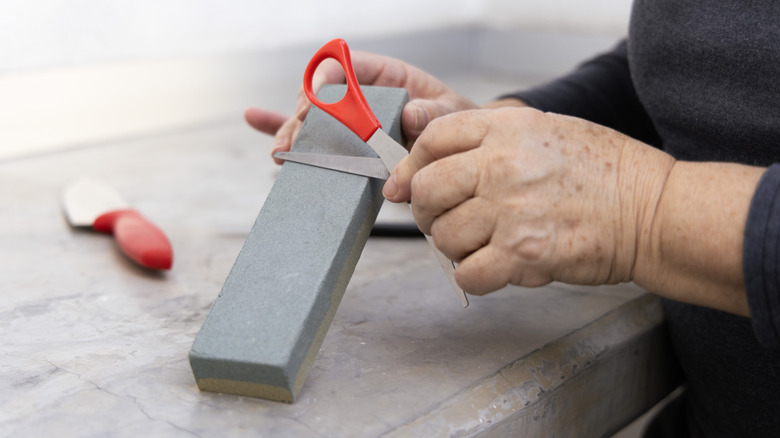
Yes, even your scissors should be sharpened every once in a while, though the frequency depends on how often you use the scissors and what you are cutting. In general, you can tell the scissors need to be sharpened once it's harder than normal to cut through something. You can use whetstones, sandpaper, files, and even aluminum foil. It doesn't take much to re-attain that sharp edge, so you won't need to spend a ton of time on it like you would with a chainsaw or circular saw blade.