

Move Over, Landscape Fabric: This Natural Alternative Blocks Weeds & Boosts Soil Health
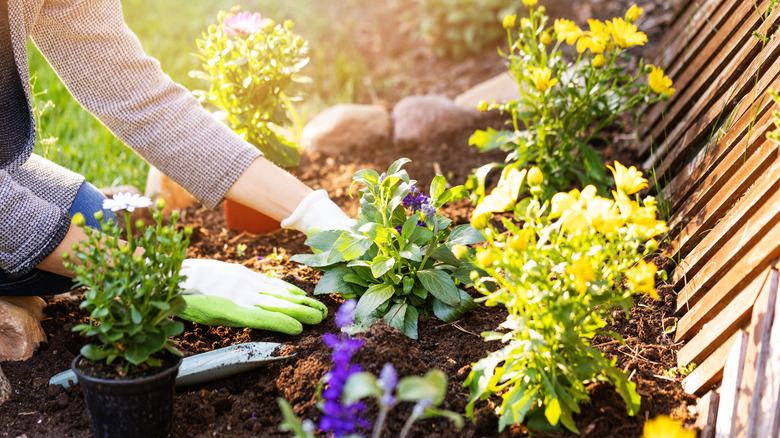
What's worse than weeds? They steal nutrients from your garden, are a pain to pull out, and pop up every season. Landscape fabric is one way to stop them, but there's a more natural way to go: Cocoa hulls (also known as cacao/cocoa shells or husks) can give your garden a boost of macro and micronutrients and block weeds at the same time.
Used as a mulch, cocoa hulls serve the same purpose as landscape fabric, minus many of the cons. One of the reasons to avoid landscape fabric is that it can harm the long-term health of your garden. Sure, it acts as a barrier, and prevents sun and water from reaching the weeds underneath. But it can also inhibit carbon dioxide movement between the soil and the air, restrict water flow, and be a source of microplastics. Fortunately, there are already many alternatives to landscape fabric that are better for the garden. Most of us know the standards: Bark mulch, wood chip mulch, and pine needles are eco-friendly alternatives that prevent weeds. And you can add cocoa hulls to that list of soil-friendly mulches.
A word of caution before we dig into the upsides of cocoa hull mulch: It poses toxicity risks to dogs and cats. Dogs can be harmed by theobromine and caffeine, two of the lingering compounds inside cocoa hulls. If animals are a concern, here's a guide on choosing the best mulch for your yard that includes options to keep your furry friends safe.
Benefits of cocoa hull mulch
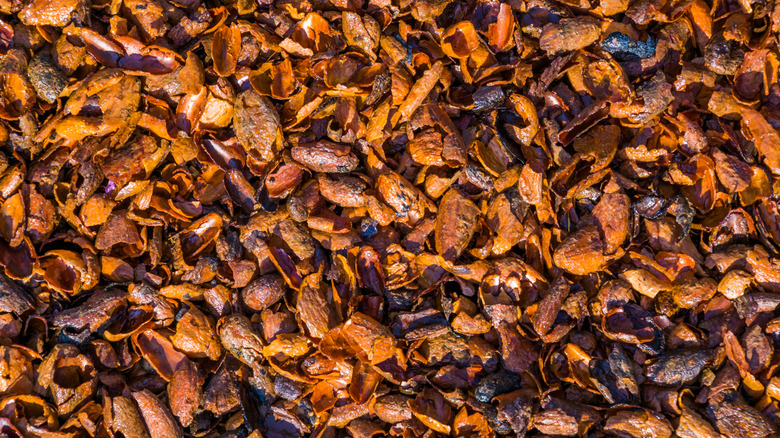
If dogs or cats are not a concern, cocoa mulch is a form of safe and natural weed control in the garden. Opting for a natural mulch like cocoa hulls over landscape fabric sets the stage for good microorganisms and worms to thrive. Unlike landscape fabric that is made of plastic, polyester, or polypropylene fabric, cocoa hulls won't seep plastics and chemicals into your soil over time. The hulls are a biodegradable source of biomass and nutrients (notably potassium and phosphorus), and help conserve moisture in the ground. While cocoa shells are one of the more niche, expensive forms of organic mulch, they create an attractive layer that can enhance the look of a prized flowerbed. You will need to renew cocoa hulls every growing season or so, but each application will feed your soil over time, rather than starve it of gaseous exchange and water.
Cocoa hull mulch can be found at major retailers and/or online, typically in 2-cubic-foot bags. To apply, spread cocoa hull mulch around plants you want to highlight in a 1–2 inch layer. If kept wet, cocoa hulls can develop mold in warm weather. Being careful not to overwater is the best prevention. If mold develops, it can be eliminated with a homemade spray of vinegar and water in a 3:1 ratio. Once your mulching is done, there is a bonus surprise: the smell. After applying, the cocoa mulch will smell like chocolate for a while. No more landscape fabric, healthier soil — and the scent of chocolate — make this mulch a potentially attractive alternative for small gardens.