

Leave The Landscape Fabric Behind: Here's Why You Don't Need It
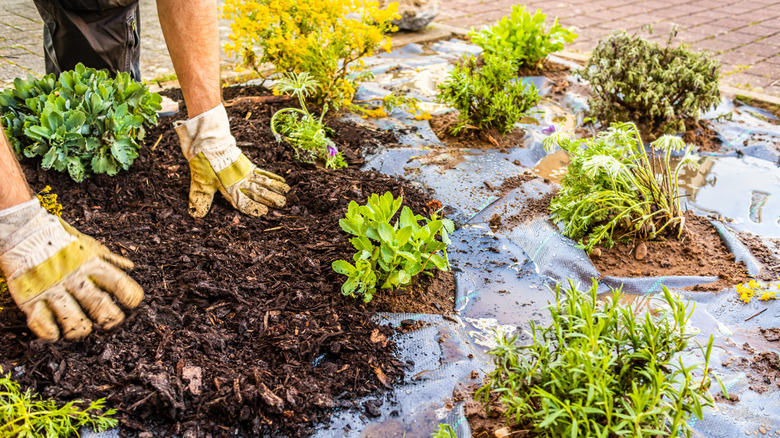
Pesky garden weeds can outcompete your more sensitive plants and leave your garden looking messy, so it's no wonder people are always looking for ways to get rid of them. One item that appears on many lists is landscape fabric. It's a thin sheet of material that physically blocks the weeds from growing, and it can be effective. However, it can also have some serious downsides, especially if it's used improperly or indiscriminately. There are better ways to achieve the same benefits without the drawbacks, so leave the landscape fabric behind and try other options such as cardboard, mulch, or straw to combat weeds.
Landscape fabric is an effective weed barrier, but sometimes it blocks the things you actually want as well. While it's designed to be breathable and let water and air through, the tiny holes can become clogged over time. This leads to unhealthy soil and, consequently, unhealthy plants, as water, air, and other beneficial soil additives like fertilizer fail to reach them. If you add mulch over your landscaping fabric, weeds can actually grow in the mulch itself, rendering your landscape fabric useless.
However, leaving the landscape fabric exposed causes other problems. It breaks down quickly in sunlight, resulting in holes or thin spots where weeds can easily push through. Plus, it's aesthetically unappealing to start and doesn't get more attractive when it starts breaking down. This makes it a better fit for keeping weeds from growing underneath your garden furniture or beside your home, where it is sheltered and you don't have other plants to worry about. In your yard or garden, though, it's not the best fit.
Replacing landscaping fabric
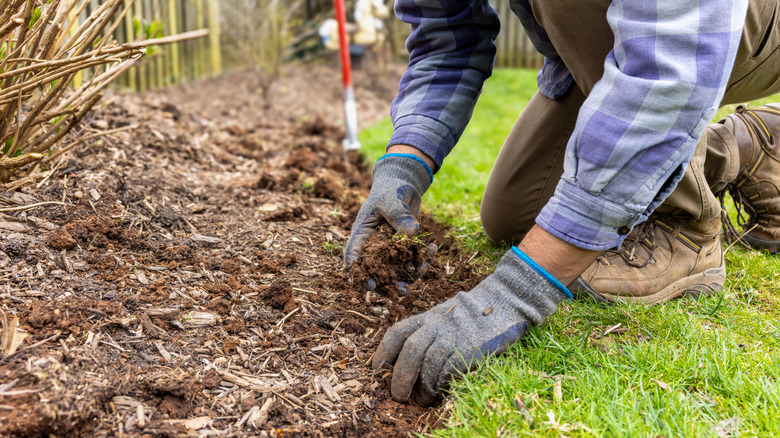
If you already have landscaping fabric in your garden, start by cleaning off anything you have on top of it. Scoop your mulch or decorative rocks to the side, but keep them close so you can reapply them later. Carefully remove all the landscaping fabric, and try not to leave any scraps. Broken shreds of the landscaping fabric can become pollutants, so pick everything up and bag it. You may need to cut the fabric into pieces, especially if it has started to break down and roots are growing through it.
Landscape fabric can't be recycled, so either toss it in the trash or find a clever DIY project to reuse it at home. Once your landscaping fabric is gone, take a moment to assess your soil. If it wasn't in place for long, your soil may be just fine. However, you may need to add compost or fertilizer to revitalize it, and you can use a garden fork to aerate compacted soil.
Next, you can replace your landscape fabric with another barrier to prevent weeds from growing in. If you had a layer of mulch over your landscape fabric, you can spread it back over the area. Eco-friendly alternatives like wood chips, pine straw, and even cardboard can be used to keep the weeds at bay. However, no barrier is 100% effective. You'll still need to refresh your mulch of choice every so often as it breaks down, and there will probably be a few stubborn weeds that need to be hand-pulled.