

7 Signs That Prove It's Time To Sharpen Your Lawn Mower Blades
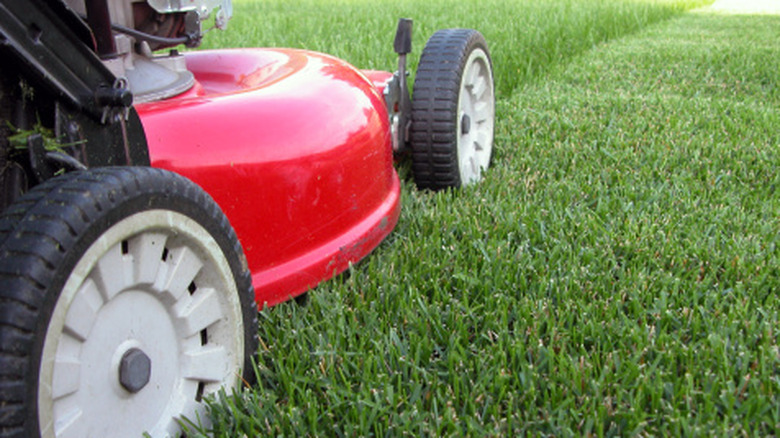
Dragging out the lawn mower on your day off to mow your grass is a time-consuming chore that many property owners dread. But it's an unavoidable part of yard maintenance if you want to have the greenest lawn on the block. To get the job done as quickly and efficiently as possible, you must keep your lawn mower in top condition. Knowing when to sharpen the blades is an important part of that.
As a general rule, mower blades need to be sharpened after every 8 to 12 hours of cutting time. Of course, you may have to do it more often, depending on your yard's condition. If you find you're constantly clanging over hidden rocks or chopping through thick vegetation, your blades may need more attention. Many lawn care specialists agree that, at the very least, you should sharpen your mower blades before the first cut each spring. The good news is that if you're not into tracking hours, there are a few signs you can look for that indicate it's time for a refresh.
Your lawn has a patchy and uneven appearance
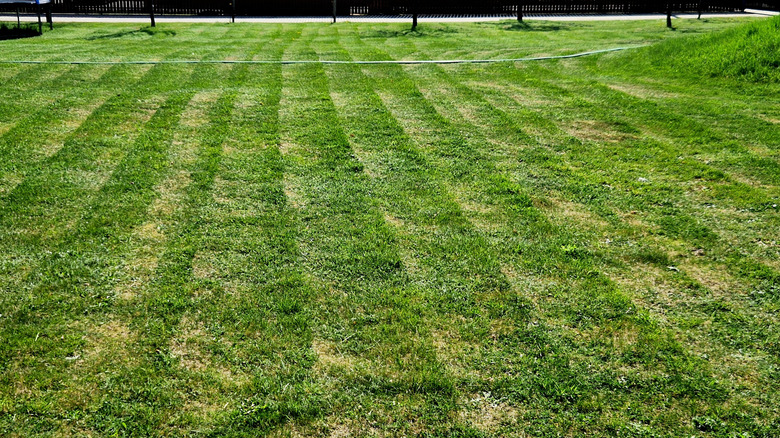
When mowing your grass, set the blades to a height between 3 and 4.5 inches. Taller grass tends to be healthier and prevents weeds from germinating and taking over. Once you've finished, your lawn should look green, neat, and uniform. If you look across your yard and it looks patchy and uneven, your mower blades aren't cutting. Dull lawn mower blades push grass down so the deck rides over it without making a clean cut. Later, the grass will spring back up. Mowing wet grass can create that same patchy effect because the blades mat the grass down rather than slicing through it.
You notice narrow strips of turf left behind
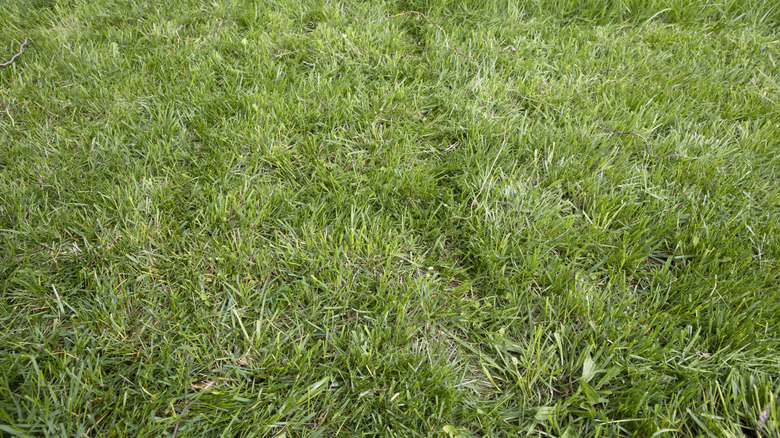
Mohawking is the term for those thin strips of uncut turf that your mower leaves behind when the blades are dull. Normally, as your mower moves across the grass, the curved shape of the blade creates a sort of vacuum that pulls grass up and into the path of the blade. If the blades are dull or have a specific blunted spot, it will constantly miss that exact strip of grass as you move forward. These narrow strips can also happen if you're not overlapping your mowing path by a few inches.
Tips of the grass appear white and shredded
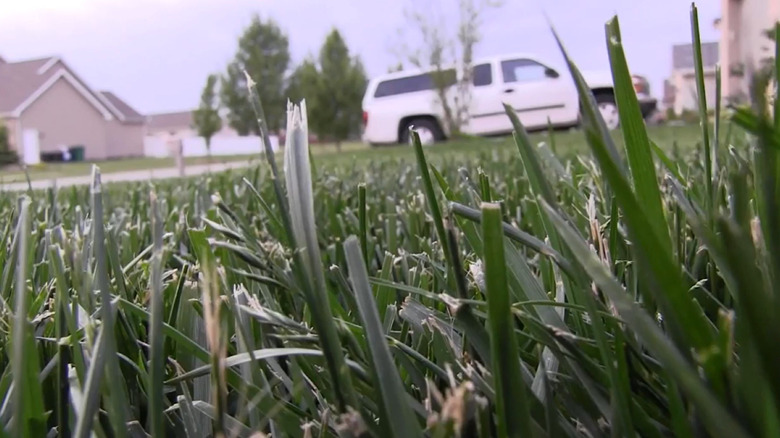
After mowing, take a good look at the ends of your grass. If the tips look white and appear jagged or shredded and your lawn is looking ragged, it's time to sharpen your mower blades. Sharp blades will make a clean cut. Dull blades rip and tear the plant apart, which frays the ends. The frayed ends dry out and will turn white or brown, which can even make your lawn look unhealthy. Not only does it look bad, but it also injures and weakens your grass, making it more susceptible to fungus, other diseases, and water loss.
Mowing requires more fuel than usual

If you're refilling the gas tank on your lawn mower more often, it could be a sign your mower blades are dull and are not doing an efficient job. Dull mower blades create a drag on the engine, making it work harder. Obviously, if the engine is straining to get the job done, it will use more fuel. You may also find you're mowing over the same spot multiple times to get an even look. Keeping your mower blades sharp isn't just good for your turf. It can also save you money.
Cutting grass requires more effort

Pushing your mower can already feel like a workout, especially if you're using a manual mower. But if you find it's getting harder to make the machine move forward, it could be a sign of dull blades. When dull blades tear the grass, it creates resistance. If you're using a push mower, you'll feel the drag and need to push harder to make it go forward. Even with a self-propelled mower, you'll still feel the pull on the engine as the blades slow it down. With a riding lawn mower, it may take you longer to complete the job.
There's visible signs of damage to the blades
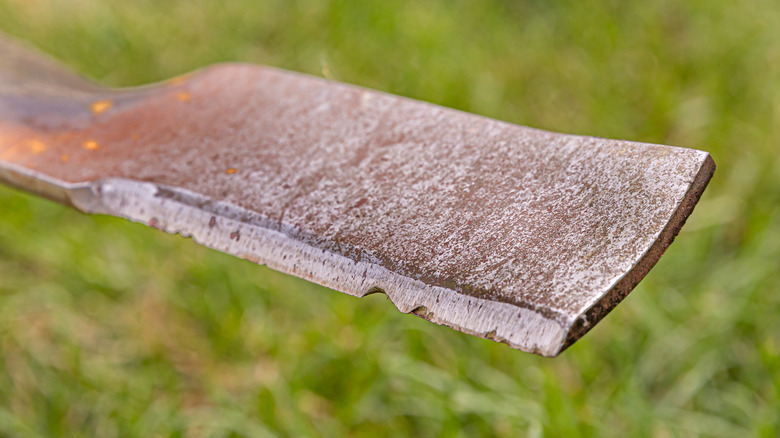
Sometimes the best way to tell if the blades are dull is to flip the mower over and look underneath. Look to see if the lawn mower blades are bent or if there are wear spots or nicks along the edges. Damaged blades can't cut as efficiently or evenly and may even cause excessive vibration. If the blade is straight and only has small nicks or slight dullness, it can easily be buffed back down. You'll only need to replace the blades if you notice major cracks or if the blade is bent beyond repair.
You can't remember the last time the blades were sharpened

It takes a while for mower blades to dull, so you might not even notice a problem until performance drops. Every time you take the machine out for a spin, it wears the cutting edge. If you can't remember the last time you sharpened your lawn mower blades, or if you never have, then it's a good time to act. Remove the blades, clamp them to a workbench, and use a metal file or angle grinder to sharpen the edge. You can also use a Dremel tool to sharpen the blades. No matter what method you choose, be sure to wear protective gear.