

The Essential Feature That Keeps Gravel Driveways Smooth And Prevents Potholes
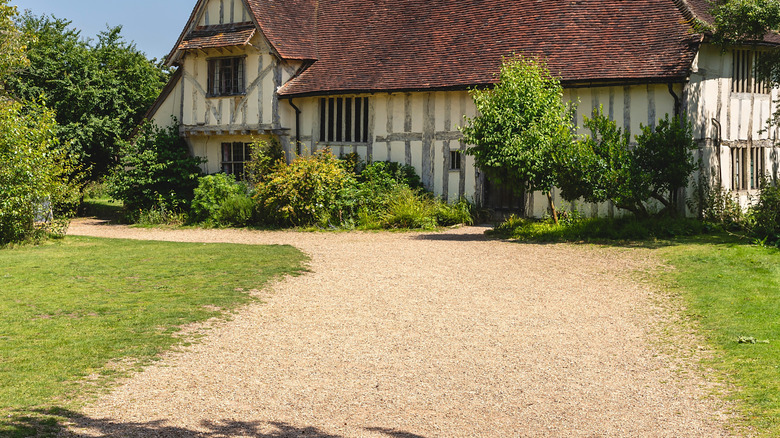
Gravel is a relatively cheap driveway material to install, extremely durable, long-lasting, and attractive to many folks. It does require regular maintenance, but usually, it is not a big deal: filling some low spots, raking an area smooth, and adding some gravel every few years. But if your gravel driveway has started to need more and more frequent attention, you may need to recrown your driveway.
A crown in your driveway is a slightly raised center, with either side of the crown sloping gently down to the edges of the driveway. It's very important for achieving proper drainage, both from rain and snowmelt. It's an essential feature for a high-performing gravel driveway. Proper drainage will help prevent puddles, low spots, potholes, and washouts. Without effective drainage, water can pool and soften the surface and underlying materials, which can lead to all sorts of unwanted circumstances.
Why is this so? Gravel driveways (and roads) are not simply a layer of rock spread out on the surface of the ground. A well-constructed gravel driveway typically will have been excavated to a depth of 8 to 12 inches, with the total depth depending on factors such as soil conditions and expected traffic. Often, this excavation process is where the crowning of the driveway starts, as the center will be left a couple of inches higher than the sides of the trench. At least three distinct layers of differently sized aggregate will follow, with small, crushed stone or selected aggregate for the top layer. All of that will be smoothed and compacted, with care taken to retain a high center, or crown. If that crown goes away, trouble begins.
How to rebuild your crown
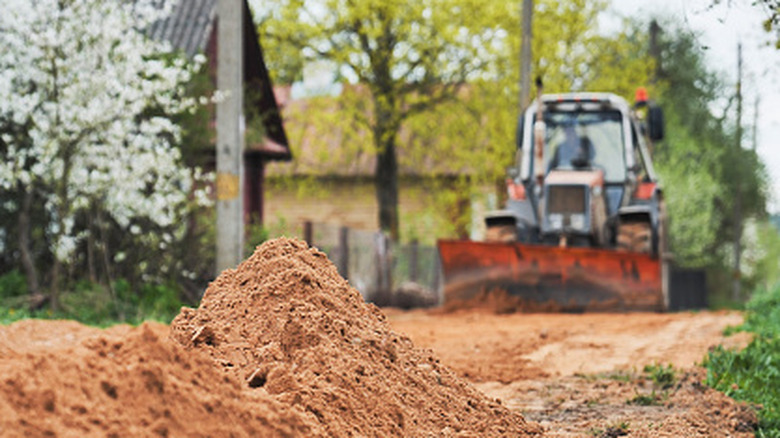
Unfortunately, raising a crown in the middle of a gravel driveway that has flattened over time is not typically a DIY job for a driveway of significant size. It requires sufficient equipment, and the skill to use it, to regrade the driveway. If you have a drag harrow, you could prepare your driveway for someone to come after you with a bladed vehicle, which will be able to effectively recreate a crown. On a small gravel pad or very small driveway, this can be done with a gravel rake and a compacting tool.
First, break up the surface. With a harrow or blade, you need to break up the compacted gravel. During this task, you will remove any weeds or other organic growth, along with large rocks. Any unwanted objects need to go.
Second, rebuild the crown. Move gravel from the sides of the driveway to the center. This usually requires a directional blade of some sort. Check the slope. A crown of about ½ inch per foot of driveway width is a common guideline for relatively level or gently sloping gravel surfaces. With that established, add gravel (some great options are cheap) where it's needed in any low spots or washouts.
Finally, compact the newly crowned driveway. The cost of this work will vary with the specific factors of each driveway. Grading your driveway will generally cost between $0.50 and $2.50 per square foot, though this can vary. Rebuilding the crown will restore your driveway and help prevent maintenance problems in the future.