

Forget Granite Countertops: A Tougher, Stain-Resistant Option

Granite countertops have long been a popular choice for kitchen remodels, and for good reason. They have the unique character of natural stone, a high level of durability, and a long lifespan. However, there is one type of countertop that tops granite in terms of both toughness and ease of maintenance, and that's sintered stone. It's a premium engineered material that's made from a mix of natural minerals and pigments, without containing any synthetic resins or chemical binders. It's eco-friendly, non-porous, and versatile in terms of indoor and outdoor application. For homeowners about to embark on the process of building a new kitchen, it's definitely worth a look.
When you shop for sintered stone countertops, you'll notice that there are a few brands that dominate the market. Neolith is one of the leading options, while Dekton by Cosentino and Lapitec are also popular. The price of sintered stone can vary by manufacturer, but according to Slabwise, it generally ranges between $65 and $150 per square foot. This makes it a bit more expensive than granite, which, according to the same source, tends to run between $40 and $100 per square foot. For those seeking to make a long-term commitment to the longevity of their kitchen and the resale value of their home, the extra cost could still be worth it. Sintered stone comes in a variety of patterns and colors, so in terms of aesthetics, it's also quite flexible. Many of these options are timeless, so steering clear of those dreaded modern kitchen trends that everyone secretly hates shouldn't be too tricky.
Comparing sintered stone to traditional granite
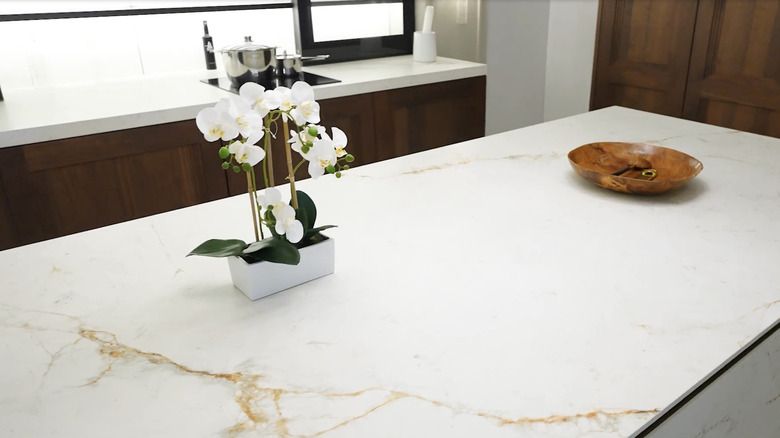
There are a few notable aspects of sintered stone that make it a more durable countertop option than granite. The engineered material is non-porous, so you don't have to worry about stains or bacteria affecting it. This also means that sealing the surface isn't necessary. With granite, you'll need to spend some time doing this every one to three years. This can be a big downside for homeowners who don't want to deal with countertop maintenance. Sintered stone also comes with an unbeatable level of heat resistance — even putting a hot pan on it shouldn't damage it. The surface also tops granite on the Mohs Hardness Scale, and this indicates that it has an advantage in terms of scratch resistance, too.
Like any countertop material, sintered stone isn't without its drawbacks. Professional installation is a must, and this can add to the material's already high price point. Impacts on the engineered stone can occasionally lead to chipping, and repairs tend to be on the more expensive side. The same concern also exists with granite, however. Also, the patterns on sintered stone are printed onto the material by the manufacturer, so they don't run all the way through the slab like they do with granite. This can be a concern if you're interested in working with non-standard edge profiles, and may limit your use of other amazing countertop upgrades that are worth every penny. Despite their differences and drawbacks, granite and sintered stone are still both great timeless kitchen countertop options that make it easier to sell your home.