

Brown Recluse Vs. Black Widow Spider Webs: How To Tell Them Apart Before You Get Too Close
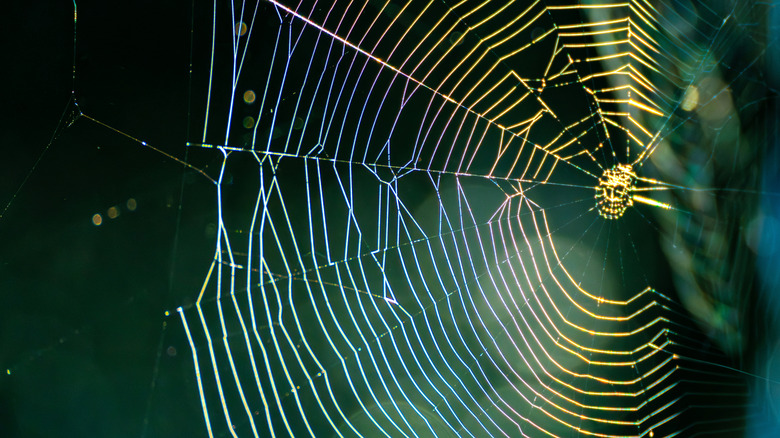
Both brown recluse and black widow spiders have one thing in common: an extremely painful bite. If these spiders live in your area, it's helpful to be able to identify the difference between their webs without getting too close. Not only will this enable you to understand how to get rid of them, but if you do wind up getting bitten, you can determine which type of spider it was without actually seeing the culprit.
Neither brown recluse nor black widow spiders build traditional webs. Indoors, a brown recluse typically builds a flat web with an off-white coloring and no distinct shape. Because brown recluses do not trap prey in their webs, they prefer to build webs in places that are mostly undisturbed, such as dark corners, attics, or garages. Outdoors, you may find their webs underneath other elements of your yard, like rocks or logs.
Black widow spider webs look different; they build a thick web that is extremely messy. It looks like a tangle of threads and can have several layers. The web is joined together like jumbled scaffolding or fishnet, without a symmetrical pattern. Indoors, you're most likely to find them hiding in a garage, closet, or storage area. Outside, they could be in a pile of firewood, a shed, or under the porch. They seek areas that will protect their webs from wind and rain.
What to do if you find a brown recluse or black widow web
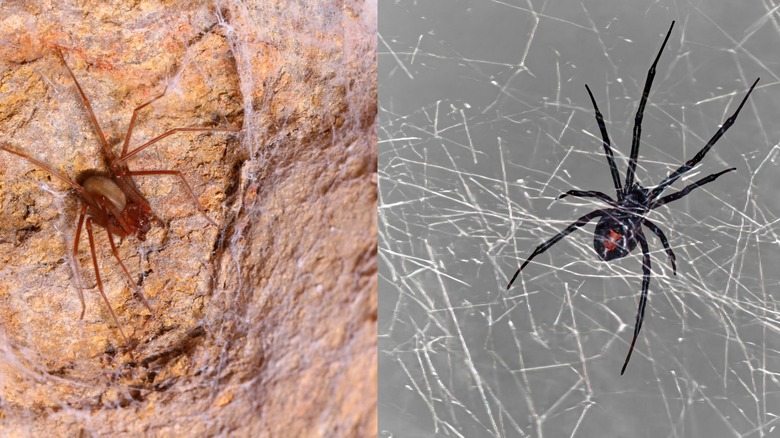
What should you do if you see a brown recluse spider web in your home? First, put on protective clothing, including heavy-duty work gloves. Then vacuum up the web or remove it with a long tool. The brown recluse is likely nearby, so keep an eye out for it. Recluses do not bite unprovoked and are not aggressive.
Generally, you should avoid killing spiders in your home, but if you think you're dealing with a black widow, a vacuum may be the safest way to go. Be sure to take the vacuum outside and carefully remove the bag or empty the dirt container into a lidded trash can, as the spider may still be alive (and angry). Some of those who have experience removing spiders prefer to use a long spider-catching tool to release black widows outside. Just keep in mind that, while they don't attack unprovoked, removing them yourself could cause them to bite you.
For either spider, if you notice a large infestation, or if you're uncomfortable dealing with the issue yourself, you can call in a professional to help with removal. Before you attempt to remove a brown recluse or black widow on your own, relocate pets to a different area. Both bites can be deadly for small animals. And if you do get bitten by either spider yourself, visit a doctor right away. While both bites generally aren't deadly to humans, they are extremely painful and can be very dangerous for children, the elderly, and those with weak immune systems.