

Not Just Grass: Here's What Else Your Lawn Mower Blades Can Cut
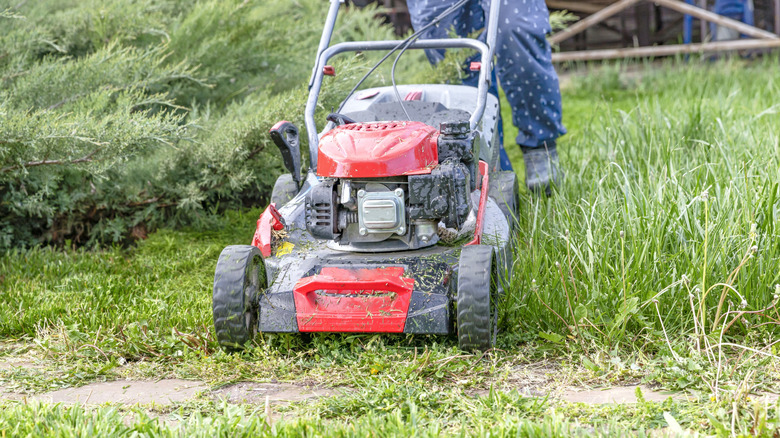
The primary purpose of a lawn mower is indeed to mow the lawn, but there are many other tasks you can put the tool to. Since your lawn mower blades are specifically designed for cutting back vegetation, it only makes sense that they be used to cut back the beneficial cover crops you planted to protect your garden soil.
It is a common practice in rotational gardening to let your beds have a rest for a season. Cover crops cover (pun intended) a wide variety of plants that are grown over bare soil in resting garden beds to help prevent erosion and prevent weeds. Some types of cover crops, such as the stunning red crimson clover, are nitrogen-fixing plants that help feed the soil with essential nutrients. Cover crops eventually need to be terminated to fully reintegrate into the soil. Mowing is one such termination method.
Some higher-growing cover crops, such as tall annual cereals like winter rye or winter wheat, or the overlooked but highly beneficial buckwheat, should be terminated with a heavy-duty flail mower. The lower-growing crops, like the aforementioned crimson clover or field peas, can be terminated with a residential push or riding lawn mower. You just need to make sure your mowing takes place at the right time of year and that you are using the correct type of mowing blades.
How to terminate cover crops with a lawn mower

The first way to successfully terminate cover crops using your lawn mower is to make sure that you are timing your mowing correctly. For the vast majority of cover crops, termination is most effective when at least 50% of the crop is flowering. Waiting for flowering allows the plant to grow to reach its optimal size and nutrient density without going to seed, meaning that when you mow, you kill the plant and reduce the chance of regrowth later in the season.
Then there is the question of the mower blades themselves. There are two main types of lawn mower blades: standard and mulching blades. You will want to use the latter for terminating cover crops because mulching blades will chop the cover crop into much finer pieces than a standard blade will. This smaller size will allow the crop to decompose faster, thereby returning its nutrients to the soil more quickly. Standard mowing blades will work, but you may have to do more passes.
As for the actual mowing, you can approach this like any other lawn job. If the crop has grown high, set your mower at the highest setting and do an initial pass. Then lower your mower deck and do additional passes until the entire patch is thoroughly mulched. Then you can either leave the mulch in place and let it decompose over winter, or till it back into the earth with a rototiller.