

The Stunning Red Flower You Should Plant In Your Garden For Healthy Soil
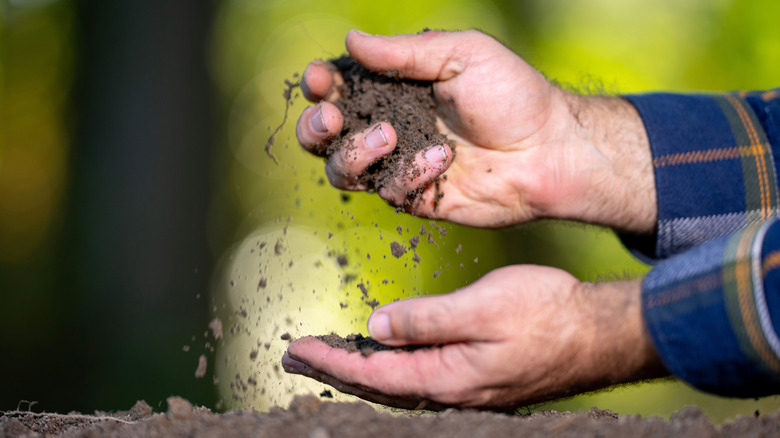
If you're struggling to maintain your flower beds or vegetable garden, the problem may be in the soil. Without the proper nutrients, like nitrogen (which is essential for photosynthesis and development), plants can't reach their fullest potential. But luckily, there are some simple solutions! For a natural way to increase the nitrogen in your soil, consider growing crimson clover (Trifolium incarnatum). Not only is it a useful cover crop that improves garden soil, but true to its name, crimson clover develops a stunning shade of red that's sure to brighten your yard in the spring.
Crimson clover is commonly grown as a cover crop to replenish soil on farms, and it will work just as well for your garden. Not to be confused with red clover (Trifolium pratense), crimson clover has larger flowers that are a deeper red color. While both are nitrogen-fixing plants, crimson clover is the way to go if you also want showy flowers and a nice addition if you love growing plants that help pollinators. Add it to your pollinator garden or around your fruits and vegetables to give local bees a nice treat in spring!
Crimson clover improves soil in a few ways. Its roots are strong and help break up compacted soil, which enhances drainage, water storage, and air flow in the earth. It also helps suppress weeds and prevent erosion, stopping loose topsoil from being worn away and working as a cool-season annual to maintain soil through the winter. However, the primary benefit is that it converts nitrogen from the air into usable nutrition that it stores in its roots, crown, stems, and leaves. After incorporating the cut-down plant, this nitrogen can be released into the soil, enriching it for the next round of plants.
Growing gorgeous crimson clover to boost your garden soil
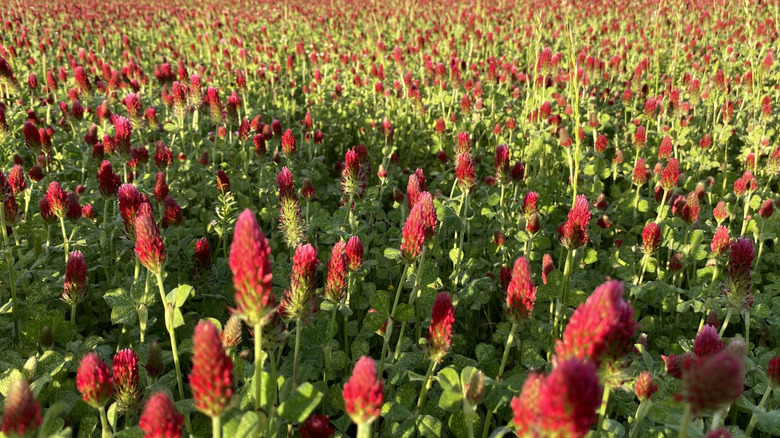
Growing crimson clover isn't difficult, but you can make it even easier by choosing seeds with a rhizobacteria coating, which optimizes nitrogen fixation and increases the germination rate. If you only want a few crimson clover plants to enjoy their flowers, this may not be necessary. However, if you're trying to use it as a garden soil amendment, a thick patch of crimson clover plants covering the entire area is helpful. For the best flowers and healthiest plants, grow your crimson clover in neutral-pH soil and full sun. Keep the soil moist but not soggy. Water them when the soil is dry, but avoid watering if the soil is still wet or if it is about to rain.
Crimson clover grows from the fall into the spring. It may experience winter kill in cold climates (around USDA Hardiness Zone 5 or colder), but otherwise, it will fill your garden with gorgeous spring flowers. Plant crimson clover in late summer or early fall, around six weeks before the first frost. The seedlings need warm weather to grow properly, and you want your plants to develop sturdy roots before winter arrives.
If you're growing crimson clover as an ornamental plant, leave the flowers to put out seeds and reseed itself. However, if you're using it to make your soil healthier for other plants, you'll want to stop it from reseeding. Enjoy the beautiful flowers in spring, but when they start to fade, you should mow them down to the ground. Leave the plant to break down, as that's where the nitrogen comes from! Give it about three weeks to decompose, and when you're ready to plant your next crop, you'll have beautifully conditioned soil for it.