

Move Over, Quartz: This Eco-Friendly Countertop Looks Like Stone But Starts As Paper
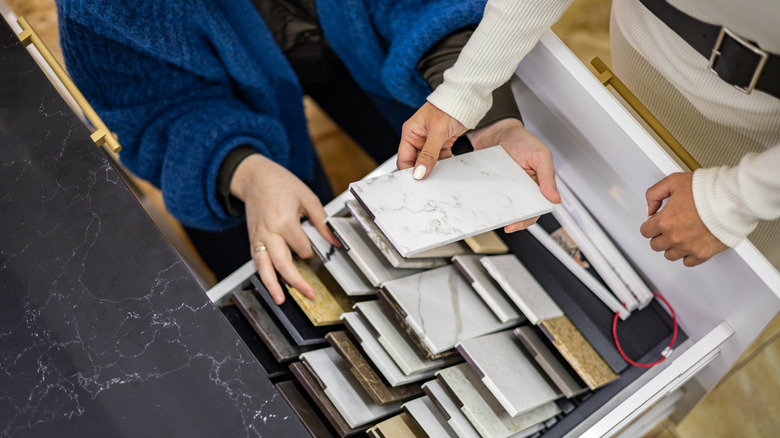
When you research countertop options for a kitchen remodeling project, usually one of the first materials you'll read about is quartz, and for good reason. It's exceptionally durable, and doesn't require sealing or any other form of regular maintenance. It also comes in a wide range of colors and textures, and can mimic the aesthetics of natural stone. However, though quartz can sometimes be manufactured from a mixture of recycled materials, it's not always the most eco-friendly countertop option on the market. Some of the most sustainable kitchen surfaces are those made from paper composite. Though paper may not initially sound like a reliable material to work with, it actually offers a surprising level of durability. These countertops are made by combining post-consumer recycled paper with petroleum and formaldehyde-free adhesives and resins at high heats. The end result is a densely-packed slab that's easy to install, looks similar to stone, and is warmer to the touch than natural materials like granite and marble.
The price of paper composite countertops can vary, but according to Remodelista, they typically run between $30 to $80 per square foot installed. This is a slightly lower price tag than the likes of quartz, which, per MSI Surfaces, ranges from $50 to $150 per square foot installed. If you have a mid-range budget for your kitchen renovation project and building with eco-friendly materials is important to you, then paper composite surfaces might be a good fit for your home. However, you may also want to weigh the eco-friendliness of quartz vs. granite before making your final decision.
The case for paper composite countertops
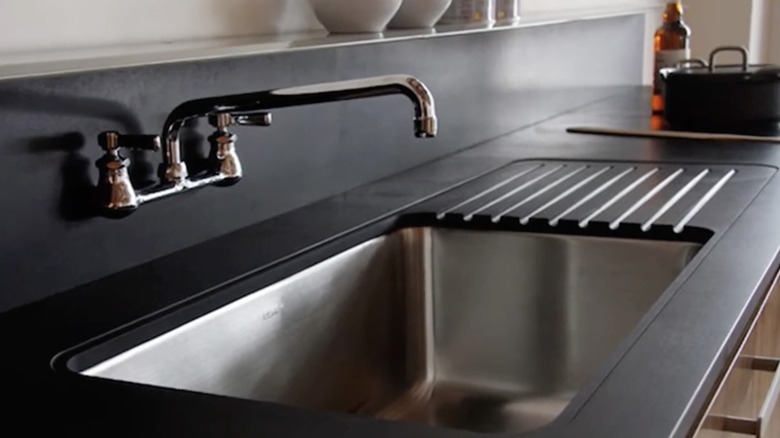
The sustainable nature of paper composite countertops may be their main selling point, but there are actually a number of other reasons why you might want to install them in your home. For starters, paper composite has a high level of resistance to stains and scratches. Even if you do end up with a couple of light scratches, you may still be able to buff them out. The material also does a good job of absorbing impacts, and as a result, won't chip as easily as natural stone. You can clean paper composite surfaces with soap and water, and you shouldn't have to worry about the material harboring any bacteria. Paper composite is also suitable for outdoor uses. This is in direct contrast to quartz, which can sometimes yellow or fade when it's exposed to prolonged UV light.
Paper composite countertops are great for indoor air quality because they don't off-gas volatile organic compounds (VOCs). They also lack crystalline silica, a particulate matter sometimes found in high concentrations in quartz countertops, which can affect the health of those who manufacture the slabs. Paper composite countertops also have an aesthetic advantage: tightly joined seams. If you want to avoid the visible lines that come with stone countertops, this material might be an ideal choice for your home. There are also some amazing countertop upgrades worth every penny that may hide seams.
The case against paper composite countertops
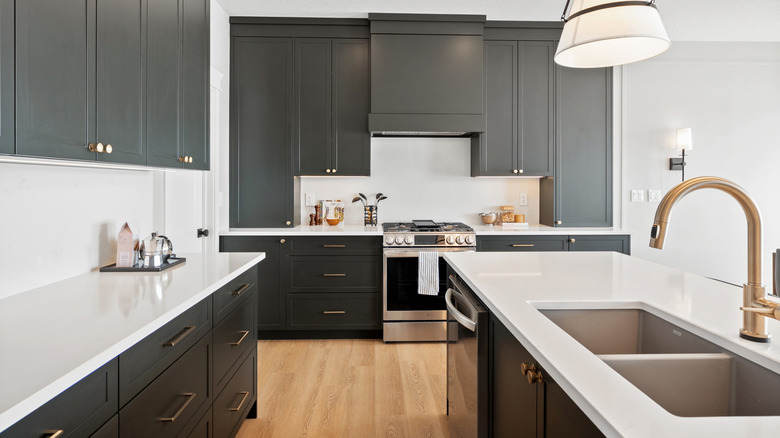
Though paper composite countertops do come in several colors, the options may feel limited. Thanks to the resin in the material, the surfaces tend to be on the darker to mid-weight side of the color scale. If you're looking for bright whites, quartz and perhaps even marble may better suit your space. Beyond its color limitations, paper composite also doesn't have the best heat resistance. This shouldn't be too much of an issue with some trivets and pot holders, though. Unlike quartz, this material does require regular sealing, so if a low-maintenance surface is what you're after, this might not be the best choice. Paper composite countertops can also develop a patina over time. This will be a pro for some and a con for others. It's a matter of aesthetic preference.
Paper composite may be eco-friendly because it's made from recycled paper, but the surfaces themselves aren't recyclable when they reach the end of their lifespan. Quartz countertops can be recycled. It's worth noting that there are other countertop materials that technically offer greater durability than paper composite. Quartzite, Dekton, and soapstone are a few examples. However, these materials aren't the cheapest, and for some homeowners, they may be the sort of kitchen upgrades that end up being a total waste of cash.