

Is Granite Or Quartz More Eco-Friendly? This Affordable Alternative Is Greener
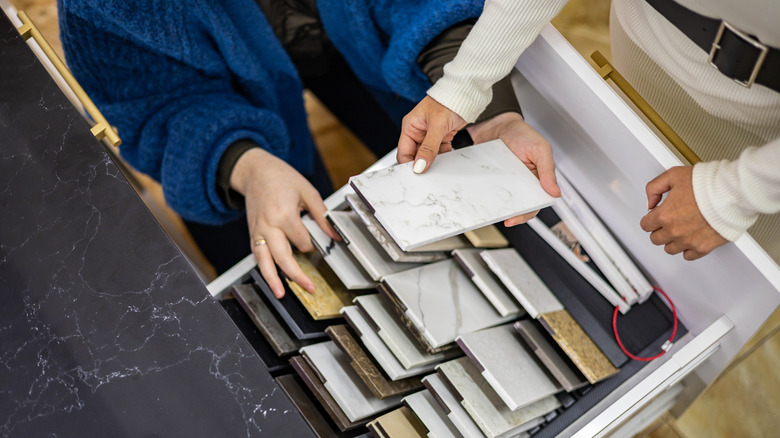
One of the toughest decisions in a kitchen renovation project is choosing a countertop material. When you start researching this topic, two of the most common options you'll come across are quartz and granite — and for good reason. They stand up well against stains and scratches, they last for years, and they both have plenty of aesthetic appeal. But how do they compare when it comes to their eco-friendliness? The answer to this question varies significantly depending on production and quarrying practices. However, quartz does tend to hold a slight edge. That's in large part because its surfaces can be made by recycling mining byproducts. Granite, meanwhile, has to be quarried, which is an energy-intensive, waste-producing operation. On the other hand, quartz countertops are engineered stone, so their manufacturing process is also not particularly eco-friendly. As it turns out, there's a much more sustainable countertop option than either quartz or granite — bamboo.
Bamboo countertops have a much better carbon footprint than quartz and granite because they're made from a highly renewable plant. Their finishes also release minimal volatile organic compounds, which are otherwise known as VOCs. Additionally, bamboo's natural graining gives these countertops plenty of aesthetic charm, and visibly connects the kitchen interior to the outdoors. The surfaces also resist mold and bacteria, so they do actually have a functional advantage when compared with other materials. What's more, bamboo tends to come in at a better initial price than the likes of granite and quartz. In short, it might help you build your dream kitchen without having to spend a fortune.
What makes bamboo countertops so eco-friendly?
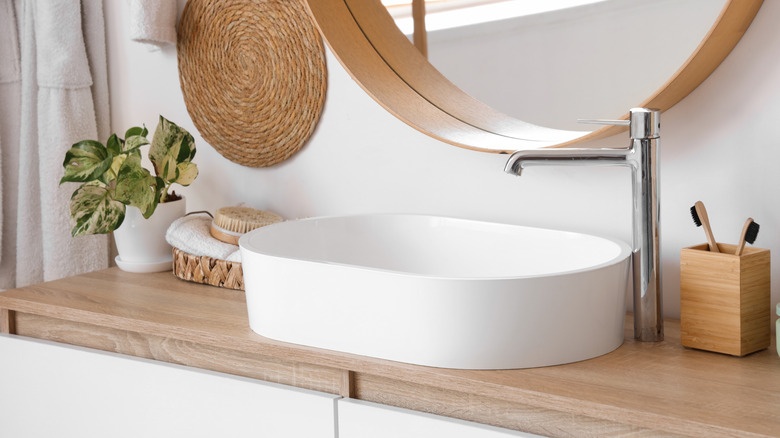
The environmental benefits of bamboo countertops start with the plants they're made from. Though bamboo can be made to look like wood, it's actually a type of grass. As a result, it grows much faster than trees and can often be ready for harvesting within five years of planting. This makes it a nearly carbon-neutral countertop material; in other words, it's highly renewable. Growing bamboo doesn't require much in the way of water or fertilizers, and in many cases, you don't have to replant it after harvesting it. It also doesn't use as much land as traditional forestry. This, along with its rapid regrowth rate, means it's a more sustainable countertop material than even traditional butcher's block wood, which is often made from hardwoods like maple, walnut, and oak. Granite, on the other hand, is an entirely non-renewable material, and takes a lot of energy to dig up. Quartz, meanwhile, is still closely integrated with mining and construction because it often utilizes the byproducts from these processes.
The sourcing and weight of a bamboo countertop are factors that can potentially impact the surface's eco-friendliness. The farther the bamboo has to travel, the larger the countertop's carbon footprint will be. Granite countertops, meanwhile, often have to travel long distances to get to the United States. Like all other forms of natural stone, the slabs are quite heavy, which can impact transportation emissions. These sorts of environmental concerns shouldn't be underestimated when you're on the hunt for kitchen countertop options that make it easier to sell your home.
Factors that could impact the sustainability of bamboo countertops
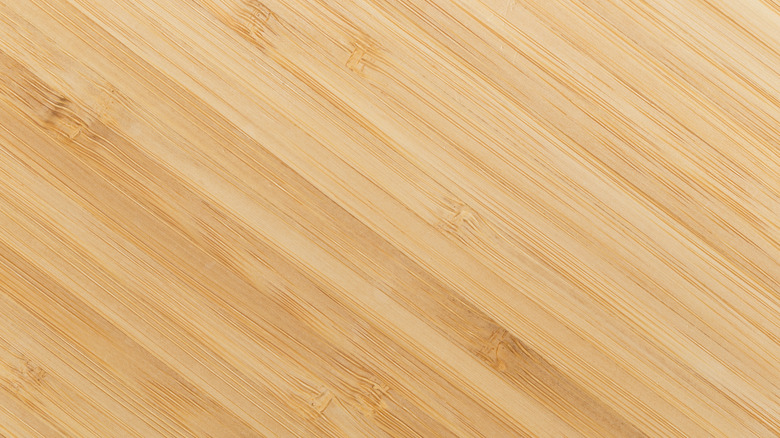
Quartz and granite countertops do have one major advantage over bamboo countertops that's closely linked to sustainability — they are both usually more durable surfaces. Bamboo unfortunately isn't waterproof and can be somewhat susceptible to stains or scratches. If you'd like a bamboo countertop, you should also know that the material must be sealed regularly with wood-safe products, such as beeswax or mineral oil. Granite and quartz countertops don't need so much maintenance. They still are less sustainable than bamboo, but they're also likely to last longer. Their timeless design quality may also play a role here; it helps ensure that they won't need replacing for aesthetic reasons.
The eco-friendliness of a bamboo countertop can also vary depending on what you use to seal it and treat it. Avoid using treatments and resins that contain lots of chemicals, so as to keep VOC emissions and indoor air pollution to a minimum. Certain countertop sealants can also be a bit toxic; linseed oil and tung oil are two choices that should be reasonably safe and suitable for use on bamboo. Don't forget that the maintenance requirements associated with bamboo are something you should factor into your kitchen renovation budget if you're planning to work with this material. You may want to leave a bit of space in your budget for amazing countertop upgrades that are worth every penny as well.