

Skip Pricey Compactors: Smooth Gravel Driveways With Tools You Probably Have
We may receive a commission on purchases made from links.
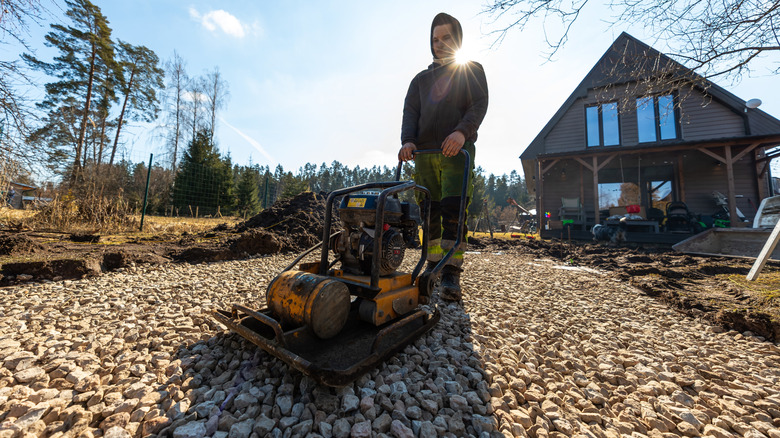
Gravel is undoubtedly one of the cheapest driveway paving materials, but it can also be exceptionally long-lasting if you work to maintain it. One of those maintenance tasks is keeping your gravel driveway level with replenished gravel. You can perform this chore by renting a machine called a vibratory plate compactor, but this can cost upwards of $1,000 depending on how long you need it for. Thankfully, you can skip the pricey compactors and smooth your gravel driveway with tools you probably already have.
A hand tamper is a common tool that many homeowners use for landscaping, patio, or driveway projects. The tool consists of a long handle attached to a heavy, flat, square plate. The hand tamper is used to manually level the surface by using the weight of the plate to compact the materials. A simple tamper with a wooden handle is going to cost roughly $50 (per 2026 Home Depot pricing).
Compaction, whether it is by hand tamper or a vibratory plate compactor, is one of the best ways to keep gravel locked in place and level. The compaction forces the individual aggregates to lock together, stabilizing the surface and allowing vehicle weight to be better distributed. Now, despite not being as efficient as a motorized compactor, you can level your whole driveway with a hand tamper.
How to level a gravel driveway with a hand tamper — and your car
The benefit and drawback of using a hand tamper on your gravel driveway is the fact that it is excellent for getting into the tight areas that a larger machine cannot access. Unfortunately, it really is not terribly efficient if you have larger sections of the driveway to work on. The good news is that there are some other common tools, including your car, that can offer a smarter way to smooth and level your gravel driveway.
To do this, first use a metal or landscaping rake to evenly spread the gravel to a layer roughly 2 inches deep. Tamp the gravel down, overlapping your sections to create a smooth, consistent surface. Gravel driveways can be up to 12 inches deep, so you'll potentially need to repeat this process at least 6 times, working with the 2-inch increments. Depending on how large a section you're working on, this could take quite a long time. Most residential driveways are only 4 to 6 inches deep, however, which will cut back on workload.
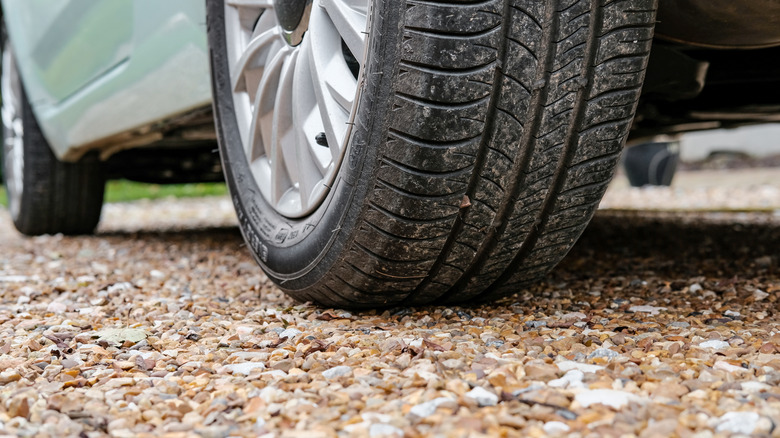
If you want a slightly quicker way to level out your gravel driveway, you can always use your car and slowly drive over the section you're working on. The weight of the vehicle will aid in compaction, but it is once again only really going to work for small sections because the car won't give wide compaction the way a roller or plate compactor would.