

Not Standard Gravel: There's A Better, More Durable Solution For Driveways
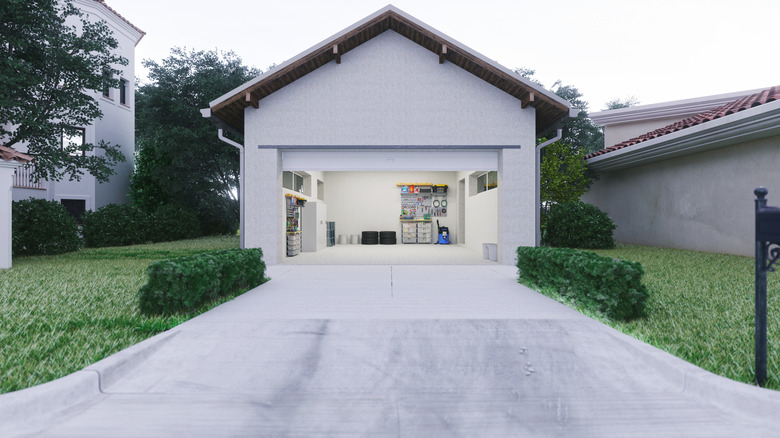
We don't really think much about driveways; we just use them and forget about them. That is, unless some sort of problem makes itself known — a crack or large pothole in an asphalt driveway, a chunk of concrete driveway fractures and heaves, or a significant portion of your gravel driveway washes out. If any of these problems occur, it is likely due to an improper choice when the gravel base of your driveway was constructed. Almost all driveways are built upon a gravel base. And while there are many types of gravel for landscaping and driveways, failure to use pit run (3-inch minus) gravel at the very bottom of your driveway's base leads to overall performance failure later on.
Gravel is an aggregate of sand, clay, and rocks of various sizes. All gravel basically starts out the same, but we don't let it stay that way. After it is excavated from a pit, gravel is filtered to select for rock size. It is often washed to remove fine grains of sand and rock dust and separated into various grades for differing uses.
Curiously, gravel that's cleaner (less sand and clay) and consists of more uniform rock diameters will compact less firmly. If it does not compact well, it is less useful as a base and may lead to the surface failures mentioned above. With pit run gravel, it's the mixture of fine grains, clay and a variety of rock sizes that is the magic facilitating proper, sustained compaction.
Start at the bottom
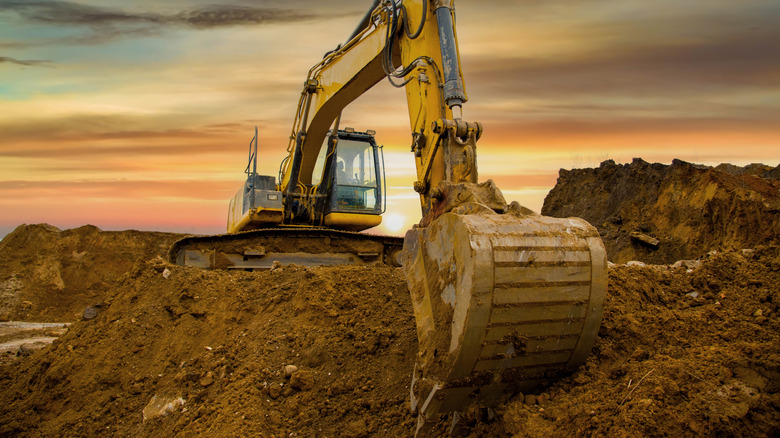
Pit run (3 minus) grade is not the standard clean gravel you usually see in sidewalks, patios, gravel garden beds, or on the surface of a gravel road or driveway. It's basically the unprocessed gravel freshly dug out of a gravel pit. It has a wide variety of rocks of differing sizes (but all smaller than 3 inches in diameter). "Minus" (as opposed to "clean") means it contains large amounts clay, tiny rock fragments and sand (ratios vary due to a pit's geomorphological make up). All those characteristics mean it compacts exceedingly well and stays compacted (the fines settle in amongst the pebbles, holding everything together).
On the other hand, if you choose to pass on the pit run (3 minus) gravel and make the entire base of your driveway from standard washed and uniform gravel, you are asking for trouble. It would compact poorly allowing it to shift and distort over time. Any type of driveway surface you put on top of it — whether asphalt, concrete, or even superior aggregate concrete — would crack, crater, and break, as it loses its support underneath. So, the basis of a better, more durable driveway solution is a properly constructed gravel base, anchored by a well-compacted layer of at least 6 to 12 inches of pit run (3-inch minus) grade gravel.