

Skip Standard Gravel: This Landscaping Option Makes Flower Beds Stand Out
We may receive a commission on purchases made from links.
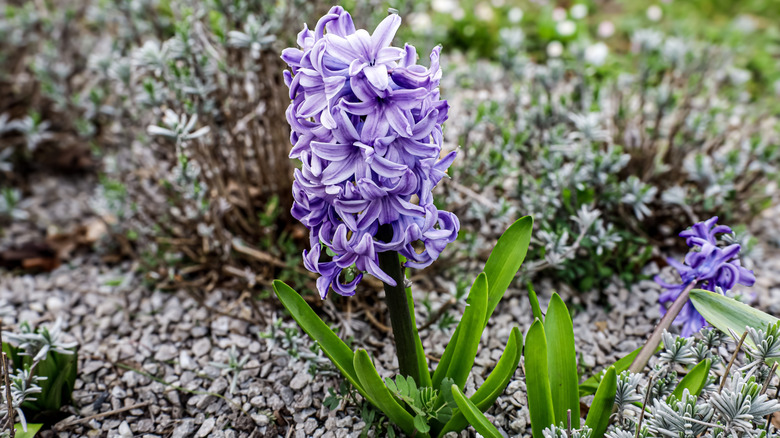
While gravel is a certified superhero in the landscaping world, even Superman is not Wonder Woman –and the world certainly needs both. So, when turning a weedy patch of ground into a flower bed and you need an attractive, low-maintenance stone solution, what are you going to do if you are just not feeling gravel? Dolomite is a great option that you may not be as famous but is a proven product with a long history. (Think of the Green Lantern.) Its light color and reflective facets are beautiful and will highlight the colors of your flowers exceptionally well. Landscaping with gravel gently fades into the background, while dolomite creates a bold, bright, and attractive supporting character for your plantings. A bit like the contrast between the DC and Marvel universes ...
Dolomite is a mineral composed of calcium magnesium carbonate, which is formed from limestone. Dolomite rock tends to be a translucent to transparent bright white. Impurities will show up as random buff, pink, or bluish hues. As a landscape material, it is commonly available with diameters of roughly ⅜-inch, ¾-inch, and 1-½-inches. Curiously, dolomite has another superpower. When ground into a powder, it is sold as a soil amendment (called Dolomite Lime) to increase your soil's calcium and magnesium content as well as moderating acid levels. (Side note: the Dolomite Mountains in Italy are made from, wait for it, dolomite.)
How to install a dolomite flower bed
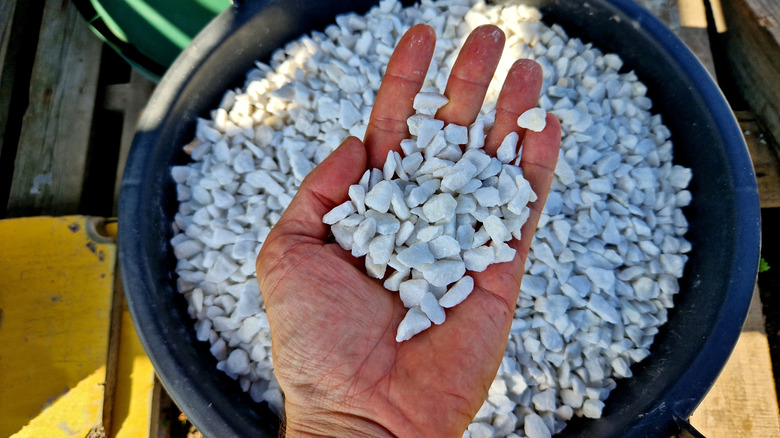
Creating a flower bed from dolomite is a great DIY project. Just follow the proper steps and employ a bit of elbow grease and you'll be pleased with the results. As when installing any sort of rock or gravel layer, the first and perhaps most important step is preparing the ground. You need to dig down and prepare a space clear of weeds, rocks, and roots. You've got a decision here since a couple of inches of dolomite will inhibit but not prevent weed growth. For more robust weed prevention, a layer of high-quality permeable landscape fabric would be needed. But of course, you'd then need to cut holes in the fabric for your flowers and plants (which is a lot more work). The prepared ground should not have big dips and divots. If you are having a tough time getting rid of them, using sand to smooth the area and prepare the surface is a good idea. With the area ready, add a layer, a minimum of 2 inches thick dolomite, or whichever diameter you've chosen. Rake it smooth and then walk over the rock to gently pack it in place.
Inspect your flower bed from a few different angles and perspectives to check for thin, low, or high spots. Dolomite is rock, so it will not break down over time, but it may shift and compact, so adding a bit more each year may be necessary. Even a superhero needs a bit of help from time to time.