

Turn A Weedy Patch Of Lawn Into A Beautiful Flower Bed (Without Dangerous Chemicals)
Homeowners are constantly looking for ways to remove common weeds from their lawns. One of the easiest ways is to use chemical herbicides. However, a study from UC Berkeley School of Public Health has noted long-term exposure to lawn herbicides may be linked to cancer and metabolic disorders. As such, a growing number of environmentally conscious homeowners are looking for eco-friendly alternatives to remove weedy patches – one of which is turning them into beautiful flower garden beds. But before you go renting a rototiller, you'll want to listen to Dr. Manjot Kaur Sidhu, an ornamental horticulture specialist at the University of Maine Extension, who spoke exclusively to Hunker about the process of soil solarization.
As its name suggests, soil solarization involves using the sun to kill unwanted weeds and grasses by creating an area of extreme heat under a clear plastic sheet. As Dr. Sidhu explains: "The solar energy collected under the clear plastic creates a greenhouse effect, heating moist soil to temperatures up to [140 degrees Fahrenheit] to destroy grass root systems." This intensified effect sterilizes the soil, killing the unwanted grasses and weeds by smothering them to death under a concentrated area of high heat.
There are numerous benefits to utilizing this method, including the fact that you don't need to apply potentially dangerous chemicals to your soil. According to Dr. Sidhu, solarization also helps maintain the soil structure and is extremely cost effective, too: A 10-foot roll from Harbor Freight will only set you back just $12.99.
How to use soil solarization on your lawn
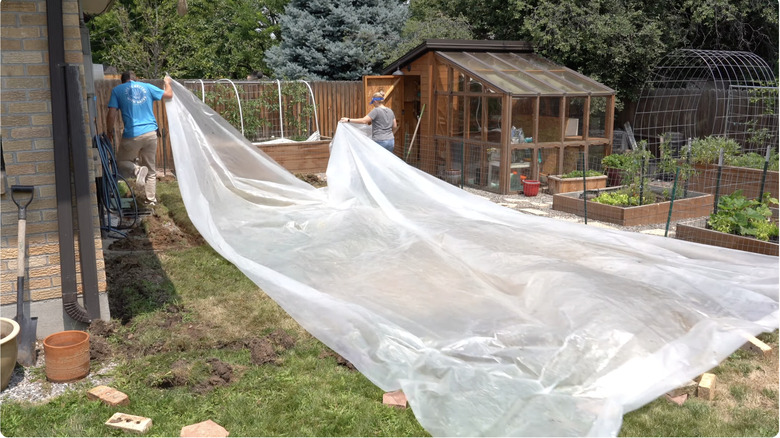
While homemade weedkiller sprays are excellent for controlling some smaller patches without harming your grass, soil solarization is better for clearing larger areas of grass and weeds. Dr. Manjot Kaur Sidhu notes that there are several steps to take in order for the solarization to be successful. "For maximum impact, mow the grass low, water the area deeply, and seal the plastic edges airtight for four to six weeks during the peak summer," she tells Hunker exclusively. This will temporarily reduce beneficial bacterial activity in the soil; then, once the grass and weeds are killed, you can easily come in with a rake to remove the dead weeds. After that, you can add any amendments you need for your flowers, which will help them thrive in their new soil bed.
The only time that you shouldn't use this method would be for an established bed of flowers. "This process is non-selective and will harm the wanted plants as well," Dr. Sidhu tells us. "If you place the plastic close to the root zone of flowers, the higher temperatures can likely damage their fine roots." In this case, other forms of weed management — like mulching, hand weeding, or spot treatment with organic natural weed killers – would be preferred.