

There's An Eco-Friendly Way To Keep Carpenter Bees From Destroying Your Home Or Deck
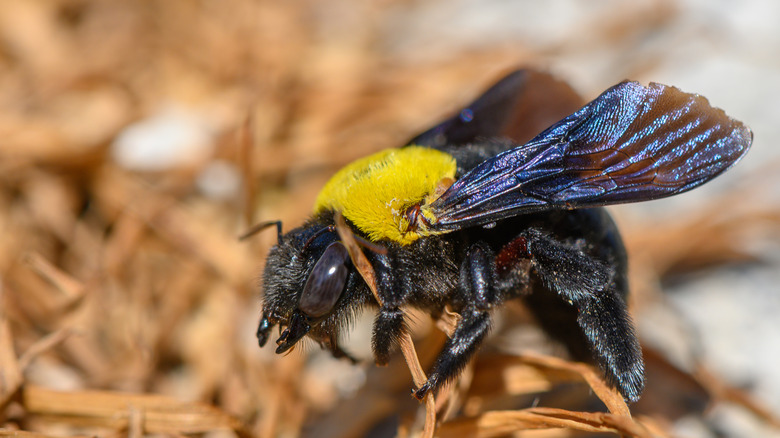
If carpenter bees have taken up residence on your deck or near your home, it's best to deal with them quickly. These bees get their name from the tiny holes they drill into raw wood; they burrow into your home's infrastructure, creating hollows inside your deck, walls, or wood furniture over time. Once they lay eggs inside these burrows, woodpeckers will soon come to peck out the larvae inside, causing even more damage to your property and reducing the lifespan of your wooden deck and other wooden items. If you don't want to spend your days filling and patching the holes that carpenter bees leave behind, all you need to do is encourage them to move out on their own.
Carpenter bees are generally harmless, and while they don't produce honey, they are still pollinators, which makes them an important part of your yard's ecosystem. This means that you should avoid exterminating a carpenter bee infestation whenever possible. Instead, convince them to move away from your home by placing a bee house nearby. These small, sheltered structures offer dozens of circular tunnels for your local carpenter bees to enjoy, and if you put one near the area of your home that carpenter bees are infesting, chances are high that they'll move themselves right inside. This is also a great way to consolidate and relocate the carpenter bee nests in your yard.
Choosing the right type of bee house
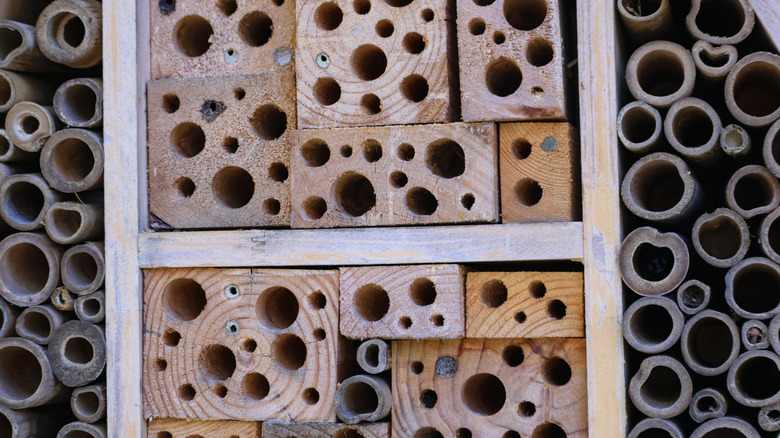
Before you can convince your carpenter bees to relocate, you'll need to choose a suitable home for them. You can either purchase a pre-made bee house or DIY one for your yard. When buying a bee house, look for wooden structures with deep holes, so that the bees can safely nest inside of them. Carpenter bees will only nest in wood houses, so keep that in mind when purchasing yours.
To make your own bee house, simply drill several long holes into blocks of softwood lumber, such as redwood or pine. Leave the entire piece of wood completely untreated and unpainted, so it's safe for your carpenter bees to live in. Don't worry if the holes aren't perfect; the bees will finish the job of burrowing into their new home once they move in.
Once the carpenter bees have moved away from your deck and into your bee house, you can safely patch up any burrows they made on your property. This will encourage the bees to avoid burrowing back into your home in the future. The safest time to do so is usually during late summer, when any larvae still living in the burrows in your deck will have grown up and moved out. Lastly, should you find that even the most beautiful bee house can't convince the carpenter bees in your deck to move, it's time to call in the professionals. If you don't want to try using a catch-and-release trap on your carpenter bees, look for companies that offer bee relocation services instead; they'll safely remove the carpenter bees from your property and find them a new home.