

What's The Average Lifespan Of A Wooden Deck?
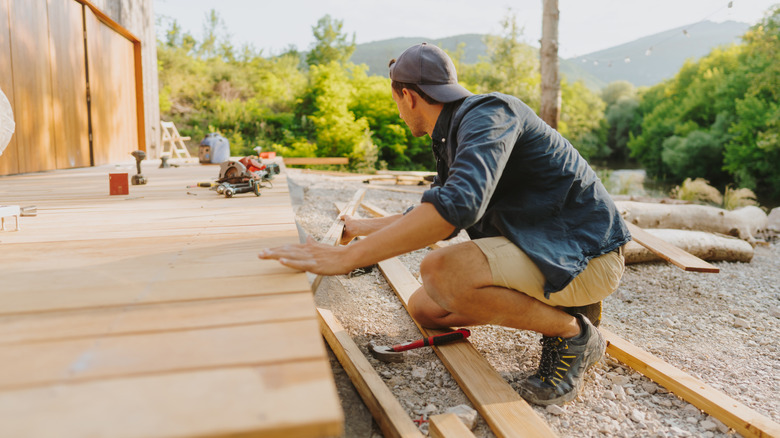
When considering decking materials, homeowners aren't limited to wood, with composite versions being a common alternative. Yet there are many reasons traditional wood decks remain popular. Not only are they considered less expensive upfront and easier to install than composite decking, but it's also hard to beat the natural aesthetics. One major tradeoff is the lifespan of wood, which is not as long as that of composite materials. Despite the comparatively lower longevity, a well-cared-for wooden deck can still last at least 10 to 15 years. Some may hold up for a couple of decades or longer.
First, it's important to understand the wide range of factors that can impact the lifespan. Specific aspects of the initial installation play a key role, including the type of wood used for the boards. Pressure-treated wood has a relatively long lifespan. Well-cared for decks made of this material last between 15 and 30 years. This is partly possible due to the use of preservatives ahead of time to decrease damages from the environment as well as certain insects such as carpenter bees or termites. Naturally hardier woods, such as mahogany, have the potential to last a few decades, but they are also more expensive. It's also important to help to protect decks that might be more vulnerable to the elements in regions that tend to be hotter, rainier, and more humid.
Care and maintenance tips to extend the lifespan of your deck
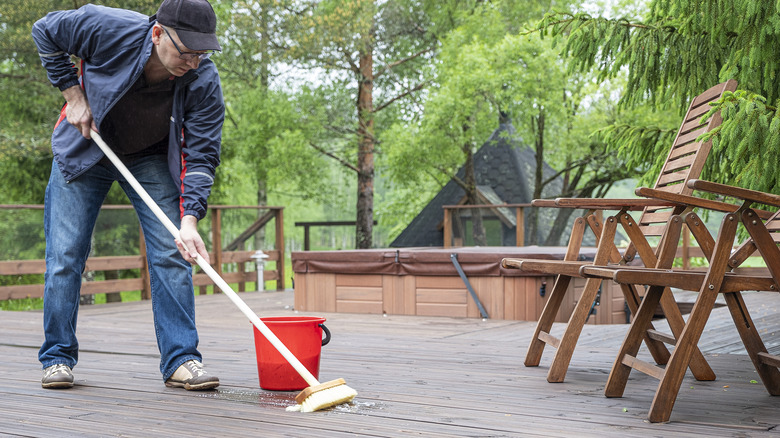
Ten to 15 years is a general guideline for estimating the longevity of a wooden deck. To achieve this lifespan though, it's important to follow key care and maintenance tips outside of choosing a durable material for a long-lasting deck. No matter which type of wood you choose, annual cleanings are must-dos to remove mold, algae, and other materials that can lead to board rotting.
Sealing and learning how to stain a deck are also both critical for keeping it in good shape. It's recommended that you perform both kinds of upkeep at least every one to three years depending on the type of wood and the climate you live in. A two-in-one product is ideal, but it's also helpful to know that individual sealants primarily protect from water damage, while stains are primarily protective against UV rays. Apply these products to clean boards only, and follow all product instructions before use. You might find that low-pressure washing or brushing may be required to remove caked-on dirt, mildew, or algae beforehand.
It's also important to understand that not every single board might last the average 10 to 15-year time frame. Regular inspections are not only important for safety reasons, but red flags such as cracks and loose nails can also alert you to sections that need to be fixed. Prompt repairs can extend the lifespan of your deck by protecting its overall integrity, while possibly eliminating the need to worry about signs that your deck is going to collapse.