

Stop Carpenter Bees From Drilling Into Your Deck With This Easy DIY Fix
We may receive a commission on purchases made from links.
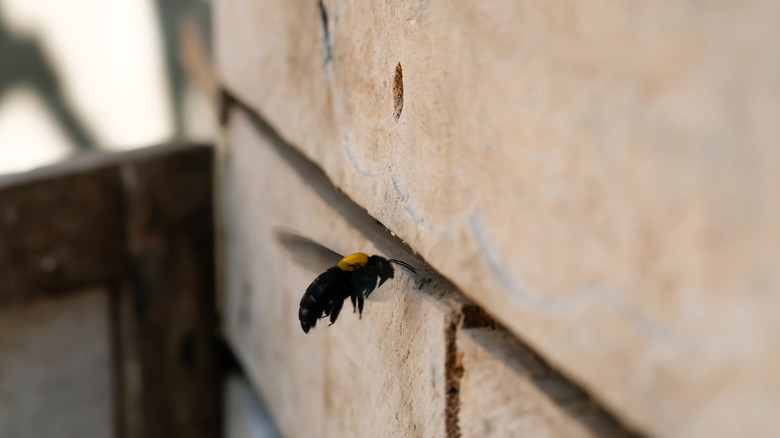
Some bees, like honey bees, and wannabees like yellowjackets, are social insects that swarm and build large hives and nests, but many other bee species prefer to be left alone. Carpenter bees display this anti-social behavior, and unlike bumblebees, which they closely resemble, they don't nest in the ground. As their name suggests, they dig tunnels in wood, and when that wood is part of your house's deck, you're right to be concerned. While you could repel these bees using a natural fragrance they can't stand, one of the most effective ways to actually get rid of them is to deploy a trap.
Dealing with carpenter bees isn't something to take lightly, as they are excellent pollinators and a benefit to your garden. If you leave them alone, though, they'll return to the same nest year after year. They'll continue to expand it by digging new tunnels, eventually weakening the wood to the point where it needs to be replaced. You have to do something.
Simply filling the holes with tin foil or caulk won't be effective if bees are in the nest. They'll probably just dig new holes in your deck to get out. You can try killing them with an insecticide, but it may not reach all the way into the nest. Even if it does, and you kill all the bees, you'll be depriving plants of an important vector for reproduction. Catching the bees in a live trap while they're out of the nest gives you the option of relocating them instead of simply doing them in.
Naturally, a carpenter bee trap has to be made of wood
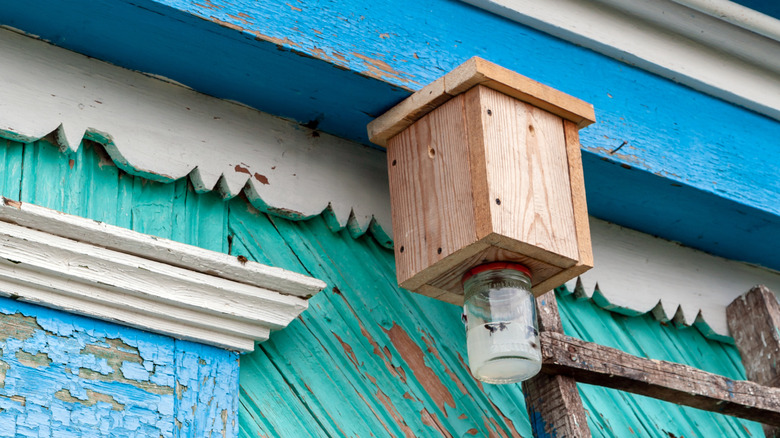
To catch yellowjackets in your yard, you can deploy a trap made from plastic. They won't care, as long as they can sense the bait. Carpenter bees do care about materials, though, and are more likely to be attracted to a wooden structure. What makes the trap a trap is the addition of a glass jar at the bottom. The bees enter through holes in the wood and, attracted by the light, they crawl into the jar through a one-way opening, where they can't get out.
A carpenter bee trap is easy to make yourself, but you don't have to; you can always buy one. A trap similar to the Best Bee Trap Pentroof Style Carpenter Bee Trap costs about $25, and it's something you can use over and over. In fact, if you install it permanently, it can become a decoy to attract bees away from your siding. If you do decide to make your own, don't paint or varnish it. Carpenter bees prefer unfinished wood, and they'll be more strongly attracted if you make the trap from old, weathered softwood.
Once you've caught the bees, what do you do with them? You can always just leave them in the jar to die, but a more humane approach is to put on protective gear and release them in the woods far enough from your house to ensure they won't come back. When they're gone, patching the holes they made in your deck makes more sense.