

How To Repel Carpenter Bees Using One Natural Fragrance They Can't Stand
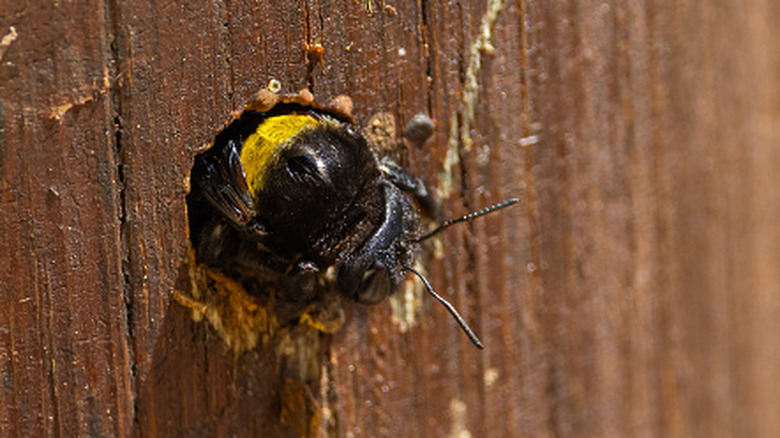
When there's an influx of pollinating insects around your home during the springtime, chances are you might also see more carpenter bees around your yard or garden. Like most U.S. native bees, carpenters mate in the spring and then quickly build nests. Unlike bumblebees who build their nests underground, carpenter bees target wood. These not only include trees, but also people-made structures such as a built wood fence or even wood-framed buildings. It's good for carpenter bees to have places they can nest, but of course it can be bad news for homeowners if they have to deal with damaged wooden structures around their property. Though carpenter bee management can be challenging, it might be worth trying effective remedies to help repel them before they cause serious structural damage. Almond oil may be one such solution, but both timing and technique are critical.
As the name suggests, almond oil is made from extracts of almonds via pressing machines. While it's possible to create cold-pressed almond oil on your own at home, it's arguably much easier to buy commercial versions. There are numerous human benefits associated with almond oil, so it might seem surprising to see this liquid as a possible solution for carpenter bees. As with many other types of natural pest control remedies, it's thought that almond oil might repel certain pests because of its fragrance. To that end, it turns out that carpenter bees dislike the smell of almond oil. When applied on unpainted or unfinished wood, there's a chance that the smell could be off-putting to these insects, and they might take up their nesting activities elsewhere.
How to use almond oil to help control carpenter bees
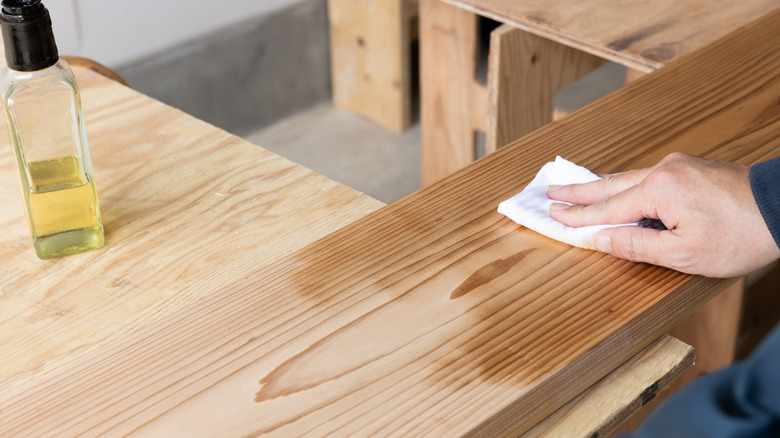
Certain wood structures around your home that can be affected by carpenter bees include a variety of exposed wooden structures that are not painted or stained, including fences, decks, railings, eaves, doors, and more. PennState Extension recommends applying a new coating of almond oil to untreated wood each spring to get ahead of carpenter bee nesting season. While the bees' activity can vary slightly by region, females tend to start looking for nesting sites by mid-spring. Almond oil works similarly to wood stains and paints in this vein, but it has the added benefit of not permanently altering the appearance. Apply almond oil directly onto the wood with the help of a cloth. As an alternative, you can also soak cotton balls in almond oil and place them strategically around exposed wood. Just know that this method might not be the most practical for a larger structure.
You'll also want to regularly inspect for carpenter bee damage. Seal old holes and cracks after nesting season to prevent carpenter bees from reusing some of the same tunnels next year. Another important note: This strategy may not be effective if there's already a carpenter bee nest in your yard. At this point, carpenter bees have already excavated tunnels to their nests and will not be bothered by newly applied almond oil. Once carpenter bees have taken over a fence, or are a serious issue within wood framing around your home, it may be time to call a pest control expert for safe and effective removal.